
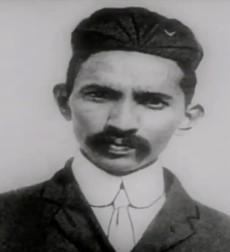
Heritage documentaries on Gandhi, Begum Akhtar and Pt. Ravi Shankar shine at MIFF 2026
Mumbai : Five restored documentary classics from the National Film Development Corporation–National Film Archive of India (NFDC-NFAI) collection were showcased at the 19th Mumbai International Film Festival (MIFF 2026) under the special non-competition section, “NFAI Presents – Restored Classics.”
All the selected films have been restored under the National Film Heritage Mission (NFHM), the Government of India’s flagship initiative dedicated to preserving and restoring the nation’s cinematic legacy.
The curated package, screened on Wednesday evening, featured five landmark documentaries produced by the erstwhile Films Division. Together, these films chronicle India’s cultural, artistic and social heritage, offering contemporary audiences an opportunity to revisit significant moments and personalities from the country’s past.
Three of the documentaries focus on iconic personalities Mahatma Gandhi, Begum Akhtar and Pandit Ravi Shankar. The other two documentaries are a cinematic representation of Calcutta and India’s tribal communities.Mahatma: Life of Gandhi 1869–1948 (Part I)Directed by Vithalbhai K. Jhaveri and produced in 1968, this English-language documentary draws extensively from archival footage to present a comprehensive account of the life and work of Mahatma Gandhi.
The film offers a valuable historical record of the life and works of Mahatma Gandhi.Begum AkhtarProduced by Films Division and directed by N.K. Issar in 1971, this English-language documentary portrays various facets of the life and artistry of the legendary singer Begum Akhtar, revered as the Mallika-e-Ghazal.
Through intimate visuals from her home, in presence of family members, and stage performances, the film captures the essence of the celebrated Ghazal and Thumri artist.Ravi ShankarDirected by Pramod Pati and produced in 1970, this documentary biopic explores the life and creative journey of the legendary sitar maestro Pandit Ravi Shankar.
Through interviews and recital footage, the film presents the many dimensions of the classical musician, composer and cultural ambassador of Indian music.Portrait of a City Directed by Chidananda Dasgupta in 1961, this documentary offers a compelling cinematic portrait of the then Calcutta.
Through visuals of factories, newspaper offices, rivers and racecourses, accompanied by music, ambient sound and incidental dialogue, the film captures the rhythm and character of life in a bustling city.Our Original InhabitantsDirected by Jagat Murari and produced in 1953, this English-language documentary introduces audiences to India’s diverse tribal communities. In less than 12 minutes, the film highlights the distinctive cultural practices, attires, ornaments, music and dance traditions of some of the 172 tribal groups spread across the country.Speaking during a session held on the sidelines of the screenings, Shri Prakash Magdum, Managing Director of NFDC, underscored the importance of preserving films for future generations.
He noted that film preservation ensures cinematic history remains accessible to newer audiences and future generations, and pointed out that many leading international film festivals today feature dedicated sections for restored classics.
The inclusion of these films at MIFF 2026 highlights the enduring significance of the Films Division archives, one of the world’s richest repositories of documentary and non-fiction cinema. Through state-of-the-art restoration undertaken under the National Film Heritage Mission, these films have been revived for contemporary audiences while preserving their original cinematic character.
The screenings reaffirm NFDC-NFAI’s commitment to safeguarding India’s audiovisual heritage and making it accessible to future generations. Their presentation at MIFF 2026 also reinforces the festival’s role as a platform that celebrates both contemporary documentary filmmaking and the preservation of India’s rich cinematic legacy.



Leave a Reply