
S Viswanath
The difference between life and movies is that scripts have to make sense, and life doesn’t. – Joseph L Mankiewicz – American filmmaker.
Once upon a midnight dreary, while I pondered, weak and weary,
Over many a quaint and curious volume of forgotten lore,
While I nodded, nearly napping, suddenly there came a tapping,
As of someone gently rapping, rapping at my chamber door. “
Deep into that darkness peering, long I stood there wondering, fearing,
Doubting, dreaming dreams no mortals ever dared to dream before;
But the silence was unbroken, and the stillness gave no token,
Desolate yet all undaunted, on this desert land enchanted—
On this home by horror haunted—tell me truly, I implore—
Is there—is there balm in Gilead?—tell me—tell me, I implore!”
Quoth the Raven, “Nevermore.”
And the lamplight o’er him streaming throws his shadow on the floor;
And my soul from out that shadow that lies floating on the floor
Shall be lifted—nevermore!
The Raven – Edgar Alan Poe
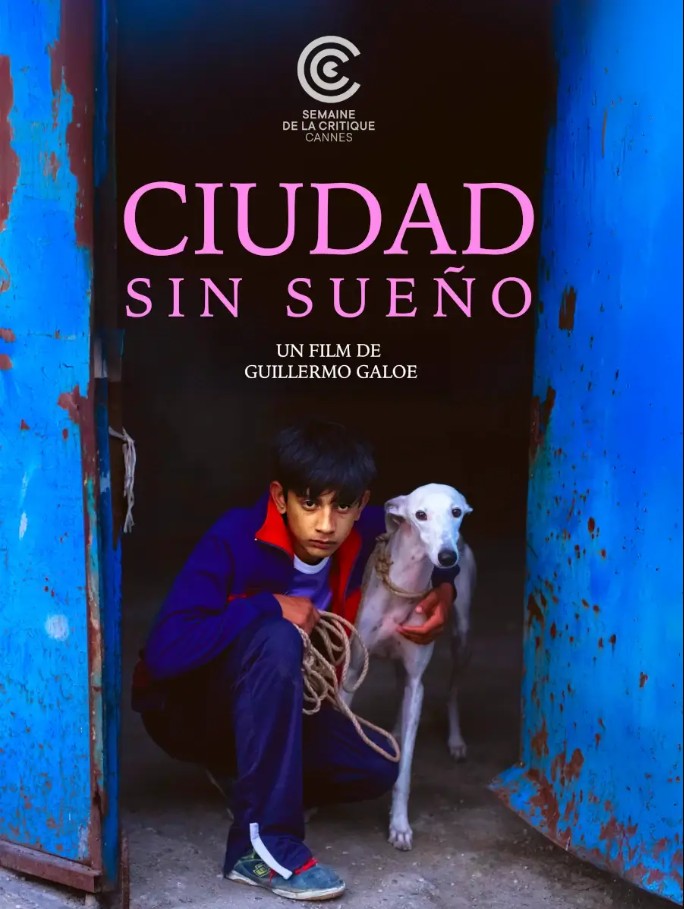
Like American writer and poet Edgar Allan Poe, Spanish director Guillermo Galoe also situates his debutant feature Ciudad sin sueño (Sleepless City / City Without Sleep / City Without a Dream), in the fantastical world of fairytales, harsh festering realities, as also in the dark and ominous setting of an inevitable destiny dangling like a Damocles’ Sword on the dwellers of La Cañada Real, Europe’s largest illegal cramped shanty towns,on the outskirts of Madrid, sans electricity or water.
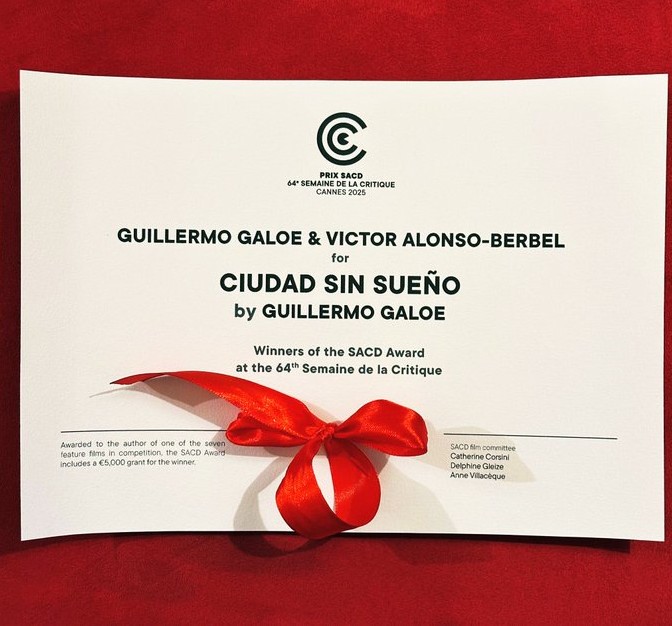
Filmed, on location, in the informal settlement,where Roma community, Europe’s largest ethnic minoritylive on the fringe of society,the film, world premieredin Critics’ Week Section of Cannes Film Festival 2025, picking the SACD (Société des Auteurs et Compositeurs Dramatiques – French Society of Authors) award given to feature film in competition, for best screenplayof talented filmmaker, fetching him/her handsome €5,000.
That Sleepless City, pocketed the coveted prize, from promising six other contendersImago by Belgium’s Deni Oumar Pitsaev, Kika by Belgium’s Alexe Poukine, Taiwan’s Left-Handed Girl by Shih-Ching Tsou, France’s Ninoby Pauline Loquès, Rietland by Netherland’s Sven Bresser, and Thailand’s Pee Chai Dai Ka(A Useful Ghost) by Ratchapoom Boonbunchachoke,bespeaks of new Spanish director’s creative cinematic talent,realistic narrative style and visual structuring of the universal drama of development, demolitions and displacements of marginalised sections of society.
As Guillermo Galoe says of his feature’s inspiration in an interview “I found a universe that makes me want to film: a Tower of Babel, a borderland, a limiting space, where reality responds to its own laws and logic and offers a mystery that interests me. And I thought that cinema could portray a world and people who have been completely marginalised by society.”
True enough audiences get to watch up, close and personal through the perspective eyes of Tonino how the family of scrap metal collectors’ world crumble following eviction notice arriving at their humble, ramshackle harmonious, happy homestead.Like Poe, director Guillermo Galoe too, intrepidly invites his audiences to experience in the eerie ‘dread’‘despair’
and ‘dream’ with their own imbibed imagination, while emphasisng the darkness, the emptiness, and the unknowable that has descended on an otherwise contended and coexisting community.
Thereby, subtly and stoically drawing his audiences into the searing and searching portrait of a family thrown into trepidation at the prospects of inevitable eviction and displacement. Through the melancholic, moody and maudlin state of Tonino driven to assume a fatalistic attituderesigned to a future trapped within his sadness and imprisoned by his loss of his happy home, Greyhound Rayo and Moroccan mobile and sounding board mate Bilal.
Incidentally, in Spanish, “sueño” means both sleep and dream. The dual state the film’s Tonino finds himself him caught betwixt his guardian grandfather’s sagacious counsel despite dismantling and destruction of their homes and dad’s matter-of-fact decisive determination of moving away from the grime and gutter they are entrenched in.
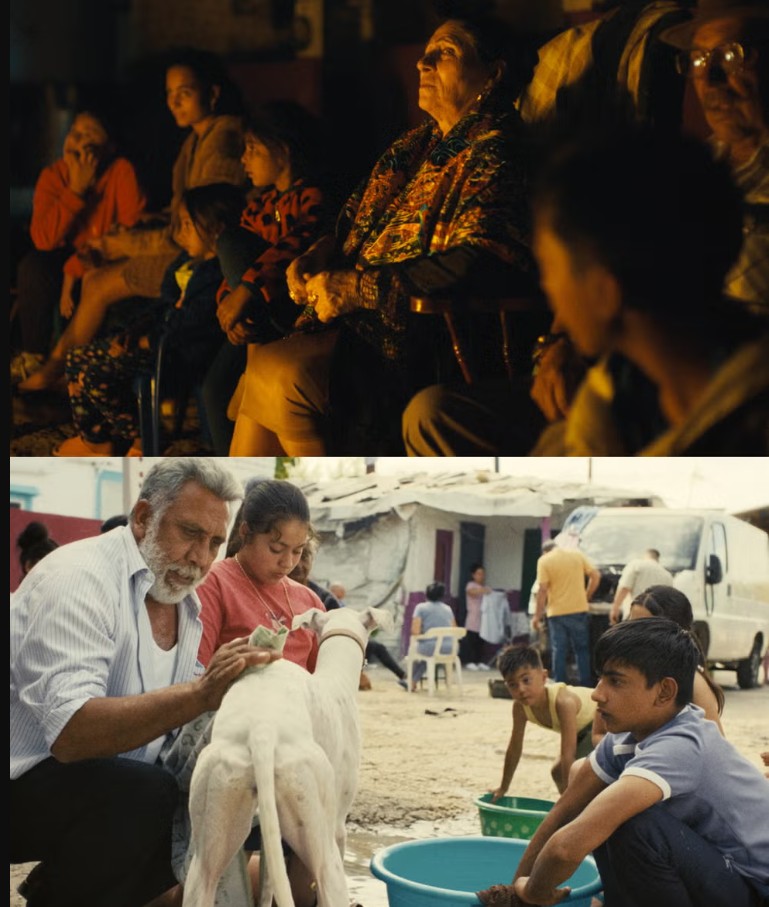
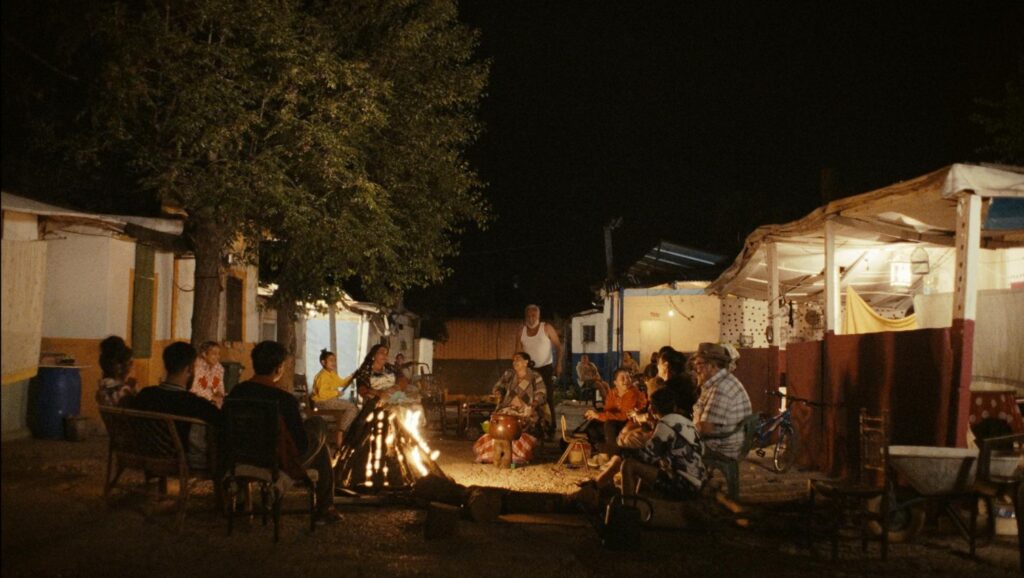
“Mai, keep telling the tale, I haven’t heard it,” the child asks her mother. The mother replies “Ask Tonino. Tell us what the future was Tonino.” “What is that, the future,” probes the naïve, innocent, inquisitive child, egging her mother, as flames flicker in the dead of darkness of their homestead.
Her poser evoking a burst of boisterous laughter among family members gathered around, while a contemplative and concerned Tonino silently watches the conversation and the sheer bonhomie and banter that prevails among the large close knit family.
This fireside conversation and fable in the film subsequently, narrated in a hoary, husky, hush hush prophetic folksy manner, by mother telling bedside story to put her child to sleep, goes thus: “And only one greyhound remained., made of gold., he ran so, so fast., he was never sleepy., the greyhound wanted fields and fields to run through., but the hood was surrendered by three rivers – a wine river, a milk river and a coffee river – from the top of the mountain., he could see the birds and was jealous of them., there were some shadows., dressed in fire., That was the future.”
Evocatively encapsulating the poignant and pithy drama that unfolds as the film’s 15-year-old teen protagonist, on the cusp of adulthood,Tonino,reflectively ruminates and resignedly contemplates where to stick on.With his stubborn and stentoriangrandfather or conveniently pack off, with his Greyhound bitch and baggage, with dear dad and family to distant city holding promise of better living conditions, he and his ilk, perforce pushed by society’s skewed priorities to adopt to a life alien to them.
Following up his 2023Nominee for Cannes’ Palme d’Or – Best Short Film Award and winner of Goya’s Best Short Fiction Film (Mejor Cortometraje de Ficción)besides 15 others 15-min short film Aunque es de noche (Even Though It’s Night)where Tonino figures for first time faced with prospects of his bosom buddy Nasser departingfor Marseille, director Guillermo Galoeexpands this thematic trajectory into full length feature with the setting, situations and lead being the same. Goya Award being Spain’s main National Film Awards, considered Spanish equivalent to Academy Awardspresented annually by the Academy of Cinematographic Arts &Sciences of Spain (AACCE).
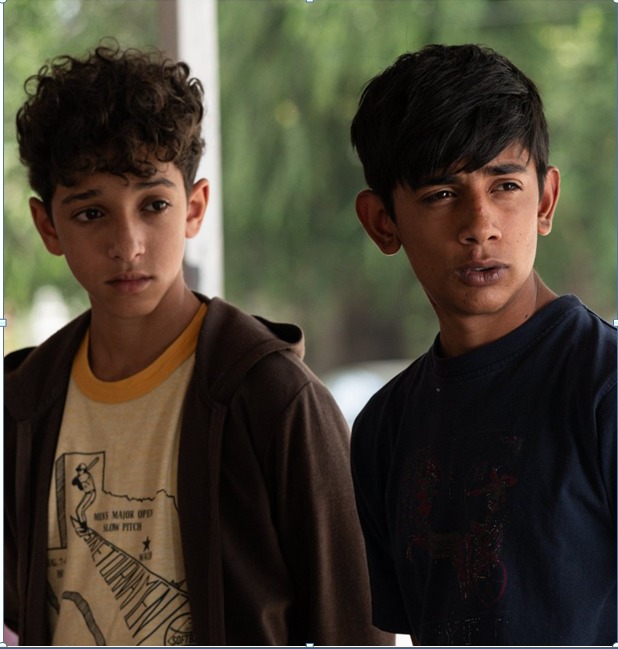
Tonino’s days are pent, apart from helping granddad Chule, nickname for Jesús Fernández Silva, family patriarch and proxy guardian with his scrap metal picking trysts,hare hunting mission on the expanse grassy outfield, bingeing with best buddy Bilal, capturing the universe around them with mobile phones, and playing with his inseparable pet – white Greyhound – Rayoand racing the family dog in his pickup truck.
However, Tonino’s tranquil and blissful life stumbles when the family receives notice of imminent eviction and the inevitability of childhood comrade Bilal too leaving La Cañada for good. This sees Tonino torn between chasing the chimera of new life that the City promises and his childhood attachment to his joint family and landed roots.
A sense of angst and anxiety enwrap him. We see constantly cigarette puffing Tonino brought up on the fringes of society stoically observe days and nights flitting by while friends and sister waste their lives giggling away in streetside shop talk and vaping without a care in the world.
Many of his neighbours have conveniently resigned to Madrid officials offer to relocate them to public homes and homeless shelters professing to provide them with better living conditions for society’s most vulnerable residentsdemolishing their neighbourhood and dissipating their families into social housing. With friend Bilal and family seeing this offer one-way ticket to French coast with happy prospects of embracing 21stC European lifestyle.
However, Tonino’s stern and stubborn grandfather Chule is made of tough stuff for whom leaving their habitation of birth and existence – Cañada Real that has provided them with freedom and independence is akin to abandoning one’s family.
It is in this intricate cobweb of uncertainty and unsureness Tonino is swept in the swirling vortex of self-discovery and self-realisation riven with existential crisis as he faces with life changing Sisyphean dilemma whether to depart or pitch tent, whether to heed granddad Chule’s careful counsel to go by his heart or plunge into promising prospects the displacement holds for him and his family. Toninohaving never known what an elevator is or water gushing shower and tap, justifiably intimidating him on a family visit to the apartment they are to move in.
“Isn’t this happiness?” his piqued grandfather posers himpointing out to vast expanse lying before them, freedom and individuality it provides as Tonino, caught in the cusp of adulthood,is riddled in confusion about the conscious choice he has to make.
As director Guillermo Galoe states of his cinematic process “I wanted to portray all through the eyes of Toni, who is on the verge of becoming an adult, but whose gaze still holds the magic of childhood—free of judgment, where anything is still possible. A poetic gaze through which we dive into a raw and complex universe.”
With scintillating and imaginative cinematographyRui Poças careens through vast settlement making the most of actual locations teeming with its assortment people and professions, cramped house and labyrinthine neighbourhood, capturing the grimy roads surrounded by mounds, wastelands, and overflowing garbage.
While Rui Pocas provides a lyrical luminescence to the film, director Guillermo Galoe, with ambitious scale and delectable style of storytelling presents an incisive insight into the ideological conflicts and divisions of the impoverished community living on the fringes, vividly capturing the highs and lows of life, livelihoods and inhabitants in La Cañada.
Through his flamboyant visual technique of playful use of different filtersthrough iPhone Guillermo Galoe captivatingly showcases a magical realism sense of wonder by changing colour palettesproviding for variety of contemporary neo-realistic styles of film-making in presentingthe world around Tonino and his ilk.
Raw, realistic and rancid in its docu-feature narrative style director Guillermo Galoe presents a pitch perfect visceral portrait of seamy underbelly of La Canada’s universe wherein an old man in a bar bitterly and regrettably rues “We gypsies are in the way everywhere.”
Though a tough and gut-wrenching watch Sleepless Citynevertheless engages and enthrals connoisseurs of cinema seriously engaged and deeply invested in the insomniac tour de force as they unfold in a nonchalant, no-nonsense fashion hitting deeply at your solar plexus.

S VISWANATH is a veteran film critic who officiates as JURY at several National & International Film Festivals. He deputises as CHIEF CINEMA CURATOR/PROGRAMMER & CREATIVE ADVISOR for Bengaluru International Film Festival (BIFFes). He also curates & advises on the selection of shorts & documentaries for Bengaluru International Short Film Festival (BISFF). Mr Viswanath is the author of “RANDOM REFLECTIONS: A Kaleidoscopic Musings on Kannada Cinema”.






Leave a Reply