
S Viswanath
Comprising nearly 50 plus contemporary cinemas that have coveted critics and committed cinephiles across film festival circuits that dot the main movie coliseum such as the Cannes, Venice, Berlin, and the likes, the centrepiece attraction of the 59th Karlovy Vary International Film Festival promises a veritable humdinger of cinematic experience for the congregation set to assemble in humungous numbers at the spa town’s Hotel Thermal this July.
The calendar cinema extravaganza, running from July 4 to 12, 2025, with the festival’s seasoned and creative curators collating some of the choicest and crème la crème of cinemas for avowed cine aficionados to binge and gorge upon, ensures Horizons feastful of fascinating films provide a window of opportunity to catch some of the choicest cinemas apart from the festival’s main course – Crystal Globe & ProximaCompetition and Special Screenings sizzlers served a la carte.
Bringing in a mixed medley of delectable documentaries and fantabulous features, some by debutants cutting their teeth, some past masters, and more importantly, the beguiling bandwagon of women directors, the Horizons horde promises a heady treat of thematic explorations and nifty narrative sojourns for the itinerant film festival diehards.
Having already watched three among 50 plus being showcased namely –April, Kill the Jockey and Vermiglio the previous year’s fare, I can assure that the assortment of 22 films that I have consciously chosen to catch up during the week long film festival, some being Cannes, Berlin award winners, I am sure, a handful of them at the least, are worth the while and would be leaving an indelible imprint in the recess of our creative cinemas appreciation psyche.
So, without further ado, these then are the films that I have assembled in the alphabetical order to hopefully book a berth at the festival cinemas to catch up and celebrate their creators and the nuanced socio-political human dramas they present for our collective entertainment and enjoyment.
Copenhagen based, Polish filmmaker Piotr Winiewicz’s 84 min documentary About a Hero (O hrdinovi) provides an interesting and intriguing example of how AI or artificial intelligence is making inroads into the creative sphere of cinema, to the extent how AI could be employed to make a film like one of Werner Herzog’s. Trying to disprove Werner Herzog’s observation that “a computer will not create a film as good as mine in 4,500 years,” Piotr not turns the German auteur as his AI protagonist and principal narrator who sojourns to Getunkirchenburg to probe the perplexing death of a local factory work – Dorem Clery.
As a result Piotr pickles audiences’ interest on his unique surge into the unpredictable space while another character is visualised forming an intimate relationship with a toaster. The film’s curator, describes the debutant enterprise as “a hilariously subversive reflection on authorship and the limits of human expression in an age of algorithms, featuring interviews with various artists, philosophers, and scientists.”
Thereon, you have Samsara director Spain’s Vigo City, Galicia community inhabitant Lois Patino presenting a “postmodernist adaptation” of Bard of Avon’s The Tempestsituated in the tropical volcanic landscape of the Azores in his 105 min feature Ariel. The film’s protagonist Augustina surrendered by full of Shakespearean characters incapable of breaking free from their predefined roles. “The film is a seductively captivating walk through literary forests and a humorous metanarrative homage to the inhabitants of fictional worlds,” notes the festival curator.
Then you have 2024 Venice Film Festival’s Special Jury Prize winner 134 min Aprilby Georgia’s celebrated Ossetian originwoman director Dea Kulumbegashvili. The critically acclaimed gut-wrenching tour-de-force which centres around doctor Nina who finds herself subject to an inquiry by the hospital following the death of an infant. She nevertheless continues to help village women who want to terminate their pregnancies, a serious crime in Georgia. Dea Kulumbegashvili’s sophomore fare depicts the clash of many worlds and like Nina, “we wonder whether we are watching reality, a dream… or a nightmare.”
Brazil’s Recife born visual artist turned filmmaker Gabriel Mascaro presents his 85 min The Blue Traila modern day dystopian drama spotlighting on the septuagenarian Tereza forced to retire from her job and placed under the guardianship of her daughter, who, however,doughtily defies the government diktat (which prioritises policies for its younger populace) for relocation imposed on its growing elderly population, and instead, embarks on a personal journey through the Amazon.
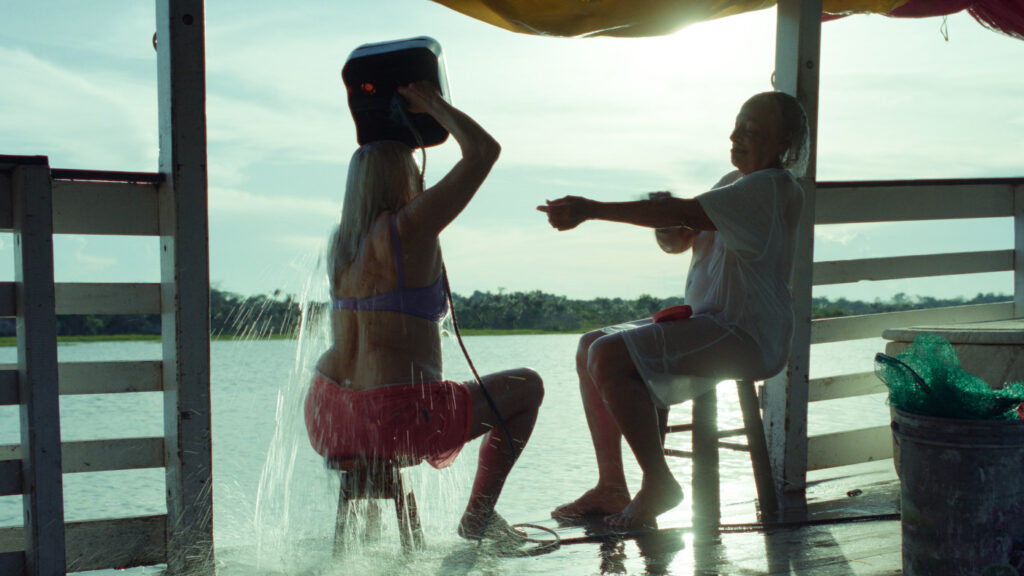
As the programmer sums up the film’s thematic trajectory “a socio-critical exploration of discrimination against the elderly and a Gulliverian odyssey across the Amazon, Blue Trail emanates its protagonist’s vivaciousness, charm, and untamed yearning for freedom.” Incidentally, the film, which had its world premiere at the main competition of 75th Berlin International Film Festival picked up the prestigious Silver Bear Grand Jury Prize a testimony to the film’s credentials and cinematic pedigree.
Expanding upon her Goya Award nominated short of the same name, Molina de Segura, Murcia, Spain based Eva Libertad’s 99 min Deaf (Sorda) starring stars deaf actress Miriam Garlofollows Ángela, a deaf woman, working in a pottery studio in rural Spain, who is expecting a child with her hearing partner, Héctor. The Panorama Audience Award for Best Feature Film winner at the 75th Berlin International Film Festival is a stark study about how the couple’s relationshi9p is test following the birth of their child. Especially Angela experiences what it is to raise a child in an environment where she does not always feel fully accepted.

The debut feature “explores not only the complicated relationship between hearing and hearing-impaired individuals, but above all the difficulties of being a mother. The main role is played by her sister, whose point of view of a character with a hearing impairment is underlined through the use of sound design,” is how the programmer describes the film.
Dreams aka Drømmer(Sex Love) the 2024, 110 min relationship trilogy from Norway’s librarian-novelist-film director Dag Johan Haugerud centres around on the cusp of adulthood Johanna all of 17, who is smitten by cupid, albeit of the platonic kind when she develops a raging crush for her female French tutor. The young lass running through a melange of emotions – flush with excitement and intoxication, confusion and frustration, commits her feelings in her diary which falls into the hands of her mother and grandmother.
Though horrified by its contents the two, are however, taken in by the vivid, vivacious and powerful prose poured out by the teen deeming it fit for publication, without, as much an iota of thought that the girl has only written it to keep the crush alive for herself.. The film, which won the Golden Bear for Best Film at the 75thBerlinale, “shows that the strength of his work lies both in his ability to create realistic characters and in his use of evocative written and cinematic language.”
Beijing born Chinese Vivian Quo of the richly rewarded Angels Wear White (Jia nian hua) and Black Coal, Thin Ice(Bai ri yan huo) under her impressive directorial belt, seeks to covet audiences with her latest 115 min Girls on Wire(Xiang fei de nü hai)which featured in the Competition Section of 75th Berlinale this year. The film, spun around two cousins – Tian single mother of a five-year-old daughter,and Fang Di, , twin together like two sisters, on a common cause to take on a rouge group of ruthless gangsters, in the hopes that one day they might end their frantic flight, after Tian slays a drug dealer. “This visually expressive film has the harness worn by actors in wire-fu films become a metaphor for our relationship to family and to the heroes of our past,” opines the programmer.
Recepient of the prestigious Palme d’Or at the recently concluded 78th Cannes International Film Festival (Festival de Cannes), Iran’s much acclaimed and accoladed dissident auteur Jafar Panahi’s 105 min It Was Just An Accident (Drobná nehoda / Yek tasadef sadeh)is sure to be piece de resistance of 59thKarlovy Vary International Film Festival.
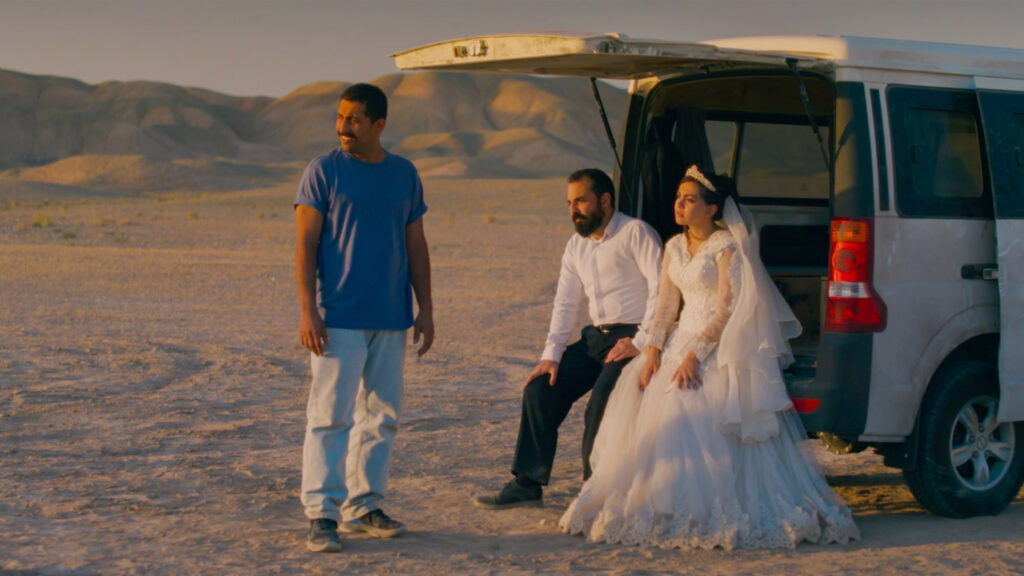
The richly nuanced and deftly done political drama which explores themes of revenge, violence, humanity, and trauma, revolves round Vahid sent to prison following a premise of a trial confronting the man he believesbrutally tortured him during his incarceration, and impulsively spirits away the presumed torturer into his van. Soon, you have the van teeming with other former prisoners coming to assist Vahid with the identification. “Together, they face a question that haunts many nations: can we exact revenge against a cruel system by taking it out on one individual who loyally serves it? A moral thriller with elements of darkly grotesque,” is how festival curator sums up this much anticipated feature.
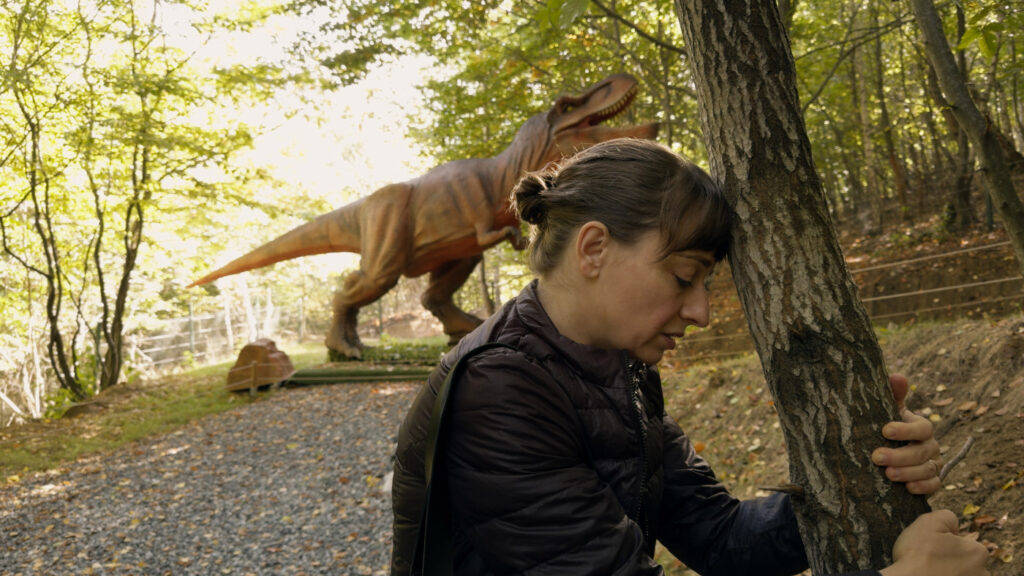
Bestowed with the Silver Bear for Best Screenplay at the Berlinale, the 109 min Kontinental ’25 (Continental) by Romania’s renowned filmmaker Radu Jude shot on a mobile phone over the course of ten days situated in the capital of Transylvania, Cluj-Napoca, spotlights on Orsolya a court bailiff, who is caught in a moral predicament since she has to serve the notice of eviction on a homeless guy and remove him from a cellar one day. Resulting in tragic consequences, the bailiff is ridden with a moral dilemma which Orsolya must try to resolve while the “was it my fault?”question troubles her. The film resonates “with Radu’s trademark dark humour, aimed straight at a contemporary society full of neglect, nationalism, faith, and shaky moral positions.”
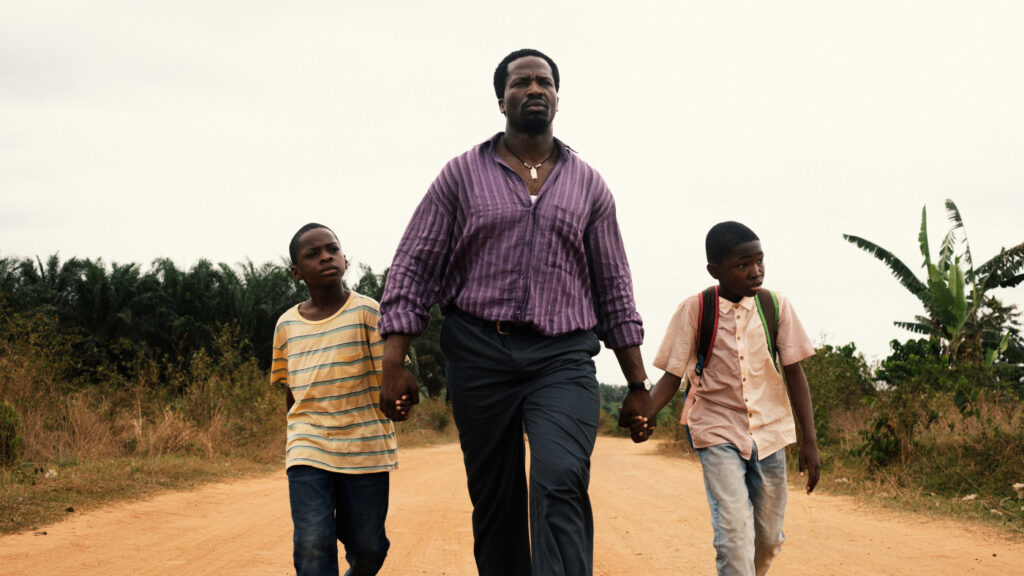
This first every Nigerian film, winner of the Golden Camera Special Mention Award at the 78th Festival de Cannes is described as “partially autobiographical impressionist remembrance with a touch of the transcendental in which images of loving parenthood are mixed with the pulsating colours of Nigeria’s largest city and drops of blood spilled for a better future that may never come.”Situated in Nigeria of 1993, the 94 min My Father’s Shadow (Stíny mého otce)by young West African director Akinola Davies Jr the film speaks of a father who leaves his village for Lagos, to take care of some work-related duties. It is the first time he takes his two young sons with him, whom he otherwise doesn’t see very often. With an important election underway and explosive political crisis looming in the background, what, at first, looks like an ordinary day slowly becomes a formative experience that the two boys will remember for the rest of their lives.
Santiago Chilean director Diego Cespedes’ 110 min The Mysterious Gaze of the Flamingo (Záhadný pohled plameňáka / La misteriosa mirada del flamenco)winner of the Un Certain Regard Award at the recent 78th Cannes Film Festival spotlights on trans women community in the mining town of Northern Chile in 1982 where 11-year-old Lidia is growing up which is struck by a mysterious and deadly illness is ravaging the area, leading to the belief that it is spread by the gaze of two men who fall in love with each other. In his debutant foray Diego speaks on “a story about queer life surviving in a hostile environment, and the complexity of love – which can be a refuge for one but a source of danger for another.”
Kosice Czechoslovakia’s very own pride Alexandra Makarova’s 111 min Perla, isset in Vienna of early 1980s,where film’s titular character, Perla, a refugee from socialist Czechoslovakia, tries to make art and raise her daughter in a free world far from political oppression. However, the dissident artist’s life is turned upside down when her estranged partner reappears after prison, who has remained behind in Slovakia, pushing Perla takes a fresh and highly disturbing look at the recent past. prompting a perilous journey back to Czechoslovakia that threatens her newfound family.
French-Tunisian filmmaker’s 95 min Promised Sky (Nebe zaslíbené / Promis le ciel)screened in the official section of Un Certain Regard at Cannes, centres around three womenMarie, Naney, and Jolie with their triad stories of flight from various corners of Africa. They find refuge in a building on the outskirts of Tunis, where they form a fragile alliance and a silent bond of solidarity. An abandoned child Kenza having survived a shipwreck appears in their lives, changing not only the atmosphere in their home but also the inner balance of each of them. The film “takes a sensitive look at the everyday lives of people united by loss, uprootedness, and the need to find their place and their purpose in a new reality.”

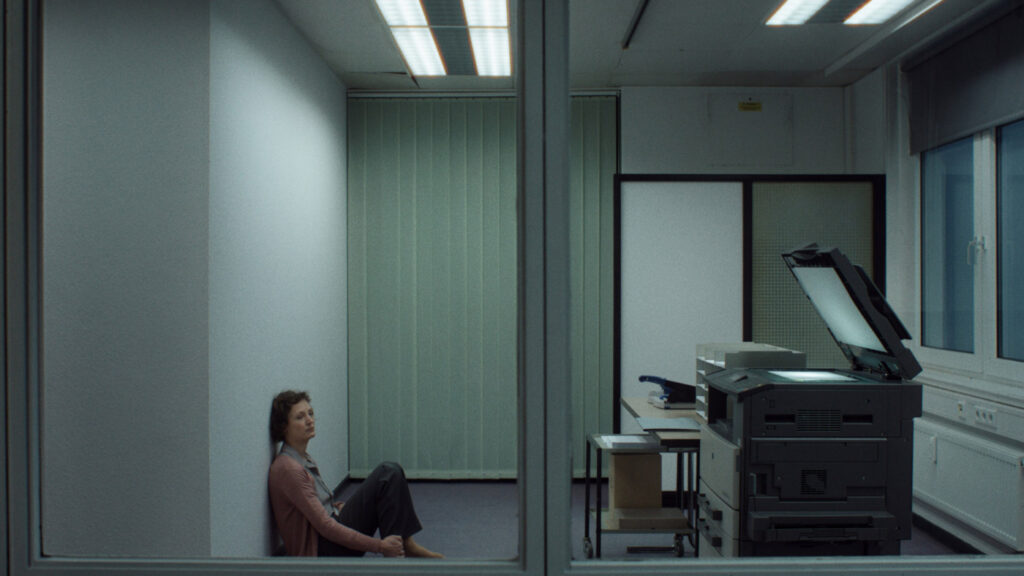
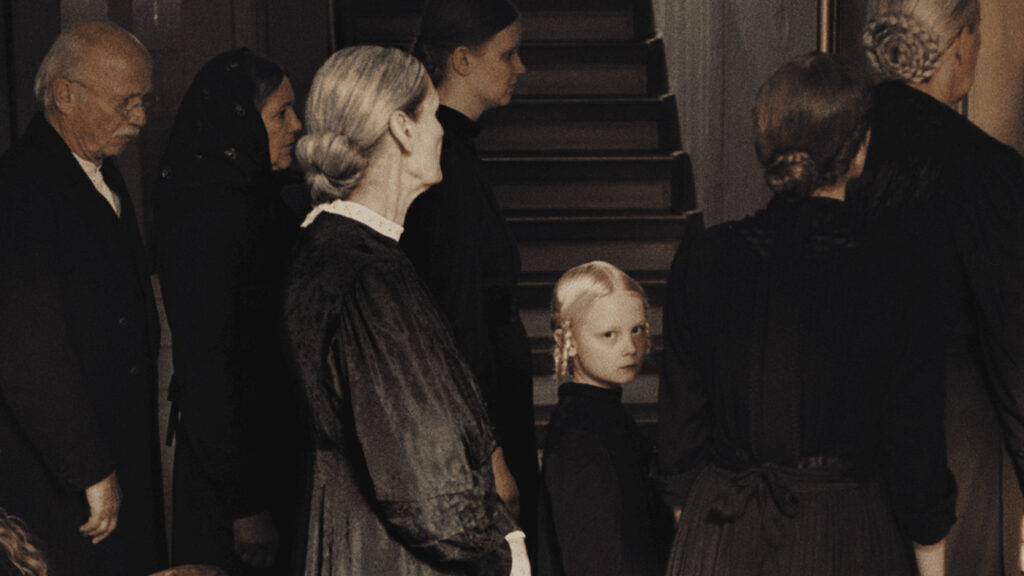
Germany’s Mascha Schilinski’s 149 min Sound of Falling (In die Sonne schauen)which rung the curtains down of the 78th Cannes Film Festival and joint winner of the Jury Prize features four generations of women in a farm in Eastern Germany whose lives are loosely intertwined spread out over an entire century. Four women, separated by decades but united by trauma, uncover the truth behind its weathered walls. “The film explores warped desires, generational traumas, patriarchal rule, and the sad events of modern history, which tear the human soul like a roaring combine shreds the ears of grain.”
American-Iranian director Alireza Khatami’s 113 min The Things You Kill (To, co ničíš)is an auto-fictional psychological thriller critiquing patriarchy revolving round University Prof Ali living a comfortable life until his mother dies. Was her death caused by Ali’s father and, by extension, Turkish society’s patriarchal culture? Haunted by the suspicious death of his ailing mother, a university professor coerces his enigmatic gardener to execute a cold-blooded act of vengeance. “Alireza Khatami’s third feature film is one of the year’s best genre benders: what begins as a realistic moral drama turns into an existential, nightmarish thriller full of violence, layered metaphors, and the posthumous influence of Abbas Kiarostami or David Lynch.”
The 80 min Polish documentary Trains (Pociagi) by Maciej J Drygaswinnerof theBest Feature Film length documentary at International Documentary Film Festival Amsterdam, brings forth the collective portrait of people in 20th century Europe, capturing their hopes, desires, dramas, and tragedies.Marciej has edited together footage from 45 archives into a documentary collage ranging from scenes of fashion shows in train cars to footage of mutilated soldiers – all without additional commentary. “Trains confirms that, although the times may change, Franz Kafka’s words that frame the entire film remain searingly topical: Hope really isn’t for everyone.”
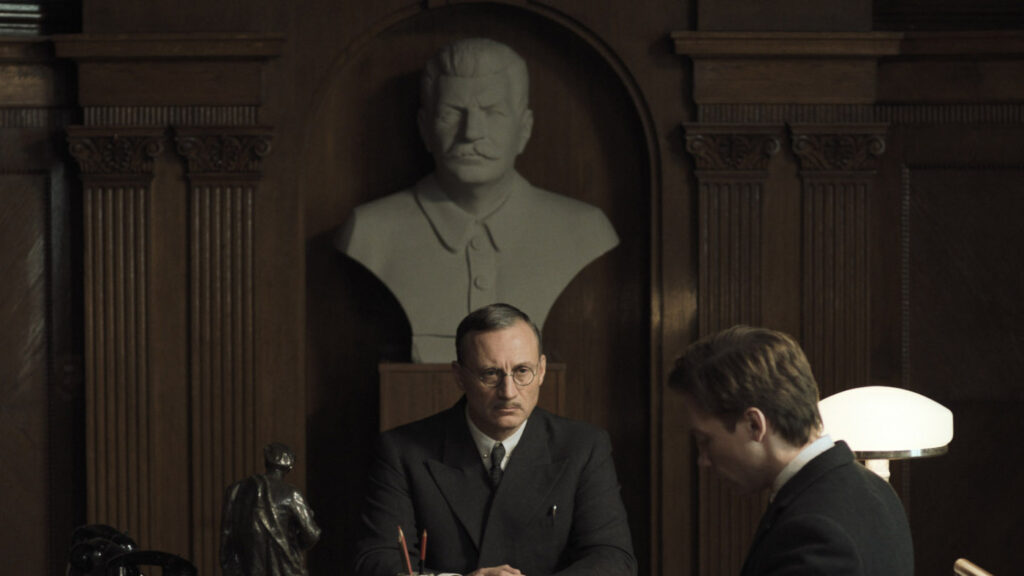
Ukrainian director Sergei Loznitsa’s 118 min Two Prosecutors ( Zwei Staatsanwälte /Dva prokurátoři)takesviewers back in time to the Soviet Union of 1937 where newly appointed local prosecutor Kornev receives a letter written by an unjustly imprisoned man in his own blood, on being harassed by agents of the secret police. Besides bringing him to the attention of the authorities, his activities also cause him to question his undying faith in the regime. Loznitsa’s adaptation of Georgy Demidov’s eponymous novel are filled with the ghosts of Gogol and Kafka, meticulously staged geometric camerawork, and above all the many symptoms of totalitarianism that seem to reappear in history over and over again.
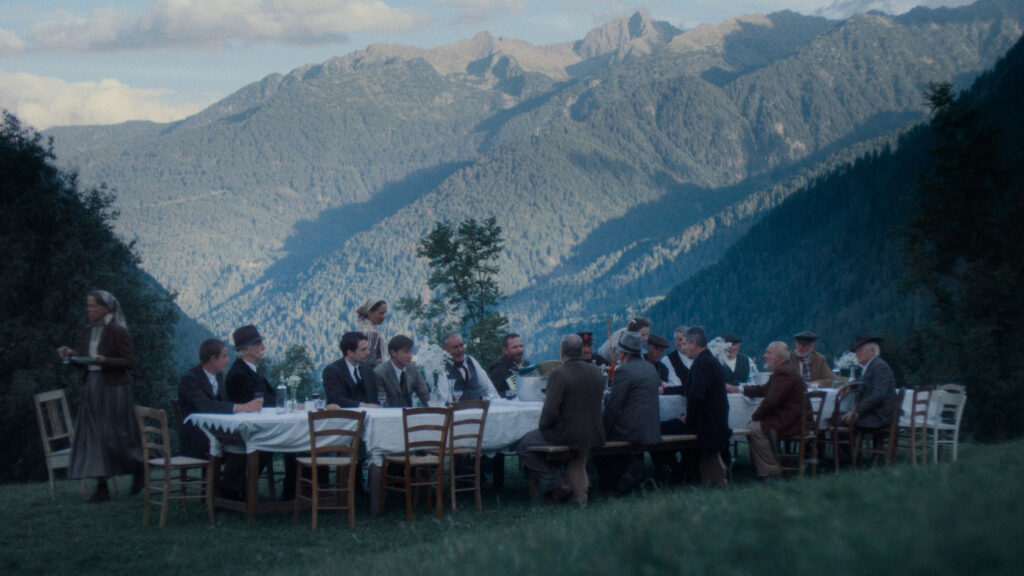
Venice Grand Jury Prize Winner Bolzano, Trentino-Alto Adige, Italy born Maura Delpero’s 2024, 119 min richly rewarded Vermiglioin her second feature returns to the time and place of her father’s childhood. The end of World War II is in sight, including in the village of Vermiglio high in the Dolomite mountains of Northern Italy. However, the sudden arrival of deserter Pietro shakes up the quiet routine of the local teacher’s family with fateful influence on his eldest daughter Lucia. “In this carefully composed, breathtaking opus, the intimate and the epic are locked in a natural embrace. Encounters with dignified beauty are often muted, as is the evocative depiction of Vermiglio and the plight of its inhabitants.”
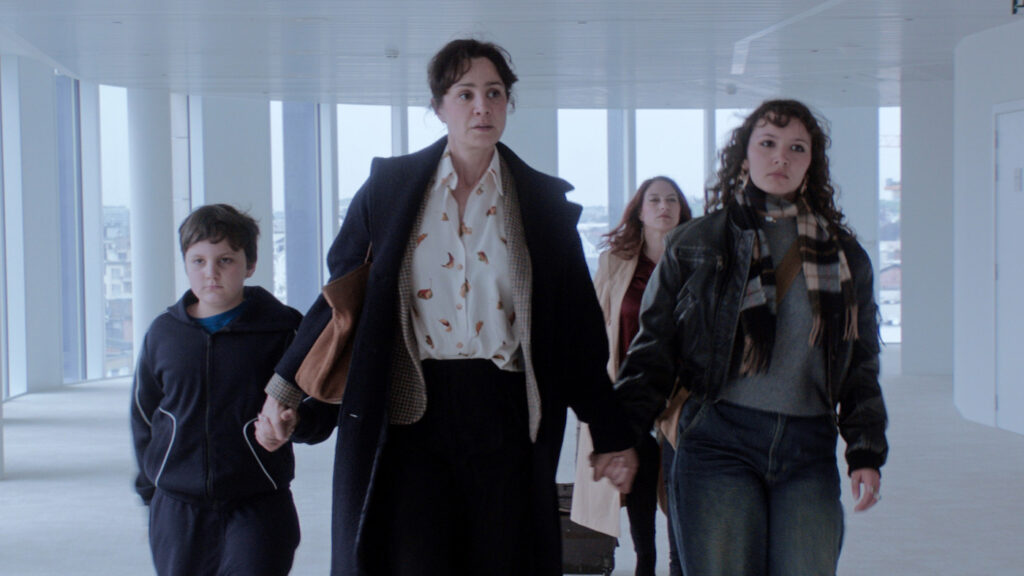
Directors duo Charlotte Devillers & Armand Dufeys’ Belgian fare the crisp 78 min We Believe You (Veríme vám / On vous croit)is the tale of Alice and her two children in court to see whether they will stay in her care or have to be returned to their father. “We Believe You captures, with haunting precision, the moment when personal testimony comes into conflict with the soulless mechanisms of justice. Working with minimalist expressive means for maximum impact and set in one room with several characters and points of view, the film unspools a drama about responsibility, fear, motherhood, and mistrust.”
South Korea’s much feted director Hong Sang-soo’s 108 min What Does that Nature Say to You (Co ti šeptá příroda / Geu jayeoni nege mworago hani)featured at the Berlinale“working with motifs in the style of Eric Rohmer and Woody Allen” follows an aspiring poet in his 30s, on an unplanned visit to his girlfriend’s family. Here, he confronts “situations that alternate between torturous banality and bitter absurdity, with conversations that lay bare the values of the middle-class household, through the film’s subtly ironic gaze.

Indeed, Karlovy Vary International Film Festival’s impressive and immersive line-up promises a veritable fiesta for the film buffs. Let’s toast the contemporary cinemas of the world as we appreciate and assimilate the latest trends, thematic texts, the vivid visual narratives to seek to engage, educate, enlighten, empower and entertain us as the Seventh Art always has done and does. Viva KVIFF. Prosit!

S VISWANATH is a veteran film critic who officiates as JURY at several National & International Film Festivals. He deputises as CHIEF CINEMA CURATOR/PROGRAMMER & CREATIVE ADVISOR for Bengaluru International Film Festival (BIFFes). He also curates & advises on the selection of shorts & documentaries for Bengaluru International Short Film Festival (BISFF). Mr Viswanath is the author of “RANDOM REFLECTIONS: A Kaleidoscopic Musings on Kannada Cinema”.



Leave a Reply