
S Viswanath
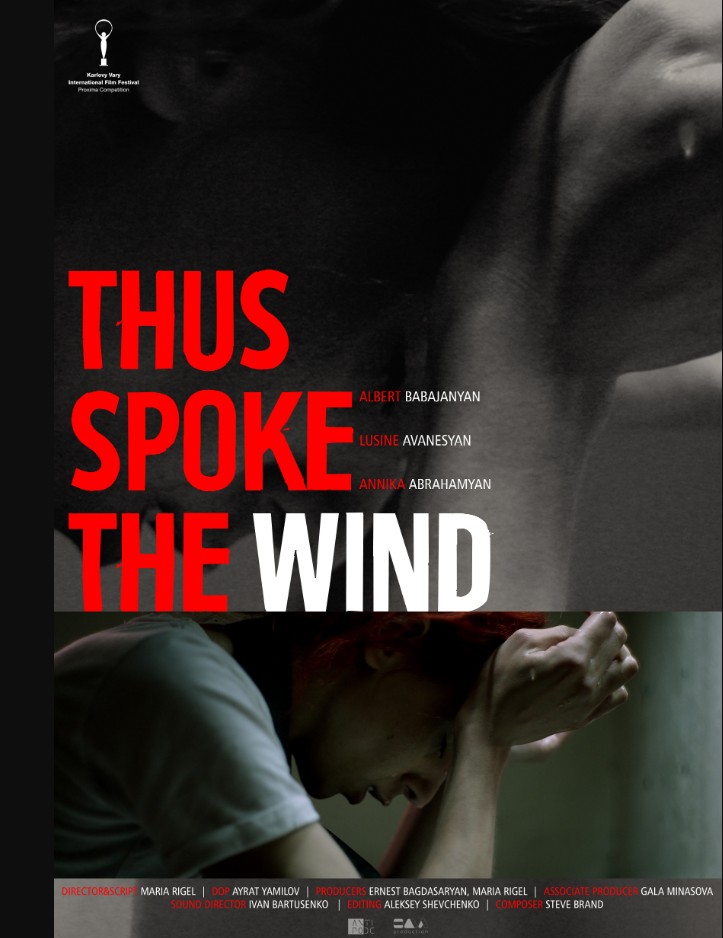
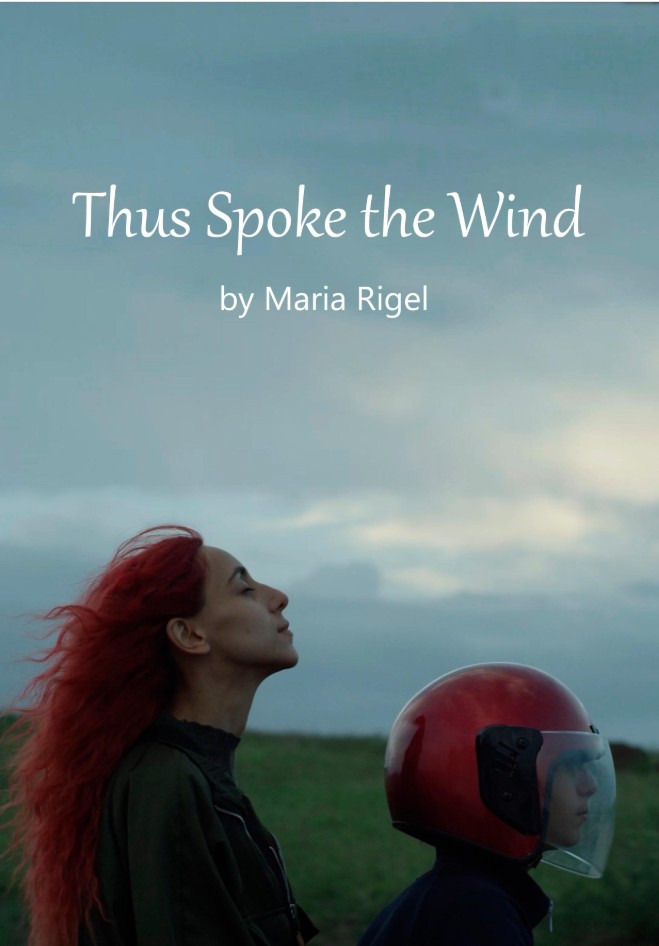
Featured in the Karlovy Vary IFF/ Proxima Competition (World Premiere) 2025 the 92 min debut filmThus Spoke The Wind(Ayspesasatcqamin)by Russian-Armenian director Maria Rigel is a moody, melancholic, meditative and meticulous study of life and happenings in a remote Armenian village.
Despite the tranquil quietude and frozen in time atmosphere that pervades its vast expansiveverdant hilly grasslands the isolated village is cosily cocooned in, an undercurrent of spooky malevolent ominousnessand dormant violence simmers on surface across wafting through its large tract breezing across like whistling wind that keeps blowing across its pristine plains.
Here the inhabitants do not take kindly to each other.Affected by despondent, dreary sense of loneliness, perpetually sad, suspicious of one another, clinging and clutching to turbulent past, defiant of any change, lacking a sense of belonging ever dreadful of displacement. They go about their diurnal duties in rather ritualistic routine manner.
The sense of disquiet can be garnered in this exchange.“They say it can be invisible. Things that can’t be seen by human eyes,” confesses the film’s principal protagonist young,timid and vulnerable prepubescent teen, Hayk, a victim of brutal bullying by those elder than him, conversing with the elder youth.
The two are scouring the mountainous stretch that lies before them through the night vision telescopic lens mounted on rifle as a feline darts hither and thither unaware of grave peril under human watch. It is through his innocent eyes and incursions he suffers in the course of the film on his person and psyche we experience and engage in the nifty, nuanced narrative that unfolds before us.
This short exchange between the young, troubled and taciturn Hayk, fitfully confronting the challenges and complexities of cold, lonely rural life and external influences from beyond and his comrade in hunting arms as the film’s title streams across the screen, virtually sets the tone, tenor and tensile socio-political drama that invites us in a measured, minimalist almost menacing manner.
Taking a listless, languorous, lethargic and contemplative storytelling pace, which, at times, seemingly teasing viewer’s patience to be fully invested and engaged in the happenings around, the film vividly brings to fore how young Hayk is a hapless victim of both vicious physical and virulent psychological violence by fun seeking adolescents who indulge in merry making at his expense and how he stoically steels himself from it all internalising the injuries being inflicted upon him virtually daily basis.
The whiff of why and where forth this eerie menace stems from is related in the way young Hayk is hounded and harassed by the unruly village lads.Reticent to a fault, abjectly shy, withdrawn and stoically silent suffering the indignities they inflict upon him – be it at soccer game or force feeding him with alcohol stupefying his senses in fun and frolicsome manner. These portend as a village’s resident woman laments inferring to his mother “every time she comes here something bad happens. The whole town is talking about it already.”
The reference may be about his young and abrasive, unconformingmother Anahit. She surprisingly returns after being away a long time only to stir a hornet’s nest which leads to fatal consequences later on in the film. However, subtly and metaphorically “the bad happens” bespeaks of inner workings of Hayk’s psyche silently suffering and undergoing physical trauma being inflicted upon him by the boys around him, whose pent up steam is let out when he shoots down the injured mare ending its misery that his mother (who refuses to shoot it) had taken out without aunt’s permission.
The lad, who lives under the benign care of his busy as a bee business entrepreneurial independent aunt Narine running a highly successful bakery in the village shepherding a group of women in her employ who knead and roll the dough preparing it for baking into bread.
He lends a helping hand running various errands for her as also as a stable boy taking meticulous care of the equine which his aunt owns and exercises it when not busy with running the establishment and finds solace in its mute company.
How psychologically the boys are violent in nature can be witnessed later on in the film when the group in the car chances upon Anahit walking across the field and chase her driving behind stalking while the driver asks “should I run her over?” “Isn’t that Vahe’s girlfriend? “Wonders another, as they gleefully harass her stating “let’s scare her. Should we freak her out. I’ll make the redhead run. I’ll hit her now. How did she end up here. Run away, run away. We can flatten her. Run ….” even as terribly frightened and pitifully petrified Anahit scampers for safety.
Having fled from traditional and conservative ridden village being given to her wanton ways after being frowned upon by its inhabitants, the defiant and haughty Anahit returns back only to be questioned worrisomely and warily by her aunt who goes to pick her up at the bus stand “Why did you return? To take Hayk away” even as she grudgingly concedes “Yes, I’m happy,” when her niece ripostes her with the poser “Are you happy I’m back?” as they head to the village.
The aunt further interjects “Why didn’t you come to visit me?” to which the niece replies “Don’t you understand why?” “What did you tell Hayk? Does he know where I’ve been?”The aunt replies “Others explained it to him”Further, on return home, as she bathes her niece, the aunt warns her “it is better if you don’t act like you always do or Hayk will have problems.Do you know what people think of you?”to which she sneers spewing with full force of the sarcasm “Sure. But I like it. There is honesty to it.”
Sure enough we witness what happens to Hayk later on who is a silent and mute witness to the goings on around his mother as also how the various things in his own life are shaping up his psyche. As to what was explained becomes clear when a young teen’s mother furiously fells Narine with her verbal fusillade “now she is trying to seduce my son. People like her bring us shame. That’s the last thing I need. For my son to get her pregnant. This will not end well,” the unseemly episode of his mother’s nocturnal rendezvous with the boy he witnesses through the telescopic lens of the rifle with him making out in the recess of the rocks, even while another factory worker accuses her of theft saying “the new girl took it, that’s what I think.” “To tell you the truth, I don’t like her either,” concurs the co-worker.
Why are village women so wary of Anahit?Why forth Anahit herself conducts the way she does with a nonchalant attitude to herself, her kinsfolk and the village at large? The answer is indirectly revealed during an encounter Anahitis having wherein she asks the man during their transactional night “Will you tell me about the war? What did you see” The man replies “a lot of brutal stuff. I d’s better not tell. You don’t have to bear that pain, too. It’s very hard and terrible. And it’s a burden you carry alone.”
The ‘war’ being referred to could be constructed as to conflict between Armenia and Azerbaijan revolving around the region of Nagorno-Karabakh, internationally recognised as part of Azerbaijan but populated by ethnic Armenians. This led to decades of intermittent conflict, including two major wars and numerous border clashes.
Moscow born Maria Batova in 2015 graduated from Lomonosov Moscow State University (Faculty of Philological) and in 2017 – Gerasimov Institute of Cinematography VGIK (Faculty of Screenwriting & Film Studies). Currently, working as lecturer of literary and drama and studying in postgraduate studies, states “through the story, I wanted to symbolically reflect the clash between the archaic mindset of a traditional society and the quiet rebellion of a younger generation.”
Maria, who has sought to emulate the eminent Russian auteur Sergei Parajanov’s film making style and cinematic technique also populates her film with visually striking frames providing a feel of surrealism, religious iconography (a scene in the film has the statue of Jesus Christ) folklore melded with historical contexts, makes the film, visually compelling auteur work.
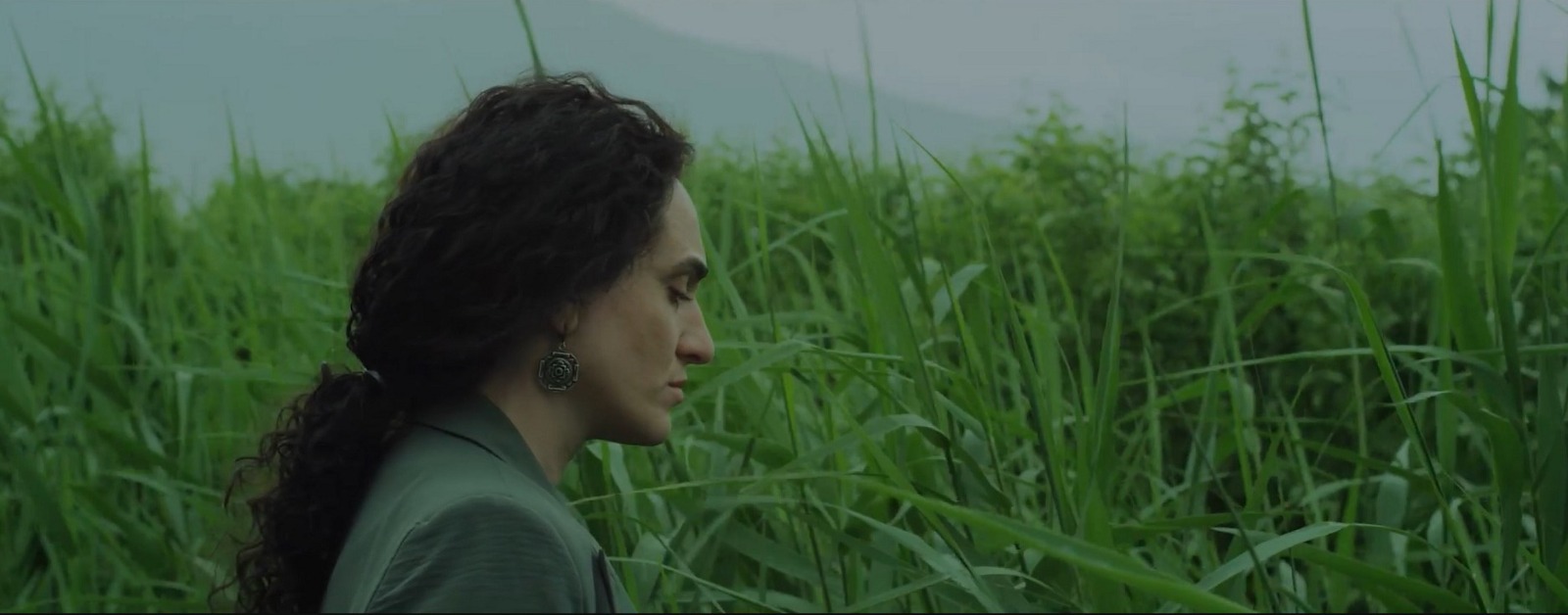
In this she is gloriously and superlatively aided by Ayrat Yamilov’s evocative and captivating cinematography as he captures the vast expanses to provide the sense of space as also close shots of the people, with his visual compositions compounding the eeriness of the milieu, the mood and the inner workings of the people’s mindscapes.
The camera captures the verdant mountains of Armenia in all its resplendent glory as also the dreary dismal weather which is persistently gloomy and uninviting, with the locals too show being very oppressive in nature in keeping with the place they are cloistered in.
He efforts are further amplified by mesmerising and magical background score and soundtrack by American composer Steve Brand that establishes an ominous mood through the constant hustling and distant thrumming of the wind right through the film’s course.

While Maria Rigel’s film is highly commendable and praiseworthy as a visually poetic and poignant drama, it however, suffers being tad underwritten by the aspirational director who has relied extensively on appealing to one’s sensory approach to the theme at hand, at the expense of more easily assimilative storytelling.
While cementing herself as a promising prodigious talent on the Armenian cinema marquee the film which almost is incomprehensible for non-native audiences leaving them a bit confounded and disengaged from an otherwise highly aesthetic and enterprising cinematic work.
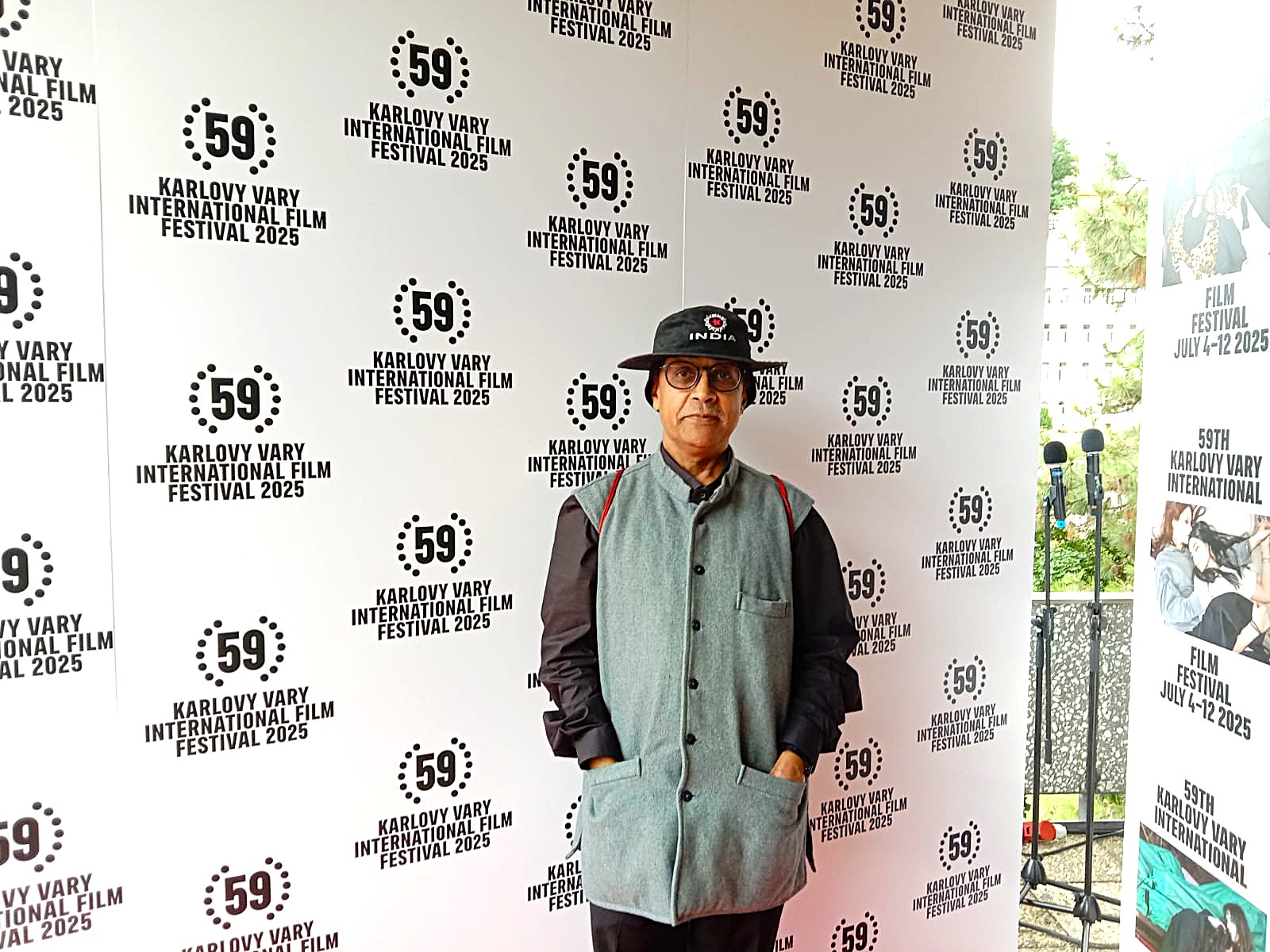
S VISWANATH is a veteran film critic who officiates as JURY at several National & International Film Festivals. He deputises as CHIEF CINEMA CURATOR/PROGRAMMER & CREATIVE ADVISOR for Bengaluru International Film Festival (BIFFes). He also curates & advises on the selection of shorts & documentaries for Bengaluru International Short Film Festival (BISFF). Mr Viswanath is the author of “RANDOM REFLECTIONS: A Kaleidoscopic Musings on Kannada Cinema”.





Leave a Reply