
S Viswanath

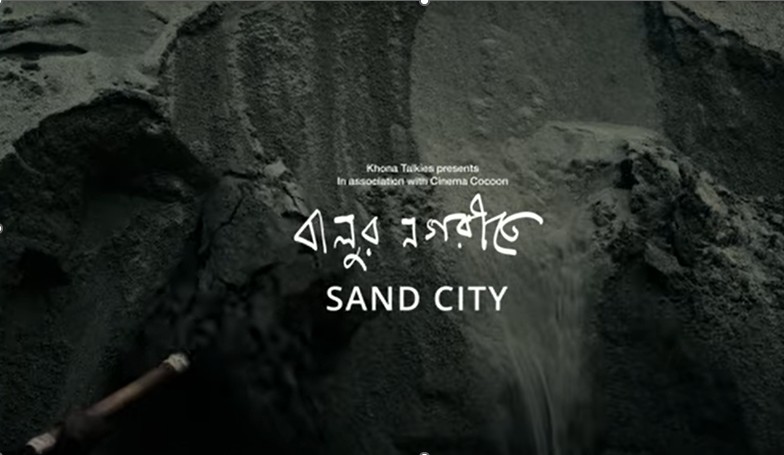
Worthy winner of US$15,000 Proxima Grand Prix Prize at the 59th Karlovy Vary International Film Festival, the 98 mins Bangladeshi film Sand City aka Balur Nagorite by young and promising debutant filmmaker Mahde Hasan holds a reflective and ruminative mirror on the modern phenomenon of ‘urban angst’.
Measured and minimalistic paced. With almost no dialogues except certain occasions. With mimetic, incidental sounds providing the film its aesthetic and realistic mode. The non-linear film tracks the grey and granular lives of two isolated souls – Hasan and Emma.
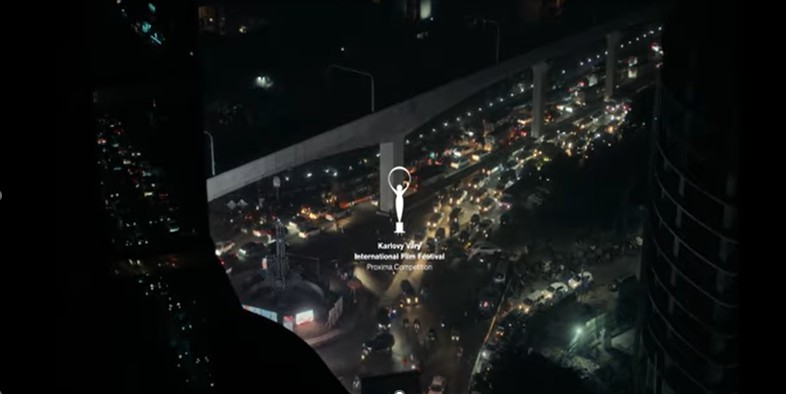
The two are lost in the concretised labyrinth of a City furiously engaged in fast paced growth and development. Here high rise buildings are universal new normal. They chart their daily routines carried about by the chaos of densely populated big City where people and machines madly sparring for space. Not to forget the looming and sneaking monstrous flyovers adding to the City’s cacophonic claustrophobia.
Juxtaposing the alienated and isolated lives of two of its principal protagonists – Hasan, working in a sand washing and glass manufacturing plant until his theft is discovered. And Emma, in a nondescript modern office, being ethnic minority facing constant racial harassment at her apartment with graffiti inscribed on her scooter “aboriginal slut.”
Mahde’s Sand City while capturing the hustle and bustle of countless faces, their hurried pacing up and down roads, proverbial slums and high-rise housing projects,flyovers, constant construction activity, speaks of a serious urban malaise.Here communication and connection between humans is lost. Each trying to find some semblance of sanity and connectivity with their own individual surroundings they are boxed in.
The various framing of the two in places such as the lift, their individual apartments, the buildings under construction, the looming sand pilings, etc are telling visual vignettes of the shackled and shuttered lives they are living. No wonder to compensate for the absence of human connect they find companionship in the animals they rear at their homestead.
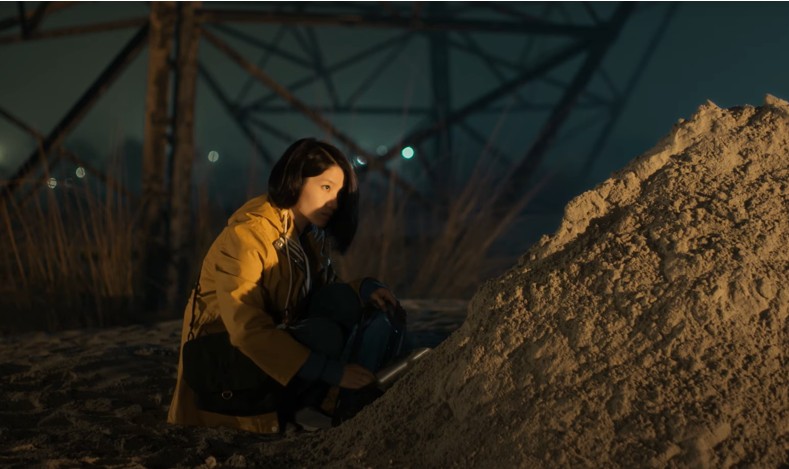
If Hasan has his rabbit or bunny flatmate for company, besides of course his collectibles of discarded slippers and materials for his glass making plans. Emma, on the other hand, finds solace and company in the two kittens that ‘purr’fectly share her flat’s residency. This until she finds a severed finger with nail painted red in the wet sand she has scooped for her flat’s potted garden and kitten litter with which she gradually develops a strange physical bondingto satiate all her physical needs and pleasures.
Mahde’s Hasan and Emma are among the scores of urban survivalists living by the day and the now. Though experiencing and virtually going through similar angst and anxiety, the two are, however, blissfully unaware of each other’s existence. Except at a traffic half, or when Emma loses her mobile phone near the sand she scoops, later ferreted up by Hasan on his nocturnal thieving rendezvous and film’s final moments when Hasan is being ferried to hospital following fiery mishap at home and Emma picks his rabbit from kerbside of the building he resided.
Hasan’s life’s ambition is to become a glass factory owner. Singularly in pursuit of this booming business he keeps spiriting away lime stone, silicon and soda ash while watching videos on how to make glass at his homestead. His fantastical obsession disastrously resulting in fiery destruction wounding him as wellin the process and subsequent demolition of the apartment following the fire.
Emma, meanwhile, is busy following up on requirements of acquiring the visa for her tojoin her family back home forsaking the City in favour of her quaint familiar and safer hometown. While lonesome Emma occasionally provides status report to her sister back home, Hasan, on the other, has his mother, being taken care of at an asylum, who he meets occasionally to gets the status report on her progressive cure and take her back home.
It may be noted that the Capital City Dhaka is one of the most densely populated metropolises being the epicentre of heavyindustriesleading to irreparable impact on the City’s environment. The sand from the City’s four heavily polluted rivers – Buliganga, Balu, Turag, and Sitalakhya – constantly extracted through unregulated or illegal mining by the industry heavily relying on the vital granular source for its thriving industrial production of diverse products.
Shot almost in dark, night times cinematographer Mathieu Giombini (who has worked with Francois Ozon, Michel Piccoli, Mahamat-Saleh Haroun, and Manoel de Oliveira) succinctly captures the bustling and bursting City in all its contours and colours, nooks and niches, as also film’s principal protagonists – Hasan and Emma – as they commute crisscrossing through byzantine traffic heavy and flyovers saddled roads and avenues to work and home and occasional nocturnal tryst they indulge in –theft of sand for their respective requirements.
Mathieu Giombini’s captivating caressing camerawork is further embellished and enhanced by the superlative haunting and synchronous sound design by Oronnok Prithibi that captures the piercing and dissonant sounds of the City in perpetual motion and construction mode.
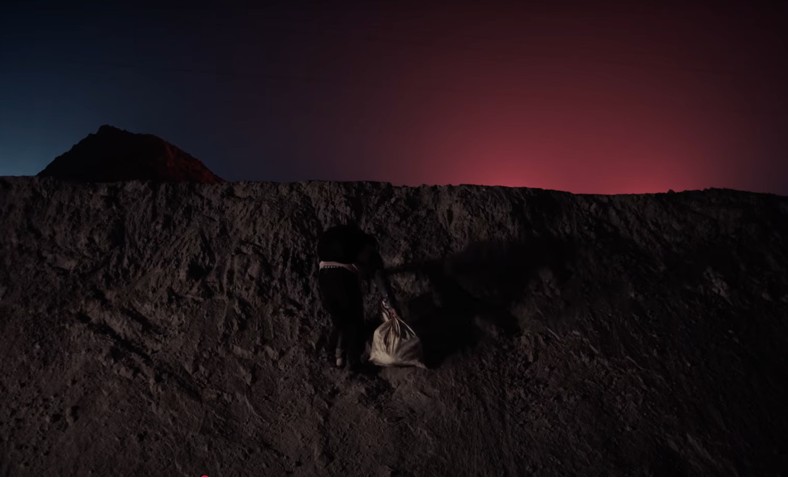
This visual framing and narrative composition helpdirector Mahde to bring with full force abject sense of anxiety, utter unease, inner turmoil and apprehension the two are undergoing living in a soulless city that has driven its citizenry into a state of total and absolute alienation.With attendant factors like crowdedness, noise, and furious fast pace of man and machines moving around them compounding their physical and psychological sufferings further.
Through effective use of sand as metaphor to the brittle and almost grainy existence the two are leading going through motions of their existence with diurnal activities they ritualistically indulge in, director Mahde subtly and deftly and nuanced narration evocatively conveys out the thematic concerns of Sand City –isolation, sense of loss, physical and personal desires and instability the Concrete Utopia has ingrained in its citizenry through two principal players.
The only connection between the two stemming from their ardent dependence for the precious and expensive granular material – the silicon or sand.As Satej, who helps Hasan get his sack of sand states there is “no shortage of sand in this City. It is less investment, huge profits. There is no escaping from the sand, my brother. For, now I can’t live with sand and I can’t live without sand,” epitomising the mundanity and mutual affinity to silicon material the two thirst and thieve for.
The symbiotic nature of their loss, loneliness and longings are juxtaposed through constantly alternating between the two in a rhythmic pattern and occasional framing of the two at busy streets teeming with trafficfleetingly cross each other’s paths, Mahde succinctly brings in the ying and yang interplay given that He and She is dealing with to provide polar opposites.
The international jury that picked the film appreciatively observing and effusively praising it as “a realm unknown, where architecture breathes and silence screams. Time drips sideways in this fractured hourglass, and colour spills like memory. In Sand City, cinema becomes a trembling map of the strange, abandoned, and intimate at the edge of sense, the distinctive narrative where silence and loneliness unfold as a deeply human language.”
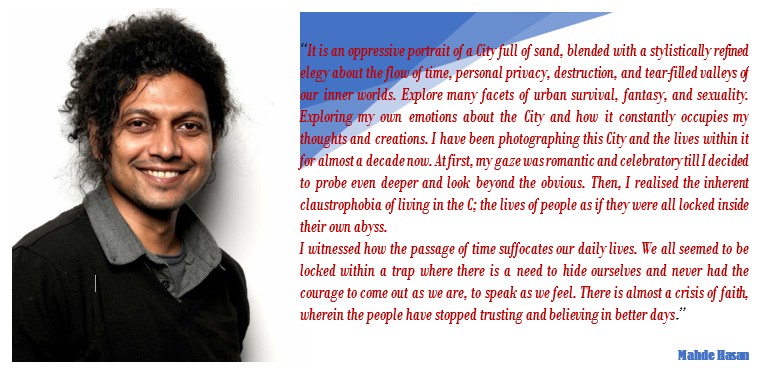
Incidentally, Mahde Hasan’s Sand City received €8,000 (approximately Bangladesh Taka 800,000) development grant from CNC at the 16th edition of Locarno Pro’s Open Doors Platform in Switzerland which facilitated the filmmaker’s stay in Switzerland for two months to complete the screenplay. Mahde also won an award from Winterthur International Short Film Festival, in partnership with Villa Sträuli for two-month residency.
In sum, languid and languorously paced to provide a pleasant rhythmic texture to the film supplemented with vivid vivacious visuals, Sand City, through its kinetic kaleidoscopic tale of two souls lost in perpetual transit provides a thought-provoking searing and indicting vivisection of a City caught in the throes of cataclysmic transformation surmounting the mountain of modernity.
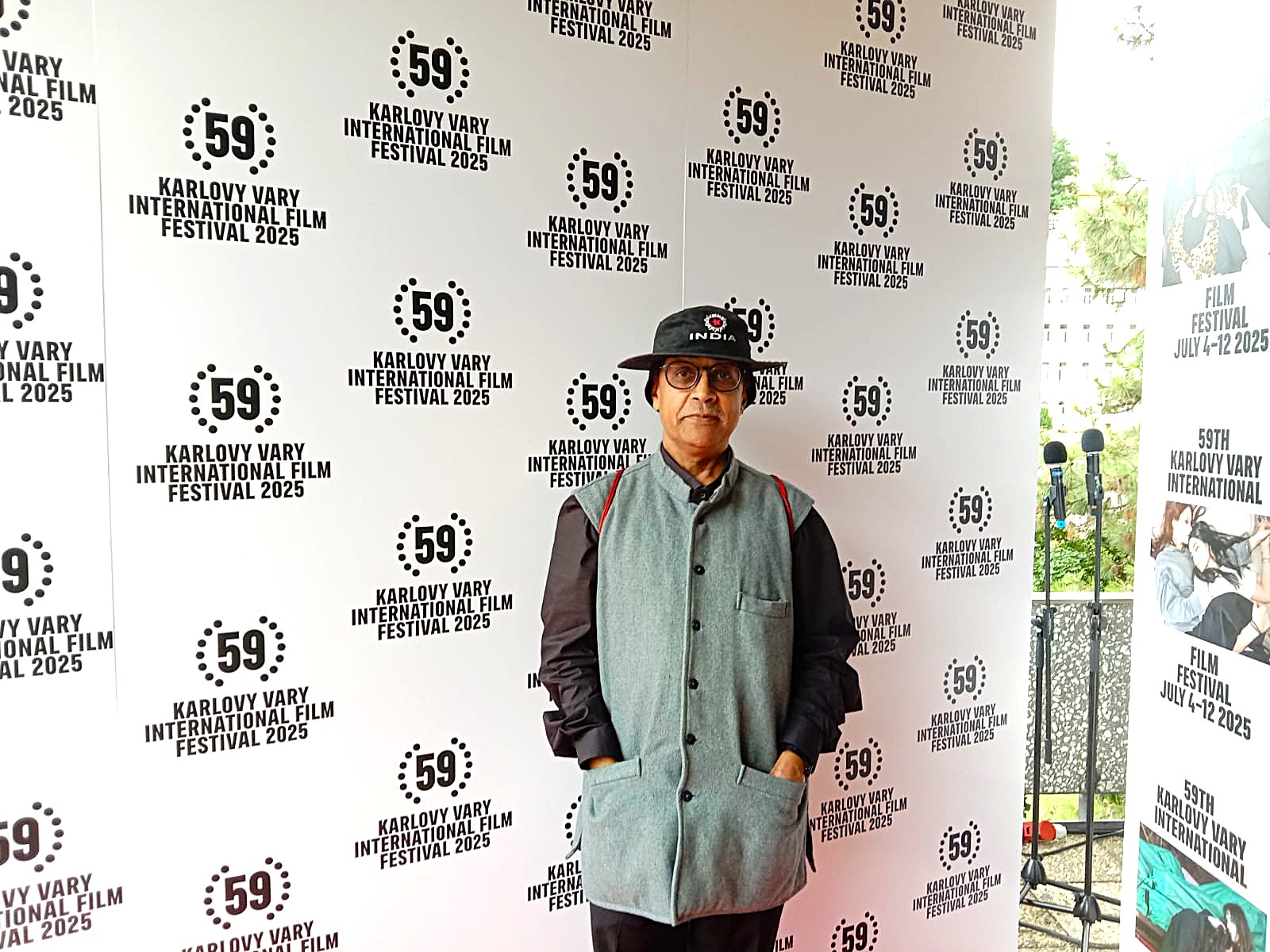
S VISWANATH is a veteran film critic who officiates as JURY at several National & International Film Festivals. He deputises as CHIEF CINEMA CURATOR/PROGRAMMER & CREATIVE ADVISOR for Bengaluru International Film Festival (BIFFes). He also curates & advises on the selection of shorts & documentaries for Bengaluru International Short Film Festival (BISFF). Mr Viswanath is the author of “RANDOM REFLECTIONS: A Kaleidoscopic Musings on Kannada Cinema”.






Leave a Reply