
S Viswanath
With the 50th Edition of Toronto International Film Festival (TIFF) round the corner it is time to take a look at TIFF’s L’affaire de L’Amour with Indian cinemas.
Given the large presence of Indian diaspora in Canada, more specifically in Toronto, with Greater Toronto Area estimated to house largest Indian community numbering 6 lakh, playing significant role in the City’s and country’s cultural and political landscape and festival’s strong focus on providing platform for Asian films, it is in fitness of things, every edition of TIFF has handful of Indian films on screening scroll coveting cinephile audiences’ attention from far and wide.
From pure play art house and independent film circuit cinemas to commercial ones have equally found favour with seasoned and professional TIFF curators engaged in bringing the best of films to showcase at the prestigious calendar cinema carnival to celebrate and cherish them at the respective sections they find themselves in.
Besides enabling Indian films reach out to a wider global audience and international film market, TIFF also fosters connections between Indian and Canadian filmmakers from co-production to other avenues of mutual cooperation and two-way exchanges on the movie marquee.
With the mandate of discovering and providing an appropriate platform and visibility to new talents TIFF has helped many Indian independent filmmakers find pathway to global acclaim. Especially over the last 25 years, North America’s celebrated film festival, while continuing to assimilate mainstream Bollywood cinema in keeping with South Asian diaspora’s filmi tastes, in the multi-cultural Toronto, has become the de facto for a for aspiring and talented Indian directors, both young and seasoned, in crafting and making films of a different timbre.
TIFF, over the years, has featured films such as Reema Kagti’s Superboys of Malegaon, Kiran Rao’s Laapataa Ladies, Nikhil Nagesh Bhatt’s Kill besides Dear Jassi by Tarsem Singh which also bagged an award. Other films include Marathi film A Match (Sthal) by Jayant Digambar Somalkar, Karan Boolani’s Thank You For Coming, Dil Hai Gray by Susi Ganeshan, Vasan Bala’s The Man Who Feels No Pain, The Field by Sandhya Suri, Kyoyang Ngarmo (The Sweet Requiem) by director-duo Ritu Sarin, Tenzing Sonam organisers of Dharmshala Film Festival, Ship of Theseus by Anand Gandhi, Shivajee Chandrabhushan’s Frozen, Ashutosh Gowarikar’s Lagaan: Once Upon a Time in India, Marana Simhasanam by Murali Nair and Dev Benegal’s Split Wide Open.
Among very many others since TIFF took roots and grew in size and stature over these five decades one has seen Suseenthiran’s Azhagarsamiyin Kutharai (Azhagarsamy’s Horse), Lijo Jose Pellissery’s Jallikattu, Geethu Mohandas’s Moothon (The Elder One), Mani Ratnam’s Iruvar and Kannathil Muthamittal, M Manikandan’s Kakaa Muttai.
In 2012, TIFF chose Mumbai as focus of City to City hosting nine titles, besides Kashyap’s Gangs of Wasseypur, other films being Anand Gandhi’s Ship of Theseus, Ashim Ahluwalia’s Miss Lovely, Manjeet Singh’s Mumbai Cha Raja, Hansal Mehta’s Shahid, Mohit Takalkar’s The Bright Day, Dibakar Banerjee’s Shanghai, and Peddlers.
Anup Singh’s Qissa – The Tale of a Lonely Ghost, Ritesh Batra’s The Lunchbox, Vishal Bhardwaj’s Maqbool, Meghna Gulzar’s Talvar, Goan filmmaker Laxmikant Shetgaonkar’s Paltadacho Munis (The Man Beyond the Bridge), Murali Nair’s Marana Simhasanam (Throne of Death), Shivajee Chandrabhushan’s Frozen, Dev Benegal’s Split Wide Open, Aamir Bashir’s Kashmiri film Harud (Autumn), Sidharth Srinivasan’s PaironTalle (Soul of Sand), Gitanjali Rao’s animated feature Bombay Rose, Shilpa Ranade’s Goopy Gawaiya Bagha Bajaiya.
Then you had Nandita Das’ Manto, after her directorial debut Firaaq, Ritu Sarin and Tenzing’s Dreaming Lhasa, Rima Das Bulbul Can Sing, Shonali Bose’s Amu in 2005, Margarita, With a Straw, The Sky is Pink, Konkona Sen Sharma’s A Death in the Gunj, writer-director Bornila Chatterjee’s The Hungry, Deepa Mehta’s Fire, Earth, and Water. Needless to say, Deepa Mehta’s Bollywood/Hollywood, Heaven on Earth, Midnight’s Children and Beeba Boys.
Mira Nair’s Salaam Bombay!, Kama Sutra: A Tale of Love, The Namesake, BBC series A Suitable Boy, Monsoon Wedding, Santosh Sivan’s The Terrorist, Malli & Asoka. Everybody Says I’m Fine byMumbai actor Rahul Bose, Ritwik Pareek’s piercing social satire Dug Dug and so on.
This time around, TIFF@50 is presenting and showcasing a slew of films under its various curated flagship sections with multiple screenings of these films.
The TIFF favourite Anurag Kashyap, who holds the record for maximum number of his films being featured such as That Girl In Yellow Boots, Michael, Gangs of Wasseypur, Mukkabaaz, Manmarziyaan, and Paka: The River Of Blood, this time around sees his latest Bandar (Monkey In A Cage) featured in the Special Presentations Section.
The 140 min feature spotlights on the modern day topical thematic concern of the ripple effects of #MeToo in digital India, posing serious posers about how one navigates the increasingly blurry frontier between our public and private lives. Spiced up with all the staple Mumbai’s Bollywood masala ingredients the suspense film of shifting alliances brings to screen a cupid saga, riddled with lies, and responsibility that takes nothing for granted.
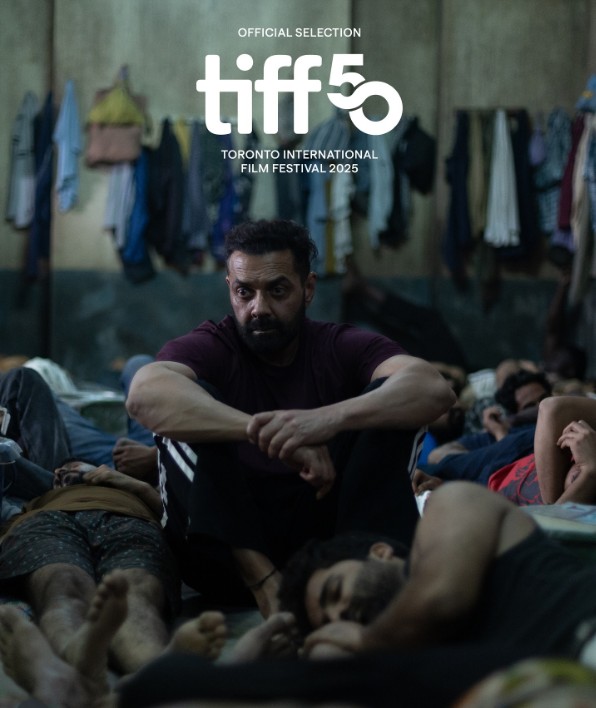
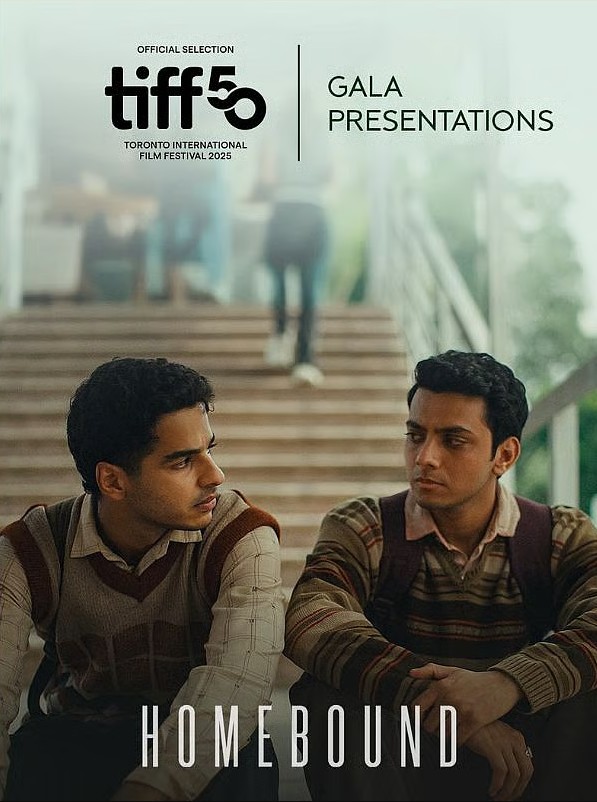
Joining him on the Indian line up is Neeraj Ghaywan with Homebound under Gala Presentations which incidentally boasts of legendary American producer and filmmaker Martin Scorsese as one of executive producers of the film.
The film, from celebrated Richa Chadha & Vicky Kaushal starrer Masaan director, follows two young best friends – one a Dalit and the other a Muslim, aspiring to land up a police job, to rise in status and dignity, and better their financial security, depicts a clash between youthful ambition and bracing political realities. While Shoaib is saddled with a physically challenged father, Chandan, on the other hand, dreams of building a house for his parents so that his mother can peacefully retire.
Boasting of the proverbial Bollywood ingredients the film highlights the humiliation they suffer due to religious and caste-based bigotry which, in the process, threatens to crush their career aspirations to rise up in social esteem as also even their precious friendship on the brink.
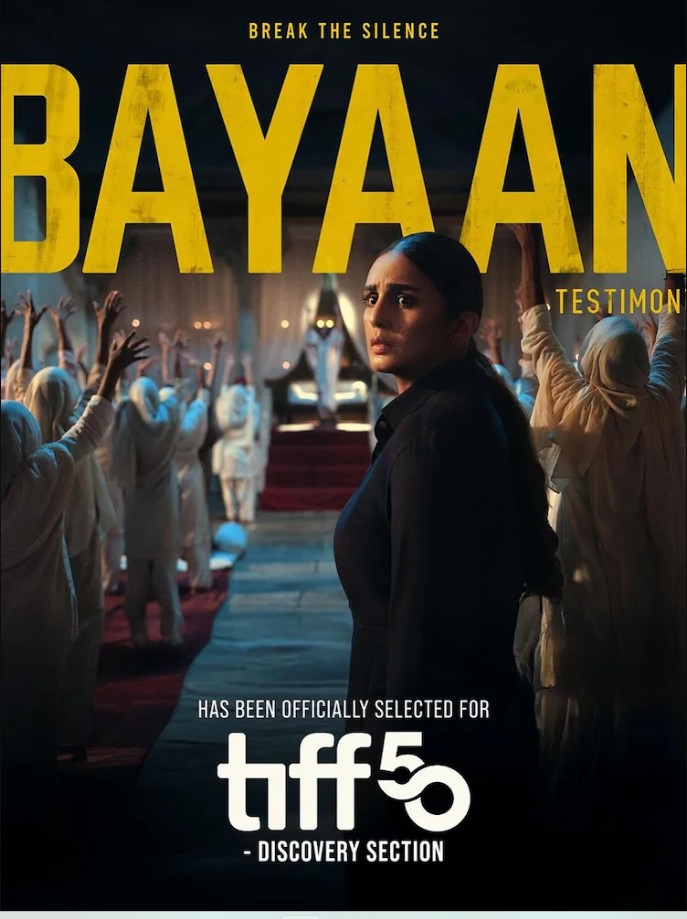
The festival’s Discovery section features Bayaan by Bikas Ranjan Mishra, set in a small Rajasthan town, centres round a rookie detective Roohi from Delhi who battles all forms of system power and political dynamics seeped in corruption and resistance to investigate the powerful and revered cult leader charged with sexual abuse via an anonymous letter. How Roohi has to wade through the byzantine power corridors to conduct her investigation facing hurdles at every step she takes forms the fulcrum of the film with a larger social homily.
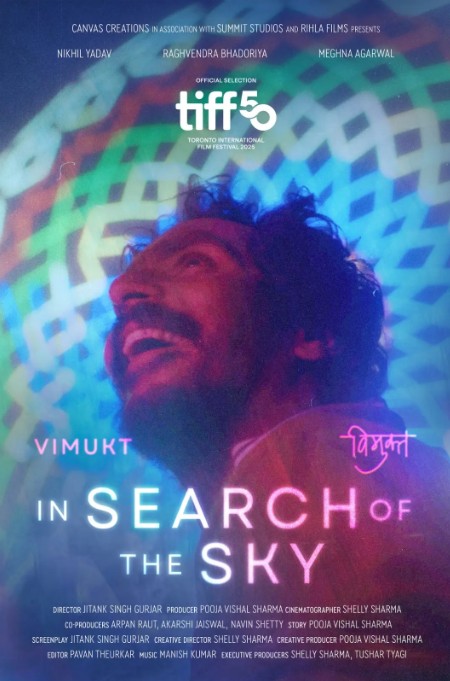
Vimukt or In Search of The Sky by Jitank Singh Gurjar being showcased under Centrepiece category is described as a moving endurance tale of faith, poverty, and familial obligation. It speaks of how an elderly couple, facing old age and at risk of losing their land, all while caring for a mentally challenged adult son, resort to an impossible inevitable decision as they confront faith, poverty, and familial obligation. The husband hauls bricks at a kiln while his wife supplements their income making and selling cow dung cakes while dotingly on their mentally challenged adult son, Naran.
Suggestions and options pour in from people as to how to tackle their situation by doing away with Naran even as a businessman covets the family’s land, while another counsels a pilgrimage to Maha Kumbh Mela, to find a solution to their dilemma. How the couple are tiringly tested by the crushing weight of poverty, redemptive force of love, and quiet resilience of personal faith forms the film’s moving and highly emotive social saga.
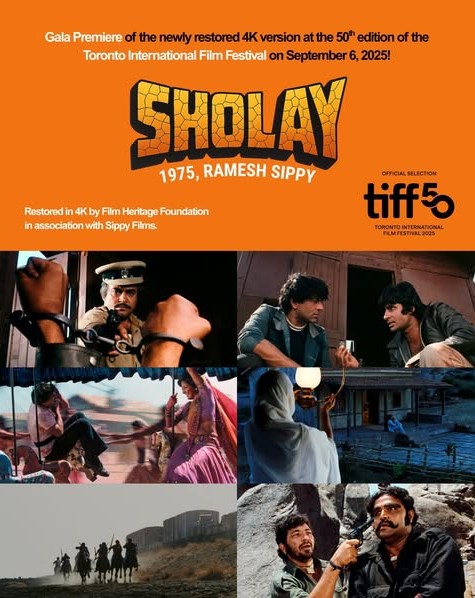
Like TIFF, which is feting its 50th year, so too is India’s iconic box office classic Sholay by Ramesh Sippy. The film, inspired by Sergio Leone’s 1984 classic western Once Upon A Time In America is being featured under the Gala Presentations following its restoration by Film Heritage Foundation in collaboration with Sippy Films. The film is sure to take audiences on a nostalgic trip down memory lane as they watch Jai and Veeru take on Gabbar Singh and his men while Basanti, the tangewali covet film buffs with their mission impossible to bring the much-feared Gabbar to book and on his knees before the Thakur who has tasked them with it.
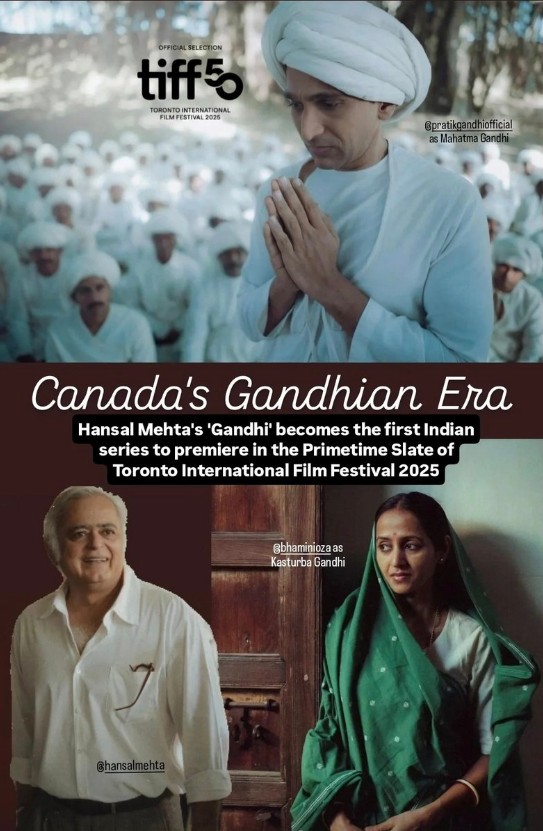
Under the Primetime serial TV storytelling Section, you have Hansal Mehta’s Gandhi which brings to screen the formative years and legal career of Mahatma Gandhi as a civil rights icon and champion of Indian independence. Based on the books Gandhi Before India and Gandhi: The Years That Changed the World by Ramachandra Guha, the series brings to life how Gandhi became a global symbol of resilience, whose self-discovery and curiosity as a young barrister about the world would lead him to forever alter it.
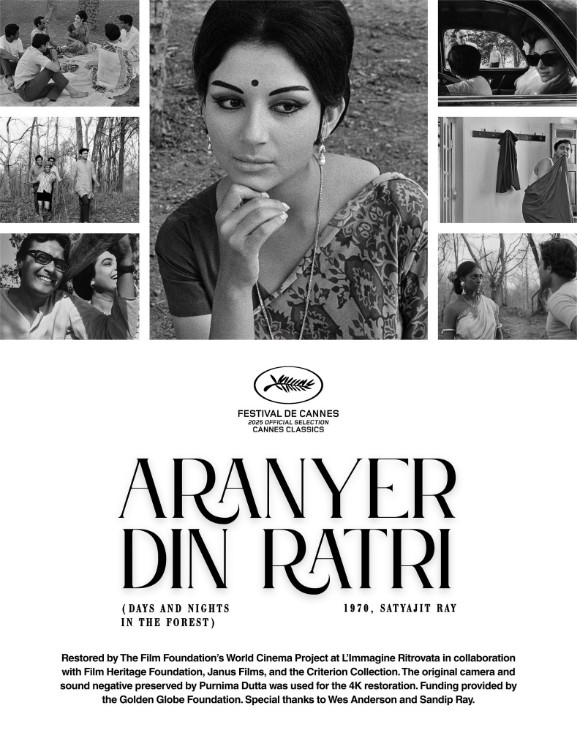
Under TIFF Classics you have the Indian auteur and Bengali cinema maestro Satyajit Ray’s Days and Nights in the Forest (Aranyer Din Ratri), being showcased where in the newly restored cult favourite, we witness four young male urbanites decamp to countryside for some rest and relaxation, only to have their pride and prejudices challenged by three women. The film based on Sunil Gangopadhyay’s 1967 eponymous novel, is a character study as clash of sexes and social statuses plays out revealing a wide array of human behaviours with filmmaker craftsman Ray in full flow.

S VISWANATH is a veteran film critic who officiates as JURY at several National & International Film Festivals. He deputises as CHIEF CINEMA CURATOR/PROGRAMMER & CREATIVE ADVISOR for Bengaluru International Film Festival (BIFFes). He also curates & advises on the selection of shorts & documentaries for Bengaluru International Short Film Festival (BISFF). Mr Viswanath is the author of “RANDOM REFLECTIONS: A Kaleidoscopic Musings on Kannada Cinema”.





Leave a Reply