
S Viswanath
“Beauty is in the eye of the beholder” Irish novelist Margaret Wolfe Hungerford in 1878 novel Molly Bawn.
“Beauty in distress is much the most affecting beauty,” Edmund Burke – Anglo-Irish Politician-Philosopher in A Philosophical Enquiry into the Origin of Our Ideas of the Sublime and Beautiful.
“Beauty is mysterious as well as terrible. God and devil are fighting there, and the battlefield is the heart of man.” Fyodor Dostoevsky in The Brothers Karamazov.
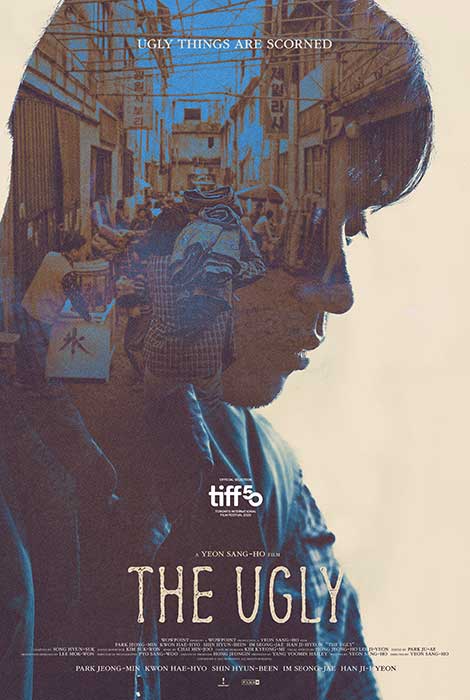
Celebrated South Korean filmmaker Yeon Sang-ho has traversed a long trail from his high action adrenaline thrillers Train To Busan series and animated features to the minimalist, ruminative and deeply enigmatic tragic soulful social saga The Ugly.
Indeed, for those looking forward to cerebral and social conscious cinema, there is more to The Ugly than its peripheral gnawing mystery drama which evocatively mimics 1950 Japanese auteur Akira Kurosawa’s classic Rashomon’s storytelling format for its own narrative template.
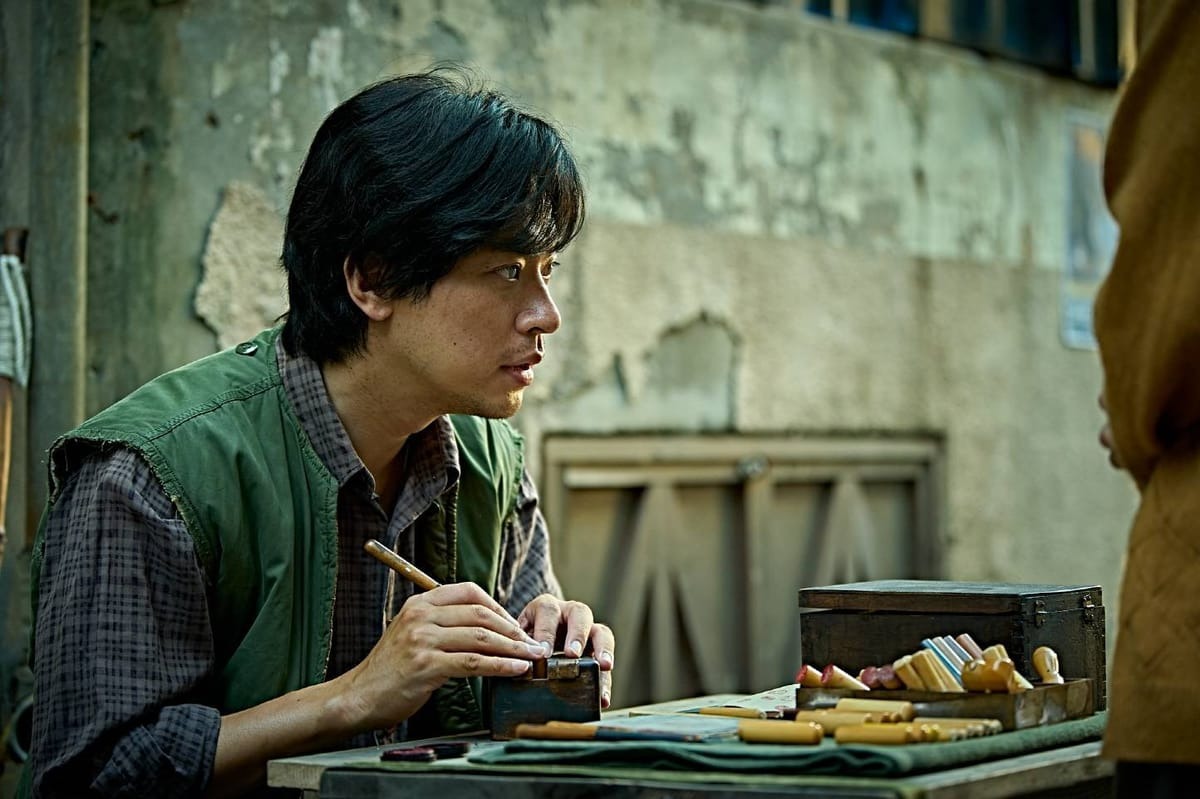
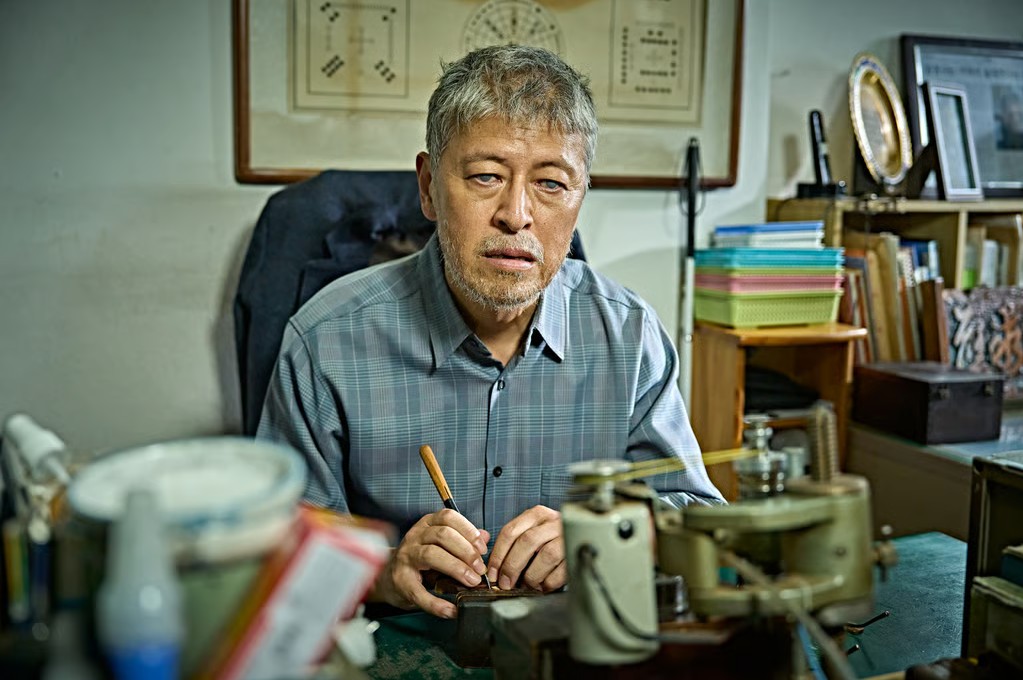
While legendary Kurosawa’s riveting thriller Rashomon was presented with four different perspectives with each participants narrating their own version of the tale, in The Ugly we witness how Yeon Sang-ho employs similar technique through five interviews, with each pugnaciously pressing home the point, about how “ugly” the woman was not only to her blind husband a skilled stamp engraver but also his now grown son on mission to investigate the mysterious death of his mother 40 years ago.
Swinging like a pendulum between tragic past and intriguing present Yeong Sang-ho makes a superlative case for pithily projecting the patriarchal societal prejudices, scorn and subjugation women are subjected to. And how a timorous, yet wilful woman’s resolve to face such indignities heaped on her, by those around here, unfortunately has led to her tragic death.
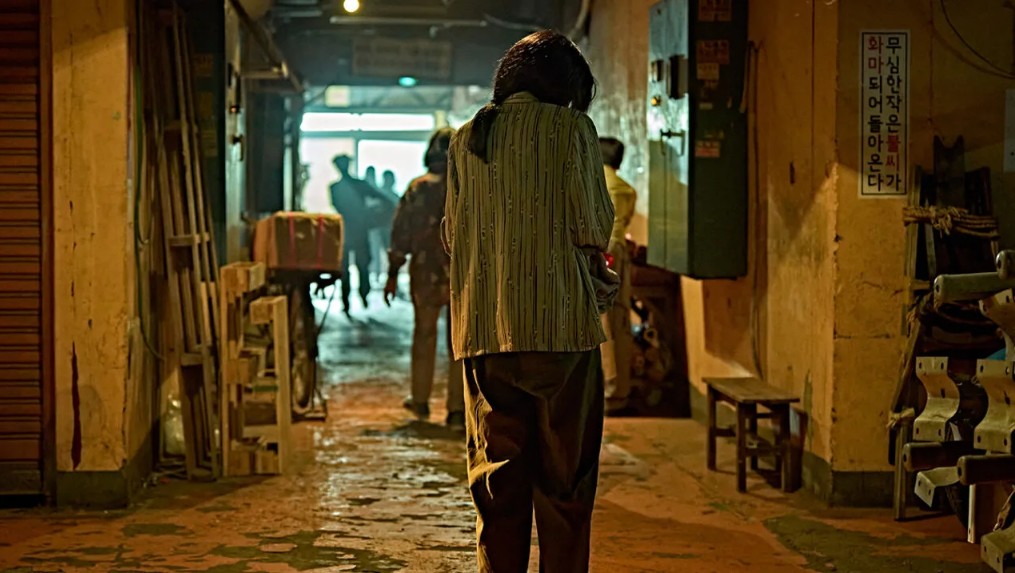
The woman Jung Young-hee cruelly and viciously derided as (‘Dung Ogre’ by those at the garment factory) blind husband Yeong-gyu’s own pitiful lament to his son Dong-hwan Wang that “from a young age, I was mocked and belittled. I worked so hard to break free from it. But, it just kept happening over and over,” may as well apply to his wife’s own plight as well.
Such is the obnoxious onslaught she faces as she valiantly tries to stand up to deviant derision to her dignity, as her husband confesses and reasons to his son “if I stayed with her, I felt I could never escape the humiliation. I could not live with that woman. I told her to stop. But she kept doing it just to spite me,” is obvious the woman was doomed to death.
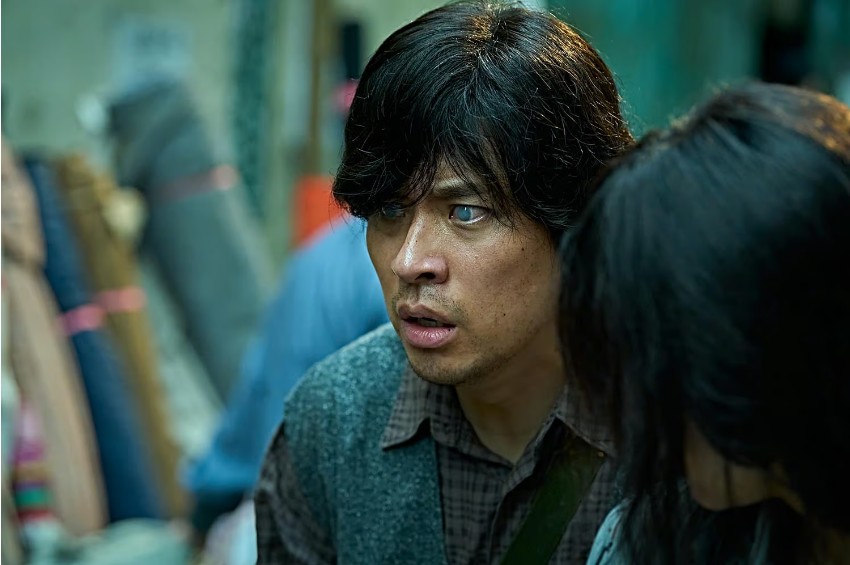
That it comes at the hands of her very own blind and blighted husband who valiantly asserts to his son “you think I cannot tell what’s beautiful and what’s ugly,” bespeaks of the society and those around him who have so poisoned his psyche, by their continuous diatribe, against the young, ill-destined woman, done in by her own man when the devil takes the better of him than accept the woman who gave meaning to his otherwise listless life.
How an innocuous routine interview session to document the life and living of the blind but blessed engraver “a man who sees the world through his finger tips,” by his son to promote the family business turns into a murder mystery and edgy thriller following a police call informing the finding of his mother’s remains 40 years back forms the fascinating premise of The Ugly.
While the shell shocked son teeters on the Hamletian dilemma whether to pursue the case and dig up past skeletons, the enterprising TV reporter Su-jin sensing a sensational and juicy exclusive. sees her investigative antenna advising the son to ferret out the truth of his mother’s death.
Premiered at Toronto International Film and having travelled to other film festival circuits, the film in a slow, sedate manner draws audiences into the intriguing fare to find out whether the woman was really ugly as she was made out to be by just those around her but by her vicious family of two other sisters and brother forms the fulcrum of the fascinating character study of panoply of people that populate The Ugly taking us to its climactic denouement.
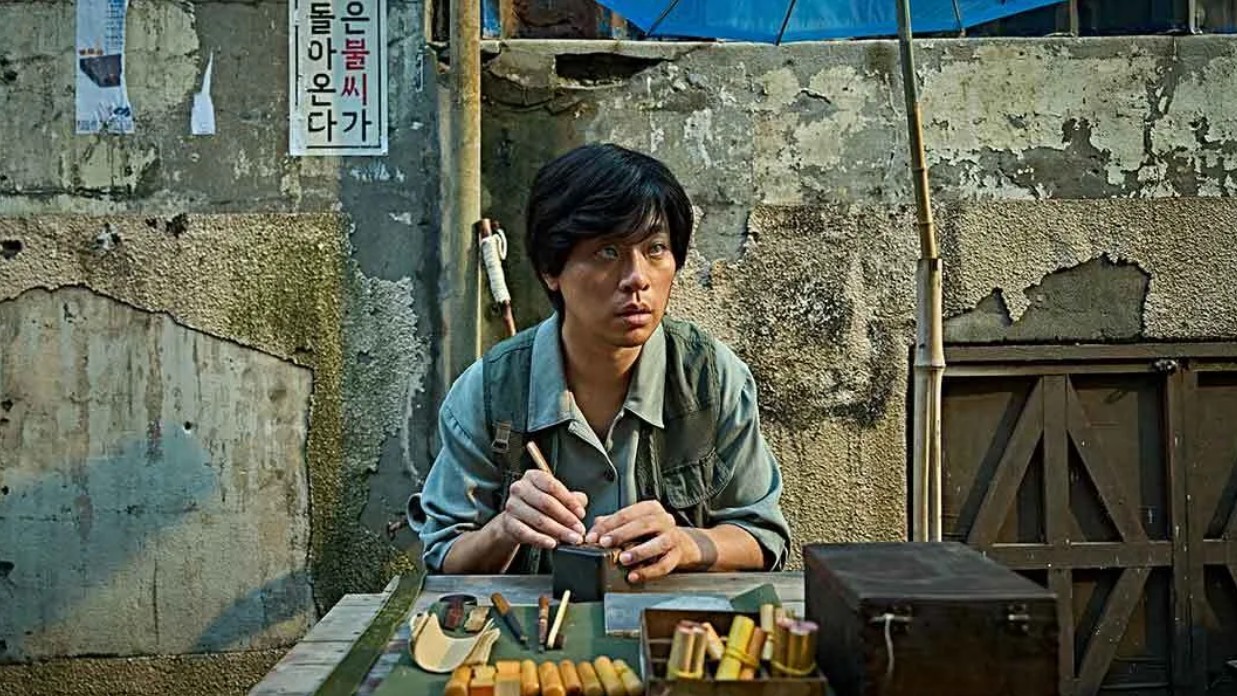
As can be derived and assumed from the film’s eponymous title, director Yeon Sang-ho takes the whodunnit thriller trail to have audiences engaged and invested in the film’s larger social and political statement as to what actually constitutes “physical appearance” in public eye.
The blind man’s own inner vision from sarcastic taunts he is subject to of which he is blissfully unaware of till his actual meeting with the man responsible for both his and his wife’s miseries, and what really qualifies as “beauty” or “ugly” and the feelings it evokes amongst all.
What makes the film even more haunting is how the son takes in and digests the fact his long dead mother was considered a social “pariah” or “outcast” by those around her given her as he silently listens to those that TV journo interviews bespeak of what is conventional good looks to be considered “beauty”.
Yeon Sang-ho, otherwise best known for staple racy and commercial high-wattage formulaic fare such as Train To Busan and The Peninsula, has taken a 360 degree turn with The Ugly adopting a more sedate, nuanced and subtle to the theme at hand which is based on his own debut graphic novel Face.
Sojourning at a snail’s pace, sparse and subtle in its thematic thrust Yeon Sango-ho has presented a very thought provoking ruminative and reflective and very gut-wrenching cinema with The Ugly urging his viewers to deliberate and dissect the social ways of seeing the others and also being seen and the harsh truth about perceived perception and actuality.
If, the blind Yeong-gyu is an object of banter among those around him due to his blindness, the Young-hee who becomes his wife is bullied and battered over “beauty” surreptitiously leading audiences to pause a moment to question ourselves on the society prizes beauty, and in turn, perforce compels others to confirm this idea of “beauty” lest be termed “ugly.”
Though his monsters and monstrous men of his anime are left behind, director Yeon Sang-ho, however, still faithfully sticks to the chilling thriller formula while deftly, diligently and delicately examining and exposing the emotive and symbiotic relationship between a single, blind hardworking dad and his now young son following in his father’s footsteps, and before that between the young woman who comes into the blind man’s life after appreciating his craft.
As director Yeon Sang-ho himself explains the idea by the film he saw a “fascinating juxtaposition between two people; the father who became a symbolic figure of a country’s rapid economic growth, and the mother who bore the brunt end of that era’s underlying hatred and prejudice.”
While, at its very peripheral and prosaic level The Ugly could be received as “being about an ill-fated woman and her sense of identity and noxious narrow-minded concept of beauty pervading in both traditional and contemporary society, the film, however, seems to draw its audiences to an era, culture, of the Korean people.”
In The Ugly we witness how director Yeon Sang-ho brings to fore the prevalent toxic ideas of beauty as also failing family ties while trying to prop the posers as to What exactly is beauty? Who defines it? How is one outcast from this gold standard? The perilous cost of pursuing it “blindly”? and more ironically presenting an inquiry into these very concepts and ideas through the film’s blind protagonist as also the sighted characters, who, blinker themselves not to visualise beauty in the traditional and true sense.
As if to pugnaciously point out the abject festerous mindset that has beset our societal conventions director Yeon Sang-ho through the defiant declaration of his blind protagonist I am a “living miracle of Korea” holds a searing mirror to how society, as the blind engraver says “spend years searching for that beauty as we really think a lot about what people see as beauty,” and that “I took meticulous care of my hands” for “they are like my eyes. I see and feel through them,” as “beautiful things are respected and admired. Ugly things are scorned.”
Tragically though, it is with these very meticulous and crafting hands that the man, driven by the drivel around him about his dutiful and daring wife, snuffs the life out of her for “no matter how much I prayed that someone please kill her for me, she never intended to leave me and he kept doing it just to spite me” and her from his life to fend for a motherless son with the guilty of his deed discovered 40 years hence by a very quirk of damnable destiny that destroys their otherwise idyllic and blissful life they have lived.
Ultimately, with The Ugly, director Yeon Sang-ho having consciously moved away from his gritty, populist crowd pulling thrillers and spectacularly gory and gruesome anime series, presents not only a gloomy and grim, and more importantly damning inditement of not only his Korean society, but of the larger heartless humanity in general.
Saddening and shocking touching the core of one’s psyche and heart The Ugly leaves its audiences truly affected ridden with guilt and remorse about what a society we are living in and have inhabited and whose ideas and perception beauty are very insidious and inimical to our very harmonious filial and fraternal existence.

S VISWANATH is a veteran film critic who officiates as JURY at several National & International Film Festivals. He deputises as CHIEF CINEMA CURATOR/PROGRAMMER & CREATIVE ADVISOR for Bengaluru International Film Festival (BIFFes). He also curates & advises on the selection of shorts & documentaries for Bengaluru International Short Film Festival (BISFF). Mr Viswanath is the author of “RANDOM REFLECTIONS: A Kaleidoscopic Musings on Kannada Cinema”.



Leave a Reply