
Survey report calls for incentivising low-cost theatres to bolster audience footfalls, resuscitate theatrical revenues & direct job creation as near term course correction_
S Viswanath
Not all is honky-dory with the film exhibition sector in the country. Faced with the onslaught of ever expanding, multiplying streaming platforms, as also new age multiplexes and cineplexes, the country’s film exhibition industry today stands at a critical crossroads. Especially the once popular and most coveted traditional single screens segment.
Thanks to the competitive challenges of a rapidly evolving market. Despite being home to one of world’s largest film audiences, the film exhibition sector has struggled to keep pace with broader economic growth of the country.
In recent years the sector has witnessed a woeful decline in theatrical revenues, finds a state of the sector survey report – The Story of Film Exhibition in India 2025 brought out by multinational professional services network – Ernest & Young (EY) and commissioned by Multiplex Association of India.
This, ironically, at a time, when, a majority (81%) surveyed still prefer going to theatres rather than watching films on streaming platforms. Given that 60% enjoyed the overall ‘going out to enjoy’ experience with family or friends, 71% of cinema goers found a visit to the cinema good value, with 53% stating they faced no barriers to visiting cinema halls if movies appealed to them. Only 20% were happy to watch movies on streaming services, while 34% fence sitters were not particular in their preference between digital and cinema, with either working for them.
As a result, the country’s filmed entertainment revenues have fallen 2 per cent from their peak in 2019, decreasing from ₹19,100 crore to ₹18,746 crore in 2024, while the revenue per screen has decreased by 5%, from ₹1.21 crore in 2019 to ₹1.15 crore in 2024.
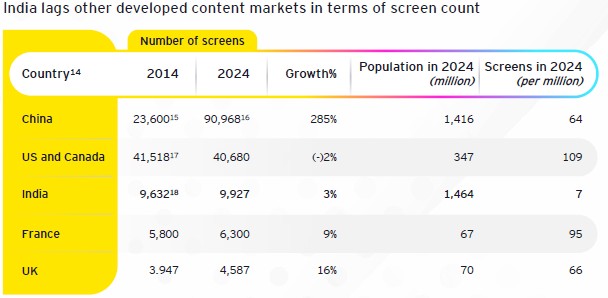
The reasons for the falling fortunes of the film exhibition sector are not that far to seek. While the number of cinema screens in India has seen a marginal increase from 9,527 screens in 2019 to 9,927 screens in 2024, the screens per million of the population has, however, fallen from 7.6 in 2018 to 6.8 in 2024.
The most impacted in this aspect being that the single screens have shrunk by around 1,000 during the period 2018 to 2024, while the large chains too have reduced their big ticket investments during the period by 12% between 2019 and 2024.
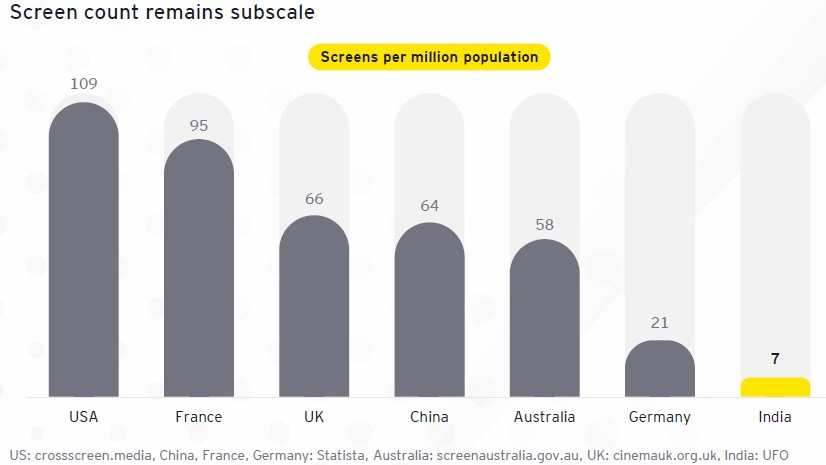
With the result, total theatrical footfalls fell by 41%, from 1.46 billion in 2019 to 0.86 billion in 2024. Footfalls per screen per year having reduced by 44% during the same period, from 1.53 lakh to 0.8 lakh. Compared to the country’s overall population of 1.4 billion, the survey finds that less than 150 million (~10%) as per estimates attend a movie in theatres in a year, as several alternative means of viewing films are now evidentially and easily available. In this regard, the survey reports notes that India’s screen density is amongst the lowest of all developed markets, and its current penetration of just seven screens per million makes the country’s theatrical market more of a premium experience only than a natural choice of film going habit of the diaspora.
What has led to this situation? It is not the modern day Hydra of Multiplexes alone nor the disrupting digital domain of streaming platforms. For, nearly 78% of content producers conceded the biggest concern was the shortage of quality writers/ stories. Likewise, 55% – over half – of cinemagoers stated that the key concern about going to the cinema was deterioration in the quality of content, with 70% wanting to see improvements in stories, etc, in order to motivate them a theatre visit.
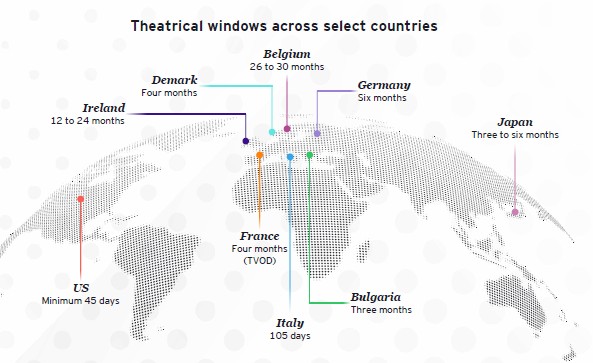
Further, following the shortening theatrical windows of 90 days before the release of a film on OTT (a pre-pandemic norm), which has reduced to four to eight weeks in 2024, this naturally reduced the need to watch all films in the cinema halls, states the survey report.
Such then is the grim and alarming situation and one of cause of serious concern the film exhibition section in India is facing that audiences are now willing to wait if the streaming window was short and almost a majority of them had waited for one or more films to release on streaming platforms rather than head to a “theatre near you,” as was a most preferred practice in the not too distant traditional past.
This has been compounded by the fact that 51% of viewers now prefer accessing content from pirated sources, and the most worrisome of it being that 76% of those accessing pirated content belonged to 19-to-34-year age group because the release of films on streaming platforms inevitably and eventually led to increase the level of piracy.
Likewise, one other factor impacting the theatre going habits of the audiences is that while the country may be the fourth largest economy, the GDP per capita is however far dismal. This, along with income inequality, is seen reducing the number of people who can afford the cinema experience with nearly 70% gap between rural and urban per capita income. With the result several Indian households prefer watching movies on lower cost alternatives such as pay television, free TV and free streaming.
But then again all is not lost yet says the survey report striking a positive picture. Given that the fundamentals of cinema viewership remain intact, the EY report resolutely believes there is a significant opportunity for growth in theatrical revenues which can increase by ₹6,600 crore if the number of cinema screens increases from 9,927 screens as of today to approximately 20,000 screens in near term. Furthermore, the report points out, should this happen, this would lead to creation of 125,000 more direct jobs, and a windfall of around ₹950 crore more tax income for the government by doubling the screen count in the country in the next five years.
Citing the American movie theatre chain Cinemark, the EY survey reports states, that in its 2024 investor deck, Cinemark found that exclusive theatrical windows increased customer awareness and film relevance, built stronger emotional connections with characters, produced bigger brands, generated incremental monetization and reduced piracy.
However, striking a cautionary note, the survey report states that, the core need is to address the shortage of screens. Being how under-screened India is compared to the rest of the world, a doubling of screens to around 20,000 would have a significant positive impact on the Indian economy says the report adding that 78% of survey respondents believed that there was an urgent need for more low-cost theatres to grow theatrical revenues.
One of the suggestion as per the survey report is in order incentivise the development of new screens, the government could consider providing tax exemptions on incomes for a certain period, especially to new screens set-up in pin codes where there are currently no screens (there are 16,350 pin codes in India out of ~19,000 pin codes in India) where there are no cinema screens, with the balance 3,150 pin codes accounting for the existing 9,927 screens.
Similarly, encourage the entertainment-in-a-box proposition, whereby temporary screens and tented infrastructure move across towns to showcase films, such as portable, inflatable movie theatres – the Balloon theatres, that are bringing multiplex-quality cinema to rural and inaccessible areas, using weather-resistant structures with high-tech sound (Dolby 5.1) for accessible entertainment such as those offered by Little Screen or The Binge Town, Picture Time – Mobile Digital Movie Theatre, among the others lately doting several cities/states in the country.
Well, the ball is now in the governments – both State and Centre – court sas to how best they address the revival of this segment given that the India’s entertainment industry is one of its most coveted soft power across the global diplomatic front being one of the largest producers of films annually, only next to cricket.

S VISWANATH is a veteran film critic who officiates as JURY at several National & International Film Festivals.






Leave a Reply