
S Viswanath
“There are some hard things about being a woman director. But there are other ways where it’s an advantage. There are things that I get away with that men could never get away with.” – Adrienne Shelley, American Actress & Film Director.
“I don’t think the challenge is asking an audience to like a character; it’s inviting them to try and understand them… then making that journey entertaining and worth their while. It’s a classic trick, but it’s human, and it allows characters to have more depth” – Phoebe Mary Waller-Bridge, British Actress, Screenwriter, & Producer.
It is a heartening and a happy augury that, in recent times, post the #MeToo movement, top-tier film festivals, across the globe, are giving prominence, priority and parity driven platform for women film directors.
A voice and a visibility otherwise earlier nonexistence in a highly male dominated entertainment industry that is yet to get over its skewed gaze and fixation about women and whether they can hold their own.
Women may have broken the glass ceiling. However, it has indeed taken a while, for them to be given their due in the centre stage of things and appreciated for their individualistic vision and vantage in the dog-eat-dog amphitheatre of global movie marquee.
Lately though film festivals have become, and overcome, their rather conservative and constrictive attitudes, resulting in women directors being provided their equal representation, who, in turn, are transforming the global cinema arena and film speak through their female-driven thematic narratives showcased in their eclectic cinematic oeuvres, earning them richly and rightly deserved rewards and recognitions.
However, film festivals as pivotal platform for advancing women directors, challenging sector’s gender disparities, through systemic barriers – be it in the form of funding or distribution – continue to remain, but representations are improving. Especially for debutant women directors, and more so, with specialised film festivals focused on female directors elevating female voices and their eclectic works, catalysing the churn and acceptance for the greater good of cinema the world over.
Thanks to this encouraging development the last few years one has witnessed women directors making significant strides, garnering international recognition for their works which come with that distinct female perspective, exploring multifarious stories of struggles and success with niftily driven narratives that question societal norms, gender vulnerability, vis-à-vis complex personal sojourns the protagonists take bringing that ‘female gaze’ to the forefront and quintessential public discourse.
This despite the welcome and assimilating progress, one still continuous to witness women filmmakers negotiating systemic challenges, which is where festivals become the welcome change to break into the industry while they challenged established and blinkered narratives.
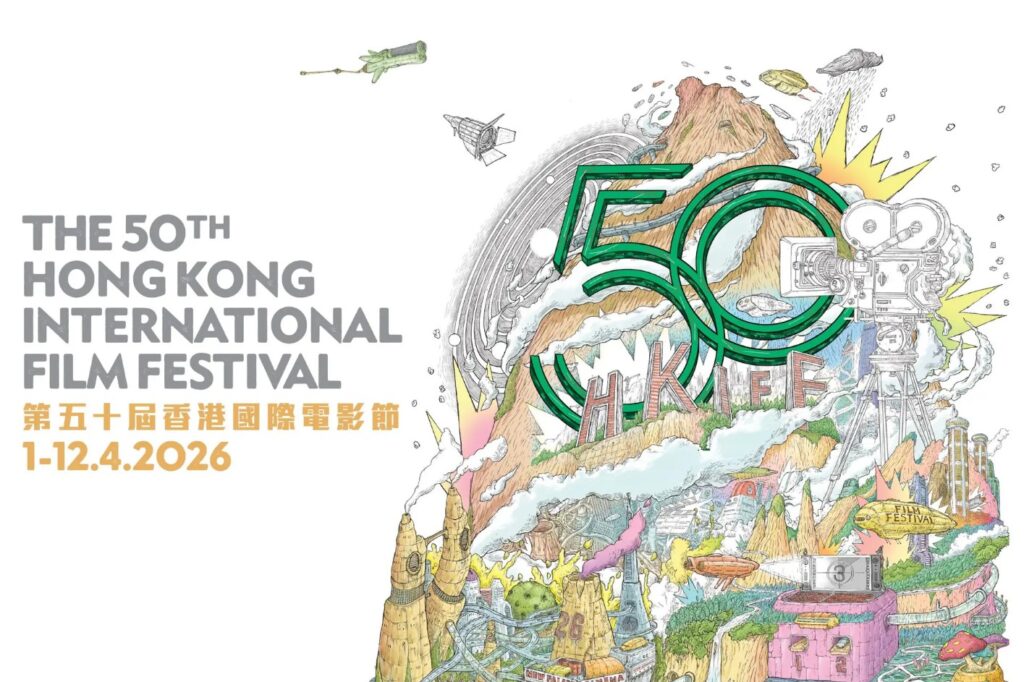
It is in this regard HKIFF@50, like many other international film festivals, with its panoply of score (20) plus perspective films featuring both seasoned, reputed directors and debutant, aspiring talent of women filmmakers, singularly garners attention and much appreciation.
Not only to the film festival per se but also talented women filmmakers featured for cinephiles to catch upon under various categories and sections of the Island nation’s flagship film festival, whose specific focus is on promotion of then Asian Cinemas in particular.
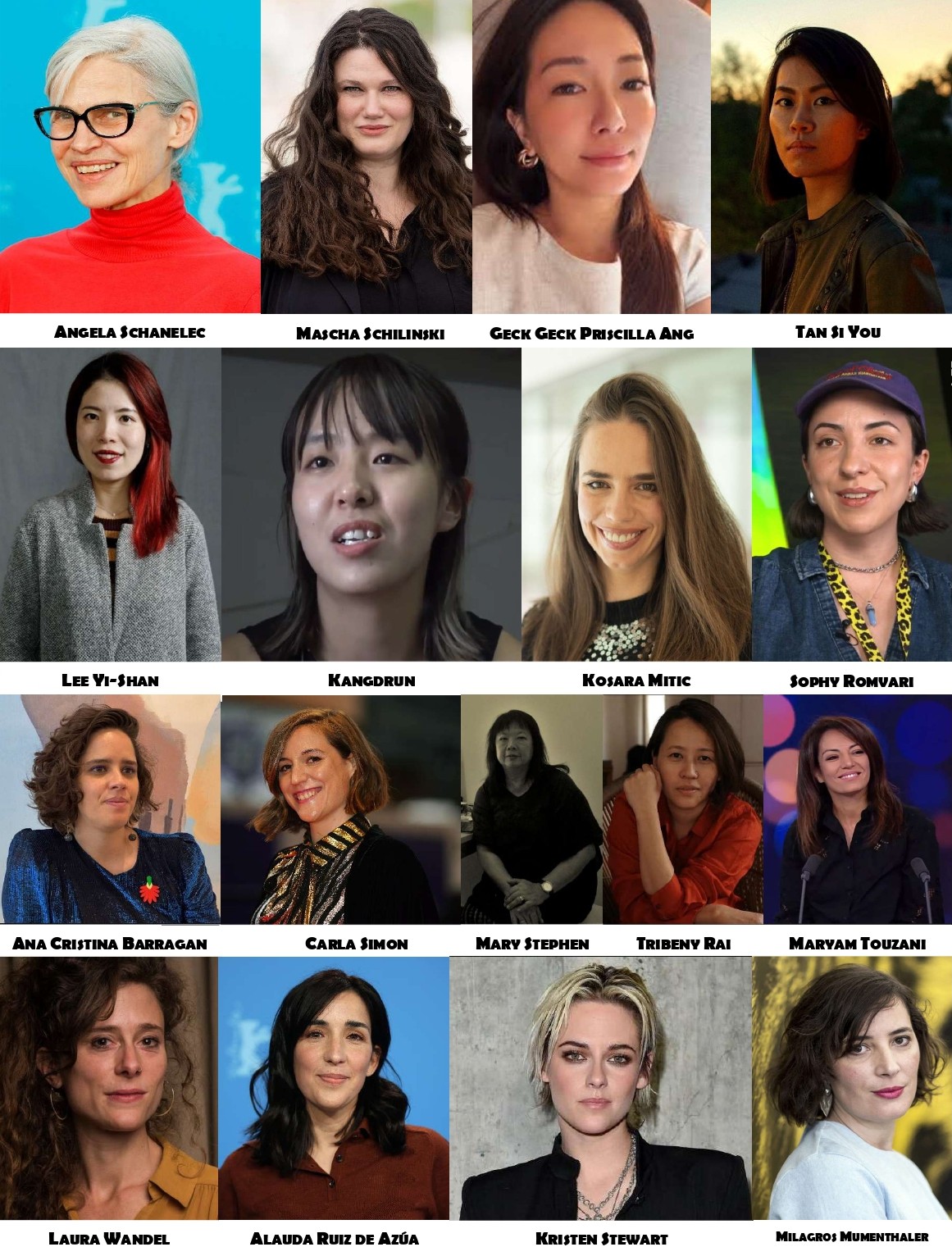
The festival’s gala presentation features German-French language 93 min My Wife Cries (Meine Frau Weint) by Angela Schanelec, the much and well-travelled and much accoladed 155 min German feature Sound of Falling (In die Sonne Schauen) by Mascha Schilinski.
The festival’s much famed and coveted competition sections – Firebird Awards – Young Cinema Competition (Chinese Language) has four films among the dozen so vying for the honour. These are the 99 min Ah Girl by Singapore’s Geck Geck Priscilla Ang, the 98 min Chinese fare Amoeba by Tan Si You, the 115 min Chinese film A Dance with Rainbows by Lee Yi-Shan and the 100 mins Tibetan film Linka Linka by Kangdrun.
Likewise, the competition’s Young Cinema (World) category, similarly boasting of a dozen contenders, sees three films in North Macedonia-Serbia-Slovenian 105 min 17 by Kosara Mitic, the Canadian-Hungarian 90 min Blue Heron by Sophy Romvari, and Ana Cristina Barragan’s Ecuador-Mexico-France-Spanish 99 min feature The Ivy (Hiedra).
The Documentary Competition features two by women directors namely – the 82 min Iceland-Polish The Ground Beneath Our Feet (Jörðin Undir Fótum Okkar) by Yrsa Roca Fannberg and Vladlena Sandu’s 98 min French-The Netherlands flick Memory.
In Masters & Auteurs Section, among the others, you have two with Carla Simon’s 115 min Spain-Germany feature Romeria and Palimpsest: The Story of a Name the 109 mins France-Hong Kong-Taiwan languages film by Mary Stephen.
The World Cinema (Global Vision) Section which has been segregated into specific Asia, Europe, America, Africa & Africa geographical categories with curated films from these specific regions sees one each from Asia and Africa and two each from Europe and America from among films curated under the category under the contemporary Cinemas of World section.
From Asia we have India-South Korean 115 min Shape of Momo (Chhora Jastai) by Tribeny Rai, from Africa the 116 min Morocco-France-Spain-Germany Calle Málaga by Maryam Touzani, the European select has 75 min Belgium-France Adam’s Sake (L’intérêt d’Adam) by Laura Wandel and Spain-France 117 min Sundays (Los Domingos) by Alauda Ruiz de Azúa, and from America it is 128 min France-Latvia-USA’s The Chronology of Water by Kristen Stewart and Milagros Mumenthaler’s 104 min Switzerland-Argentinian The Currents (Las Corrientes).
The Kaleidoscope Section which brings under different categories of (Fantastic Beasts) the Belgium-France 102 min Truly Naked by Muriel d’Ansembourg, while the (Midnight Heat) segment features the Australian 112 min Saccharine by Natalie Erika James, the (Poetry In Motion) bringing the Canadian 95 min Levers by Rhayne Vermette.
Considered among Big Three who founded The Berlin School known for examining the emotional and social state of modern Germany, alongside compatriots – Christian Petzold and Thomas Arslan, Angela Schanelec is renowned for her austere, minimalist, and “anti-narrative” structure.
The method comprising long takes, elliptical editing, and focused, quiet observation of human behaviour, alienation, and intimacy, with her films described as deeply philosophical “cinema of silence” brings the same intensity into her new feature My Wife Cries (Meine Frau Weint).
The film spotlights on a couple on the verge of breaking up amidst their fading romance which has Thomas, a 40-year-old crane operator, while at work, receiving a call from his wife Carla asking him to pick her up from the hospital. On reaching, he finds her crying. Carla informs him about her dance partner David, with whom she was going to view a house in the country who has died in the accident. She openly and honestly confessed to her husband. However, we find, they simply do not understand each other.
Given to exploring deep psychological themes, memory, and womanhood through complex, often dark narratives, characterised by intense, immersive storytelling focusing on female characters navigating trauma and personal history, Mascha Schilinski in Sound of Falling (In die Sonne Schauen) in her sophomore feature showcases her cinematic idiom with full force.
The highly accoladed and much appreciated film taking various time leaps, revolves around the lives of four girls whose lives are entwined, over a period of approximately 100 years (from 1910s to the present day) on a family farm wherein each spent her childhood or youth. As the story unfolds about guilt, shame and yearning, the boundaries between the characters become blurred depicting an associative stream of memories of the characters, undergoing intergenerational trauma and genetic memories, visions and experiences.
Drawing richly from her own personal experiences, memory, to explore the themes of childhood and parenting, and schooled at the Busan Asian Film Academy, the Singaporean director Ang Geck Geck Priscilla in her debutant feature Ah Girl which won the Youth Jury Award at the 55th International Film Festival Rotterdam (IFFR). The film charts the life of a curious 7-year-old girl, who, following her parents separation, trying to make sense of it all, while residing with her younger sister, Ah Tian, her Pa, working nightshifts, and grandma.
Her drunk mother’s poser if she would like to live with her if mama gets a bigger flat, disrupts Ah Girl’s sense of the world, and the rest of the film unfolds as she struggles with the quintessential Hamletian decision.
Los Angeles based Singaporean filmmaker Tan Siyou known to explore themes of girlhood, rebellion, and conformity within restrictive societal structures and whose work often blurs the line between documentary and fiction, in her debut feature Amoeba showcases how, in a repressive City-State, a tomboy schoolgirl persuades three classmates at an all-girls school to rebel against the authoritarian rules at their all-girls school by forming a triad gang, as an act of resistance in a country where chewing gum and feeding pigeons are illegal. The film premiered at the 50th Toronto International Film Festival 2025.
Known to examine the role and status of women within the patriarchal societies, Taiwanese indie filmmaker and editor Yi-Shan Lee (also known as Li Yi-shan) with her social exploration directorial style in feature debut, A Dance with Rainbows, turns out a motivational drama focusing on inner strength and the redefinition of identity.
The high intensity, emotive sports drama revolves around a female amateur boxer Ling who spends the rest of her time trying to hold her fractured family together, while barely making ends meet helping her mother prepare cheap lunchboxes. A character study of the harsh realities facilities by sports persons the film touches upon the moral quandary faced by athletes when sports and commerce collide.
Providing a gentle, feminine gaze approach to her narrative, the Tibetan writer-director Kangdrun’s debut Linka, Linka is described as a poignant exploration of youth, family, and identity in contemporary Tibet, told through the eyes of Samgyi and his circle of friends over three transformative summers in Lhasa, while capturing the intersections of tradition and modernity, reflecting on the complexities of growing up between cultures and navigating a city in flux.
Kosara Mitic’s debut 17 as the eponymous title speaks for itself is a coming of age realistic youthful drama revolving around 17-year-old Sara, on the cusp of adulthood, hiding a secret during a school trip which spirals out of control when she witnesses her friend Lina being sexually assaulted. This sees the two girls join forces to break the cycle of casual violence thereby sealing an everlasting bond between the two.
Known to explore personal memory, grief, and family dynamics, through her tender narrative structure, Canadian filmmaker Sophy Romvari’s Blue Heron semi-autobiographical film, based in part on the director’s own childhood and her previous short Still Process, centres around a family of six settling down in their new home on Vancouver Island. Soon you witness the internal dynamics among the family members surfacing to the fore all of which is revealed through the eyes of Sasha, the eight-year-old daughter of the Hungarian immigrant family, as the eldest son Jeremy troubled by memory and trauma of displacement shows perilous behavioural issues in the new milieu.
The Ecuadorian filmmaker Ana Cristina Barragán’s known for her coming-of-age theme with the person on the cusp of adulthood discovering one’s sexuality, in The Ivy (Hiedra) spotlights on the complicated relationship between an estranged parent and children, wherein Azucena, in her 30s and gravely ill, seeks to revive relationship with her son, Julio, whom she abandoned after giving birth at the age of 13. As two spend time together, one witnesses an uneasy closeness building up, changing the perspectives of the bonding the two develop in due course.
Drawing upon her own life and family history, using personal memories for her scripts, Spanish filmmaker Carla Simon’s Romeria based on a fictionalised account of the director’s own experiences, showcases how the protagonist Marina, a young woman, seeks to ferret out the truth about her deceased biological father, with her mother’s diary in hand, her own search for official documents from the university.
Hong Kong born, Paris based filmmaker Mary Stephen’s Palimpsest: The Story Of A Name, earlier screened at Toronto International Film Festival, is a deeply personal, real-life detective story which sees the director delving into her own family past while trying to uncover the long-hidden origins of her Western surname, and, in turn, revealing a story of colonialism and contested remembrance.
The Nepali film Shape of Momo (Chhora Jastai) by Sikkim born Tribeny Rai which premiered at the Busan International Film Festival, is loosely based on the director’s own life about a woman who returns to her hometown after quitting her job and confronts various societal challenges as she seeks to set up an independent homestay facility.
The much accoladed Moroccan filmmaker of The Blue Caftan fame Maryam Touzani’s Calle Malaga tracks a doughty, determined aged matriarch’s fight to retain her childhood house in Morocco following her daughter’s decision to set it. In the process, we see the matriarch María unexpectedly strike a romantic spark with a prospective buyer she once viewed as an adversary.
Focusing on child anxiety and social adaptation, Brussels, Belgium’s Laura Wandel in Adam’s Sake showcases how Lucy, a head nurse, allows four-year-old Adam’s mother to stay past court-mandated visiting hours, resulting in the mother, refusing to leave her son’s bedside and how Lucy goes beyond the call of her mandated duty does everything to help the mother in distress for the sake of the sick child.
Spaniard filmmaker Alauda Ruiz de Azúa’s Sundays (Los Domingos) showcases the dilemma that Ainara, an idealistic and brilliant 17-year-old is caught as whether to pursue her university degree or give in to the call of her inner conscience to take the path of God by embracing the life of a cloistered nun.
American actress turned filmmaker Kristen Stewart’s The Chronology of Water is a biopic based on writer Lidia Yuknavitch (Imogen Poots) and her troubled eventful life about an abusive childhood, which sees her take refuge into competitive swimming, indulge in sexual experimentation, get into toxic relationships, and addiction before finding her voice through writing.
Swiss-Argentine filmmaker Milagros Mumenthaler known for her minimalistic and atmospheric work, in The Currents (Las Corrientes) turns out a haunting and elegant study of Lina, a 34-year-old Argentine stylist, who, at the height of her career, driven by a sudden impulse after an award ceremony in Switzerland, survives a fall in the icy waters of a lake in Switzerland, triggering a haunting journey through trauma, memory, and motherhood. Back in Buenos Aires, she says nothing, but something in her has shifted – quiet and invisible, it subtly unravels a past she thought she had left behind.
Truly a fascinating tableau of tantalising films with equally eclectic ensemble of thematic explorations await to covet the committed cineastes and true blue film festival aficionados to binge upon at HKIFF50.
Happy watching

S VISWANATH is a veteran film critic who officiates as JURY at several National & International Film Festivals.





Leave a Reply