
“The cinema like the detective story, makes it possible to experience without danger all the excitement, passion and desirousness which must be repressed in a humanitarian ordering of life.” – Carl Gustav Jung, Swiss psychiatrist & psychotherapist.

S Viswanath
“We, humans, are obsessed with sensuality., obsessed with being alive., with the passions that would ruin one’s life. Passionate addictions are powerful obstacles to perfect peace. It is difficult to let go of these emotions. We are only torturing ourselves. Nobody is doing it to us.” Buddhist monk in Fruit Gathering.
Innocent glances. Meaningful eye contacts. A clever, calculated intervention. Nodding acknowledgements. Two very disparate individuals. One an upcountry, taciturn and tentative, wistful waifish lass. The other, slightly more ‘ways of the world,’ shrewd and ambitious contrast.
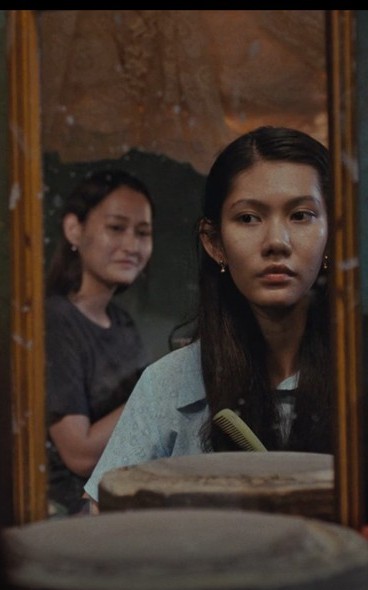
Drawn from, and belonging to diametrically “different backgrounds” as one puts it to the other – the two – San Kyi and Theint Oo – form the fascinating faces on which Fruit Gathering (Thit-thee Khu), debutant directorial feature by promising Burmese (Myanmar) director Aung Phyoe which shepherds audiences on a soulful sojourn through its contemplative and captivating cinema.
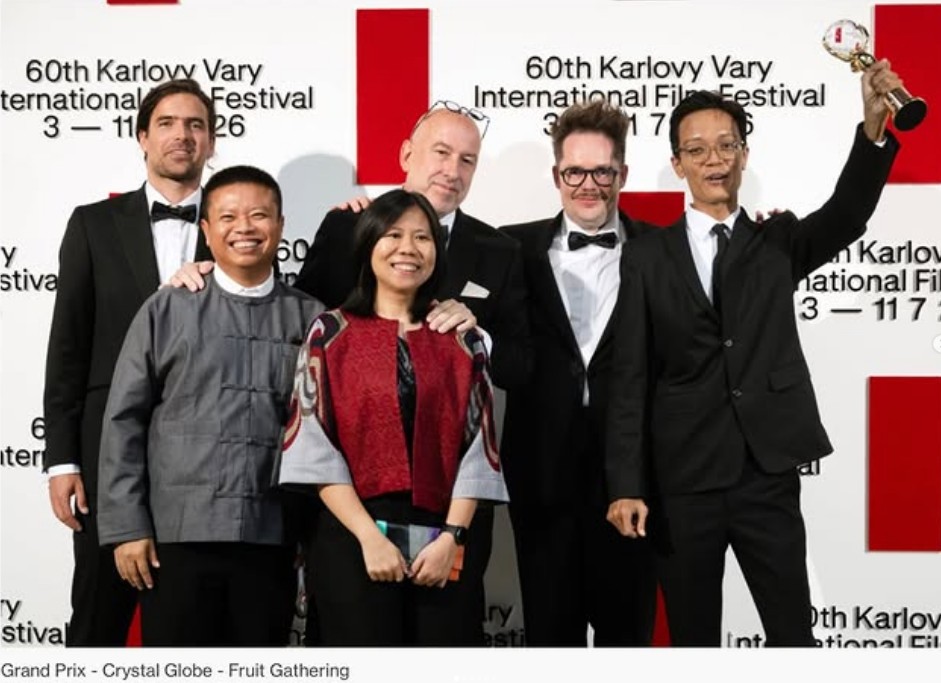
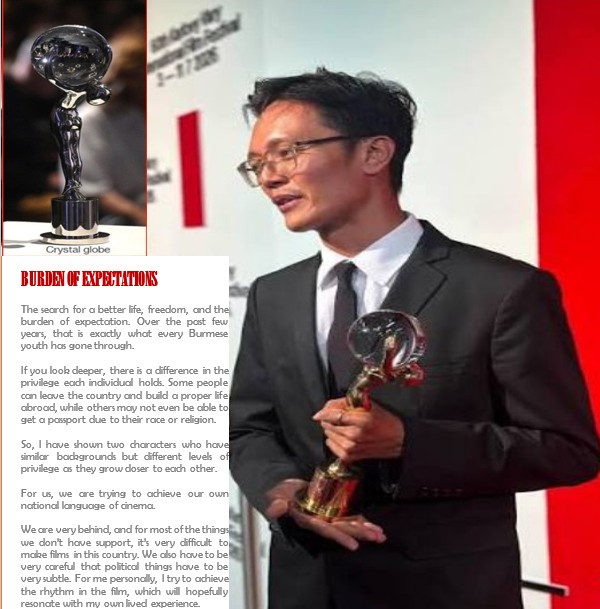
That this brave and brilliant first foray rightfully won the coveted Grand Prix – Crystal Globe Award at the milestone 60th Karlovy Vary International Film Festival’s Crystal Globe Competition where 11 other equally erudite works were in contention bespeaks of young Aung Phyoe’s cinematic erudition and aesthetic craftmanship. So refreshingly and resounding reflected in Fruit Gathering.
Indeed, the Myanmar film, as Crystal Globe Competition Jury eloquently put it “oscillates in a captivating rhythm between tenderness and harshness, reflecting on women’s desires ………” and aspirations.
What’s heart-warming is Aung Phyoe’s fantabulous first bespeaks of how a sensitive man can bring about perceptive and pulsating “female gaze” into a film with all nuances and deftness of craft at his creative command.
Myanmar born Aung Phyoe who left his native at impressionable young age of 15, to pursue schooling, explains Fruit Gathering in an interview “I want(ed) to tell this story of someone who is naïve, and who is quite optimistic, and quite hopeful and full of dreams. And suddenly when she faces this reality of life, she transforms into someone else. This process of transformation that I was trying to tell is also the sadness that I think I find in (San).”
So true. Post schooling, saw young, mature Aung Phyoe returning to discover home country as if for first time. Noticing a solitary young woman crossing rail tracks toward nearby housing complex the director was struck by the sadness on her face.
Continuing on his train travel through the Capital City’s industrial area, he imagined that woman might be a low-wage garment worker toiling in a nearby factory which sowed the seeds of Fruit Gathering. A film evoking memories of his childhood and attendant loneliness and alienation that had swept him, as he forged deep attachments with others.
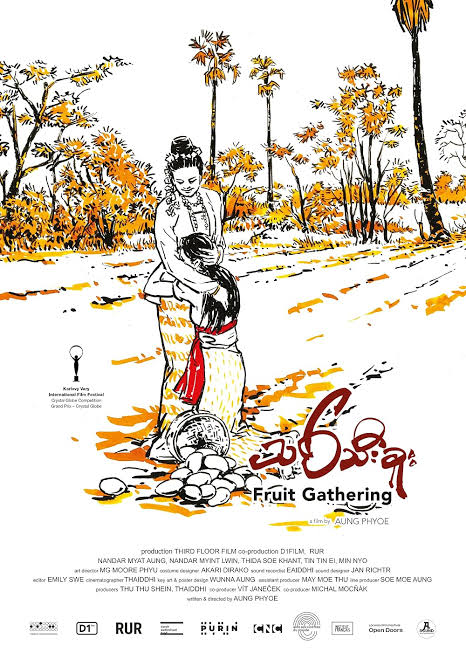
The film, taking its title from Burmese translation of Rabindranath Tagore’s poetry collection “Fruit Gathering, in the upcountry region of Myanmar, following the Thingyan water festival in mid-April, and just before the heavy mid-May rains begin, groups of women venture out to the large trees near their villages to gather fruit. Mango trees, in particular—often planted in groves are harvested early and left to ripen, allegorically associates itself to desire and attempt to draw another person into one’s life and prevent them from leaving.
The film faithfully records all his individual experiences of his country through the two protagonists and understand the busy, bustling and industrialised Yangon (formerly Rangoon) Myanmar’s Capital City young folks like San Kyi and Theint Oo chasing the chimera of better life are drawn to.
Set in the working-class Yangon, the film, while portraying the powerful and strong kinship that the two young female factory workers bond in, searching for hope and fulfilment, slogging in the stifling and suffocating confines of a garment factory, shows how the two view their friendship in diametrically different ways, amid the economic uncertainty of a country devastated by civil war where loneliness, family pressure, and longing for dignity, intimacy, and change, impact the lives of people, especially the aspirational young.
Through sharing meals, factory breaks, spending quality time together at the riverside or taking the bus, dreaming of better morrow, sharing room and bed with San Kyi liberal on her purse, paying for their dinner, lending cash from her kitty seeking intimacy, a sense of permanence to their fraternity.
The two form a close companionship finding solace in one another’s company as an outlet from the pressures and expectations of their surroundings even as the two dream about possible escape from their current economic and social entrapment to a possible promising future the world outside. All in the wishful fantasies of a leading a better life with Theint which the latter constantly indulges in.
In between San Kyi also aspires to return to the calming, serenity and solitude of her ancestral village nostalgic about the mango trees of her village and the fallen mango fruit gathering, reflecting the homesickness of a young woman working in a garment factory longing to return to her upcountry home and bring her friend along.
Reminiscent of 3 hours 55 minutes mammoth Chinese trilogy documentary Youth by Wang Bing filmed over a five year period focusing on young textile workers leaving their rural villages to work in a manufacturing town outside Shanghai and being uprooted are tirelessly drawn into friendships and romances.
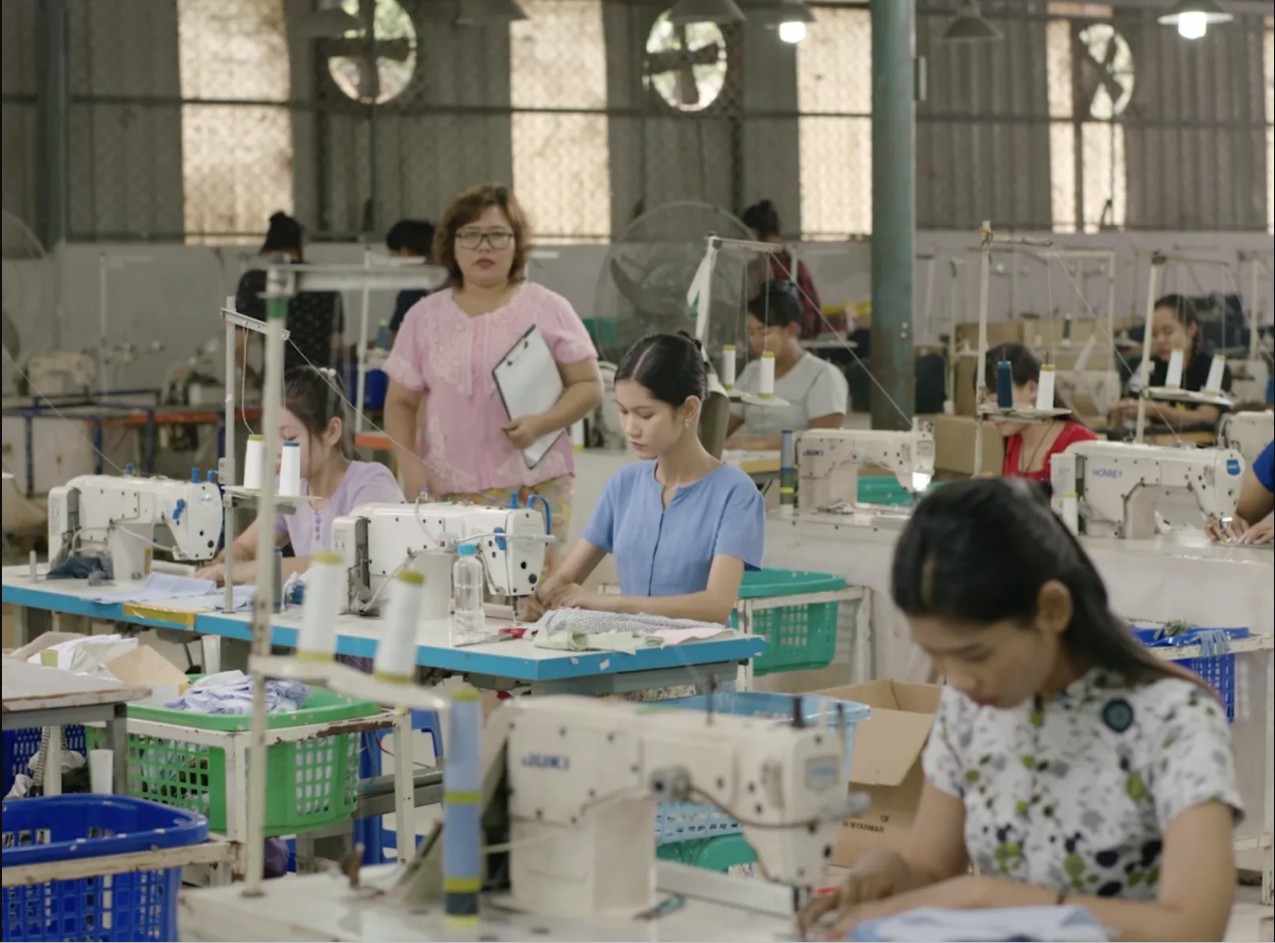
Aung Phyoe too evokes similar harsh milieu of the massive clothing factory, which sees young women seamstresses stitching seams all day long in robotic fashion in a ferociously noisy, cut cloth scrap-strewn harsh milieu of unforgiving performance and efficiency driven sweatshops.
While young San Kyi, is slowly but inexplicably drawn to her bold, outspoken and confident co-worker, Theint Oo, leading to San Kyi to find all possible ways to help her newly recruited fellow co-worker.
The receiving and rather ‘manipulative’ Theint Oo has no qualms in ‘exploiting’ wilfully the innocent and naïve expectant San Kyi’s liberal financial and personal help, all the while hoping the latter (Theint Oo) would sooner than late reciprocate her attentions in similar fashion.
One cannot fault San Kyi’s relationship proclivities. For having shifted to industrialised and commercially developed Yangon with her mother and grandmother, she finds in Theint Oo a perfect passport to finding a passage of rite and possible ticket to independence and freedom from the constrictive and censorious traditional rural roots she comes from.
With the family’s male having left them, the domineering mother, expects her growing daughter to follow the proverbial path, constantly badgering her to get married and take to much more financially lucrative and fashionable career, than her current modestly paying highly demanding job.
Seeking fraternity with Theint Oo at every opportunity possible, given her strict childhood and her mother’s constant demands she wed family friend and Man Friday Bhone Shwe, San Kyi believes Theint Oo can give wings to her desire of fleeing familial and social pressures to say distant Thailand, Singapore or Malaysia with their more assured, modern lifestyles and work culture.
Indeed, it is to these very countries the youth of Myanmar (boys between 23 to 32) are migrating to escape conscription into army following Military Service Law forcing State authorities to clampdown on its young men and women.
Sadly though San Kyi cannot stop “daydreaming” as Theint Oo chides her on one occasion as the latter had promised her that “I am looking for better jobs. If I find one, I’ll show you.” It is this innate belief that drives San Kyi to repose faith, trust and hope in Theint Oo that she would reciprocate her feelings to which the other is actually totally impervious beset with her own ambitions and issues.
Why does San Kyi shower such an affection towards Theint Oo one may ask. The reason is that it is Theint Oo who had promptly come to her rescue and support at the factory when the snooty and sharp floor supervisor reprimands an affronted and aghast San Kyi questioning her “Why didn’t you ask permission for a washroom break. Behave, or you’ll lose the job.”
Theint Oo bravely butts without as much of a qualm “she did ask the leader. I saw it. I saw her asking for permission,” as the stout and severe supervisor shuts her down stating she being new comer “don’t interfere with others’ business.” Theint Oo’s fortuitous and fraternal intervention winning San Kyi’s gratitude and attachment leading them to become closer in a mutual companionship.
Sure enough, as her mother says to her, after their temple visit and offerings to the monk, at the pond, “that’s how woman are. We never know what we want and need.” Sadly San Kyi falls hook, line and sinker for Theint Oo, with her carnal cravings getting the better of her and sense of rationality, without realising her much more practical pal is exploiting her fondness and friendship given that it suits her “flight” plan from the situation and nation they are constricted in.
Despite learning that she (Theint Oo) has a husband away in Malaysia (the comrade informs her and also a brother) San Kyi afraid of losing her new limerent object of infatuated desire, dreams of accompanying Theint Oo to more affluent countries like Singapore or Malaysia like the menfolk have been doing.
“We are going abroad to work, aren’t we? We are friends. We go abroad and work together. Let’s live in a guesthouse, save money and travel together. Your village first, then mine,” coos a coy and chirpy San Kyi to Theint Oo.
In the face such a claim, driven to last resort, Theint Oo on whom finally dawns San Kyi’s actual intentions and her views on their friendship tries to fan sense into the lovelorn girl steadfastly stating “I don’t want to be with you like that. We can be just like friends and sisters.”
As their conversation veers towards a virtual showdown, a shocked and now suffering San Kyi, shrilly and stubbornly states “I want you in my life. So who am I to you? to which Theint Oo huffily retorts “you cannot control my life in such a way. Everything is over between us. Why do you keep holding these impossible ideals. You must understand the boundaries.”
Clouded by her conflicting craving, San Kyi is unable to recognise or understand her desires, until the practical realities of life in Myanmar intervene, be painfully rending them apart and trundle towards the inevitable showdown marked by accusations, acrimony and bitter, piquant parting.
The Myanmar-Czechia-France joint production film has the audiences in its hypnotic thrall as the soulful cupid drama of unrequited love plays out before them turning Fruit Gathering into an enthralling and evocative cinematic experience as it brings to fore the contrast and contradictions in its depiction of the rural-to-urban migration and economic precarity that drives the young to seek greener pastures.
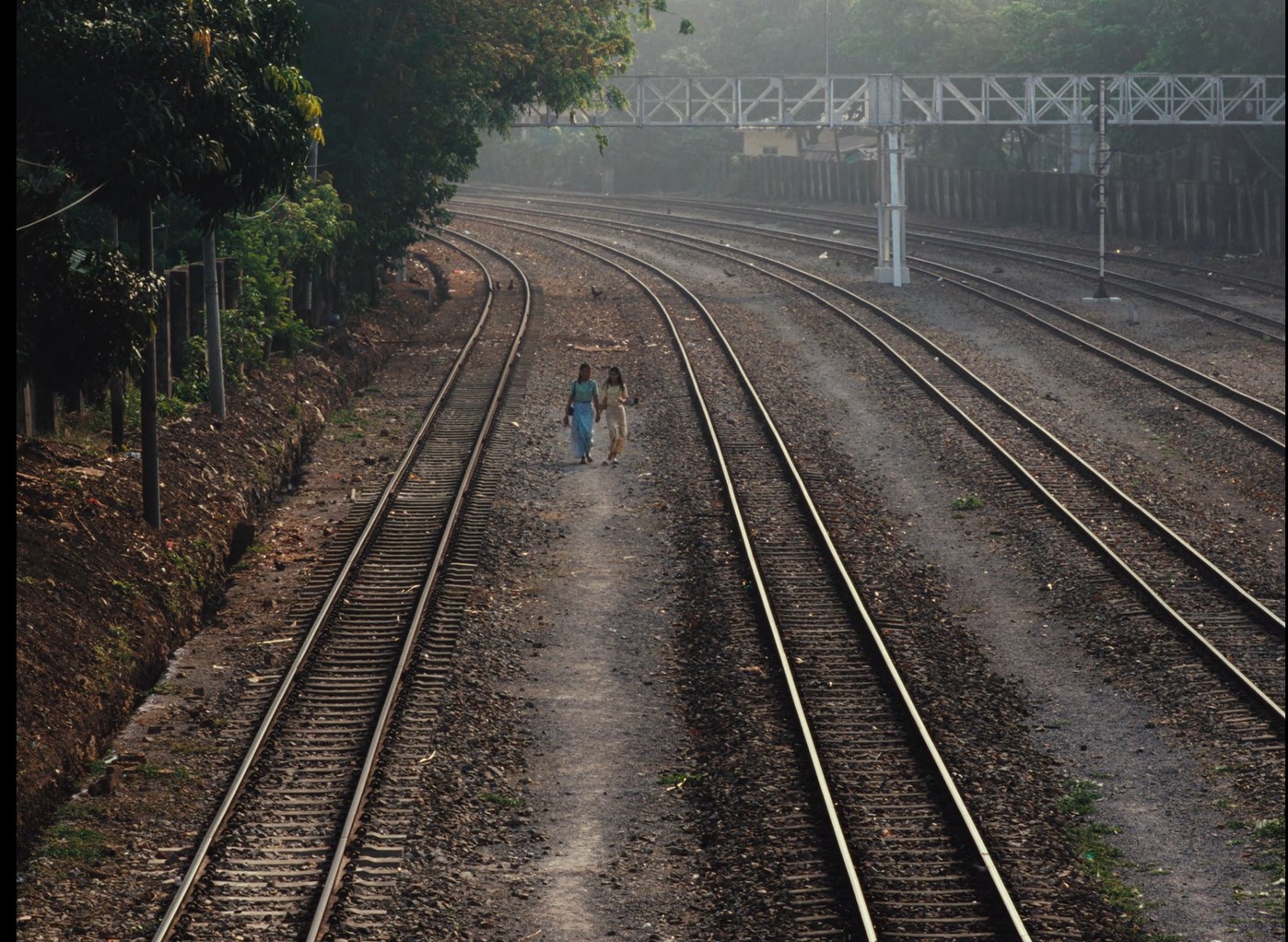
The riveting and revealing film, also in turn, providing an incisive insight into the socio-culture and harsh realism of the today’s society wherein while San Kyi and her grandmother are deeply attached to their village (upcountry) roots as the monk would put it “we, the up country people, attach our nature so much,” while her hard-nosed, hyper-critical and practical mother and forward looking Theint Oo have, on the contrary, in keeping with the times, realistically embraced the urban values to the core where survival of the street smart is the key.
More importantly what makes Fruit Gathering work even more affectingly and moving is the pitch perfect and bravura central performances of Nandar Myat Aung in the pivotal role and Nandar Myint Lwin as her perfect counterfoil, with the subtle, nuanced and vivacious vitality the roles demanded.
Truly, Fruit Gathering is a bravura cinema at its best. It would do well to doff one’s hat in admiration to Aung Phyoe in fulsome appreciation and await his sophomore fare that is in the works. Prosit!



Leave a Reply