

S Viswanath
With about a month away when Toronto’s Entertainment District comes alive with films, fanfare and festivities marking 11-days of cinema watching binge and networking hyper hubbub, as the annual 51st Toronto International Film Festival (TIFF) 2026 gets underway, the festival programming team, lead by the irrepressible CEO & Festival Programmer Cameron Bailey, Chief Programming Officer Anita Lee, Director of Programming Robyn David and TIFF’s seasoned programmers, announced the festival’s flagship and piece de resistance Centrepiece Programme unveiling mouthwatering multifarious selection of 54 films drawn from as many as 50 countries.
The much anticipated TIFF Centrepiece Section (formerly Contemporary World Cinema), as the title bespeaks for itself, is the film festival’s pivot providing the singular platform for showcasing some of most anticipated crème la crème contemporary cinemas, creating buzz in film circuit circles, winning awards and accolades which will vow TIFF audiences being first to watch them following their World and Canadian premieres.
Primarily presented with the objective of honouring and anchoring in recognition of contemporary cinemas with their diversity of genres, trends and thematic concerns and ideations, providing window to promising filmmakers’ artistic excellence and global cinematic culture for festival’s committed cinephiles from across the globe.
Given that animation has become predominant forms for filmmakers, this time around, TIFF curated record-breaking selection of animated films with as many as eight animated features with Centrepiece Section turning spotlight on not only established auteurs, seasoned masters and lauded luminaries but also the upcoming, rising and promising talents to make that decisive cut among top league of the festival coliseum.
That many films that get featured at TIFF’s Centrepiece Section thereafter go on to be feted and become part of respective nations’ official submissions for Best International Feature Film category at Academy (Oscar) Awards as also their own film festivals is to state the obvious.
Further, that the Centrepiece Section facilitates regular festival-goers to discover some of high-calibre, international cinemas that might not otherwise get wide theatrical distribution is another hallmark of the festival’s anchor showpiece.
The 54 titles from as many filmmakers comes from as many as 50 countries include Australia, Bangladesh, Brazil, Canada, the Central African Republic, Chad, Colombia, Côte d’Ivoire, France, Germany, Hong Kong, India, Italy, Mexico, Nigeria, Thailand, and the like, underscoring TIFF’s commitment to spotlighting the best in global cinema.
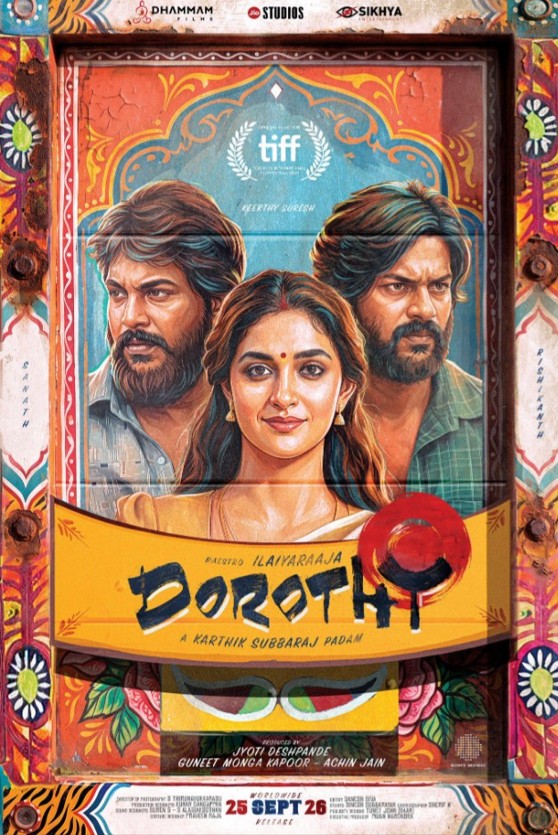
The Centrepiece Section sees world premiere of India and Tamil Nadu’s young and rising filmmaker Karthik Subbaraj’s 10th Tamil language feature Dorothy with magnetic Keerthy Suresh helming the titular role. Described by the filmmaker as “a story that is very close to my heart and a film I wanted to make since many years carrying with me for a long time,” Dorothy, says Karthik Subbaraj “comes from a world I know intimately, one where friendship becomes a refuge, where love survives in silence, and where tenderness exists even in the harshest of places.”
According to him “the film explores identity, caste, masculinity, and compassion, not through spectacle, but through deeply human characters. Though rooted in the culture and landscape of Tamil Nadu, its emotions are universal.” Incidentally, the film is slated for its theatrical release across India on September 25, 2026.
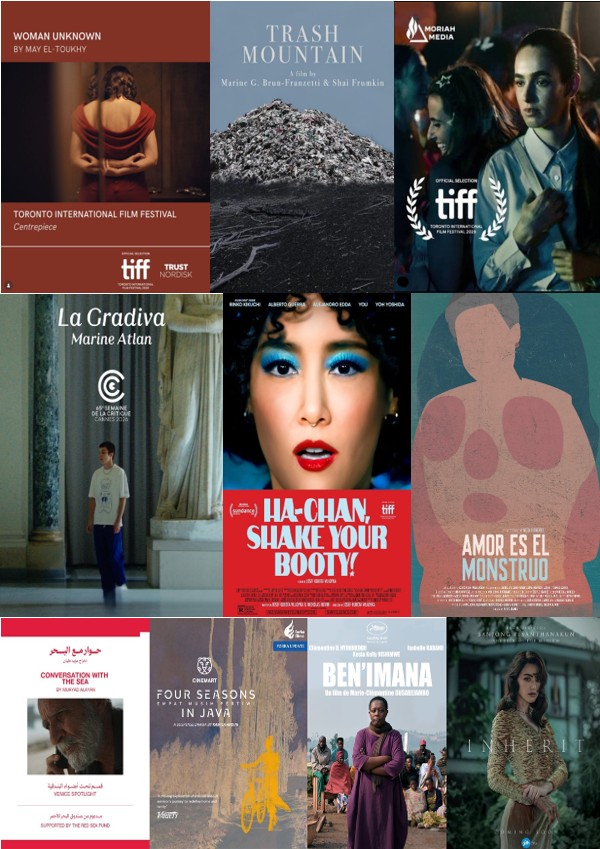
The Indonesian film Four Seasons In Java by Kamila Andini revolves around a marginalised woman in an East Java village who wants to give herself a second chance. Following her release from prison she returns to her native village in an effort to rebuild her life by joining hands with a group of outcasts, she finds the power to confront her past and redefine her meaning of belonging and peace.
The Thai film Inherit by Banjong Pisanthanakun is a directed by Banjong Pisanthanakun, adapted from the 1991 novel Tayat Asun, is a psychological horror flick, which follows a wealthy family whose lives unravel when an 80-year-old grandmother returns looking like a 30-year-old after vanishing for decades, carrying an ancient centipede curse for her granddaughter.
The Irish-US director Kim Bartley’s debut feature Lemonade is a tender, uplifting story about first loves, and the power of human connection. When teen Danny makes a mistake derailing his future, he unexpectedly reconnects with Josh, the social worker who once tried to help him but whose own mistakes drove them apart. With their paths crossing again, Josh becomes both mentor and mirror, guiding Danny on his journey to manhood. Danny soon discovers that family is not always the one you are born into, but the one that believes in you when no one else will.
The Spanish film Love Is The Monster by Neto Villalobos follows a 70-year-old grandmother who seeks to reconnect with her granddaughter after learning she has little time to live. When the child is kidnapped under her care, she will do whatever it takes to find her.
Our Loves by the Israeli filmmaker Avi Nesher focuses on multiple lives who intersect and transform during a single day as terror strikes Israel on October 7, 2023, forever altering the paths of those caught in the chaos.
Based on a 2010 novel of the same name by Nigerian poet Lola Shoneyin, The Secret Lives of Baba Segi’s Wives by Daniel Oriahi, set within the polygamous household, follows Baba Segi, a wealthy patriarch with three wives, seven children and carefully maintained family order. However, the arrival of his youngest wife, Bolanle, unsettles the fragile balance within the household. The film explores universal themes of love, power, jealousy, identity, survival and the complex relationships that bind families together.
The Surgeon by Canadian physician and filmmaker Roshan Sethi is an thriller actioner which follows a retired surgeon who uses her decades of medical experience to fight back after being abducted to perform an illicit operation. Outnumbered by her captors, she turns her deep anatomical knowledge and surgical precision into a lethal advantage.
Trash Mountain by US filmmaker Kris Rey is a comedy which spotlights on a young gay man living in Chicago who returns to his hometown in Missouri following the death of his hoarder father.
Kigali, Rwanda, based film director Marie-Clementine Dusabejambo’s Ben’Imana set in 2012, 18 years after the ethnic Tutsi genocide that rocked and ravaged the country, follows women rebuilding lives amid shared trauma, showing how the past shapes their present. Veneranda, a survivor, despite pressures, organises discussion sessions between victims and families of executioners. Therapy for some, an act of betrayal for others, these testimonial sessions revive and reveal the traumas that each of them try to overcome, in their own way.
The Palestine film Conversation With The Sea by Muayad Alayan centres around a 60-year-old Palestinian man who receives an Israeli court order requesting a social security debt payment in his late son’s name, who allegedly drowned two decades earlier. When no record of death can be found, he embarks on a journey to discover what happened.
Ha-Chan, Shake Your Booty! by Japanese filmmaker Josef Kubota Wladyka charts the lives of Haru and Luis love competing in Tokyo’s ballroom dance scene. However, when tragedy strikes, Haru withdraws into isolation. When friends coax her back to the studio, she develops an infatuation with the new instructor.
The French film La Gradiva by Marine Atlan is a coming of age drama follows a group of high school students who set off on a school trip to discover the ruins of Pompeii. They are seized by a sense of vertigo. They allow themselves to be overwhelmed by desire and anger, until they surrender completely.
German director Valeska Grisebach’s The Dreamed Adventure winner of the Jury prize at Cannes in the main competition section is centred around the poor socio-economic situation in Bulgaria, mostly close to the Turkish border at the end of the 20th C. The thriller has a woman who agrees to a deal to help an old acquaintance. She follows the hero on his adventure and enters dangerous territory where she is then confronted with her own desire.
The Egyptian film Woman Unknown (Kvinde ukendt) by May el-Toukhy Marie, is a psychological drama which Marie, a young nanny and housemaid, is about to marry the wealthy older widower, Christian, for whom she is working. But Marie guards a shameful secret. During World War II, she was in an intimate relationship with a German soldier. Now Marie’s past threatens to catch up with her, and she is forced to do everything in her power to preserve her new status as lady of the house in post-war anarchy.
Other films include A Girl Unknown by China’s Zou Jing, After Elena by Chile’s Shawn Garry, Singapore’s Ah Girl by Ang Geck Geck Priscilla, Ashes by Mexico’s Diego Luna, Canadian Ron Murphy’s Back in Black,
Congo Boy from Central African Republic by Rafiki Fariala, Austria’s Eklipse by Manuel Wetscher, Nepalese film Elephants In The Fog by Abinash Bikram Shah, Germany’s Everytime by Sandra Wollner, Flies by Mexico’s Fernando Eimbcke, Furies by Lebanon’s Rami Kodeih, Future Tense the South African fare by Jenna Cato Bass, New Zealand’s God Bless You, Mr Kopu by Alex Liu, Marie Clements’ How We Stand, Intermission by Yonfan from Hong Kong, L’AUTRE by Alexandre Franchi, France’s Marie Madeleine by Géssica Généus, Neverman by Rodrigo Barriuso, Rehearsals for a Revolution by Iran’s Pegah Ahangarani, Smudge The Blades by Cody Lightning, Soumsoum, The Night of the Stars Mahamat-Saleh Haroun from Chad,
Sunburn by Serville Poblete, Tangles by Leah Nelson, The Betrayers by David Bezmozgis, Colombian The Bovine With The Curved Horns by Omar E. Ospina Giraldo, Italian film The City Of The Living by Edoardo Gabbriellini, Bangladesh’s The Difficult Bride by Rubaiyat Hossain, Irish film The Lost Children Of Tuam by Frank Berry, The Violinist by Ervin Han & Raúl García, Thirteen in Gaza by Palestinian Hosam Abu Dan, Toy Gun Bandit by Rémi St-Michel, Singapore’s We Are All Strangers by Anthony Chen and Colombian Where The River Begins by Juan Andrés Arango.
Among animation feature films are Long Long Night by South Korean filmmaker Kyu Bock Youm, Iron Boy by French animator Louis Clichy, Julián by Louise Bagnall, Light Pillar by Xu Zao, Muyi by Julien Chheng,
Tangles the debut by Leah Nelson, The Violinist by the director duo Ervin Han & Raúl García and Viva Carmen by Sébastien Laudenbach.




Leave a Reply