
The India business contributes to the global sustainability goals through leadership in water stewardship, regenerative agriculture and circular packaging
Bengaluru: PepsiCo released its 2025 ESG Performance Update, highlighting measurable progress against its PepsiCo Positive (pep+) ambition and demonstrating how sustainability is increasingly embedded in the way the company operates and grows. Globally, PepsiCo has expanded regenerative, restorative and protective farming practices to 4.7 million acres across more than 60 countries, achieved 100% water replenishment at company-owned facilities in high-water-risk areas and reduced virgin plastic use in primary packaging by 6%. In India, PepsiCo continues to make strong progress across these priorities
“We’re excited by the momentum we’re building as pep+ continues to transform our business end to end,” said Jim Andrew, PepsiCo Chief Sustainability Officer. “We’re making significant progress- from expanding regenerative, restorative and protective practices to 4.7 million acres, reducing emissions of our operations, to evolving our product portfolio to offer more choices — and we’re doing it in ways that we believe will strengthen our business for the long term. While there’s more work ahead, this progress reflects how we’re continuing to take steps to embed sustainability into how we operate, innovate, and grow.”
In India, these global ambitions are translating into efforts in our food value chain; from farmers and natural resources to manufacturing, packaging, logistics and consumers. Rooted in its pep+ ambition and locally in its Partnership for Progress philosophy, PepsiCo is working with farmers, communities, governments, industry partners and consumers to build a more resilient food system, recognising that the long-term health of the business is intrinsically linked to the health of the ecosystem in which it operates. PepsiCo India engages with approximately 36,000 farmers across 14 states in India and sources 100% of its chip-grade potatoes locally in the country.
“In India, our growth is deeply connected to the strength and resilience of the ecosystem around us. From the farmers who grow our ingredients and the communities around our operations, to the natural resources we depend on and the consumers we serve, every part of our value chain is interconnected,” said Yashika Singh, Chief Corporate Affairs Officer and Sustainability Head, PepsiCo India & South Asia.
She added, “PepsiCo Positive and our Partnership for Progress philosophy is about turning this interdependence into shared growth. When we strive to help farmers become more resilient, we strengthen our supply chain; when we improve water and resource efficiency, we build operational resilience; when we advance circularity, we help strengthen the systems we rely on; and when we evolve our portfolio, we respond to changing consumer preferences This is how we see sustainable growth; not as a separate agenda, but as an integral part of building a stronger business and contributing to progress for communities, consumers and the planet.”
Over the years, the company has partnered with start-ups to accelerate the adoption of digital technologies across its farmer network. Through initiatives such as Mitti Didi, which provides thousands of farmers with soil-health diagnostics and real-time farming insights, and Lay’s Smart Farms, developed with Cropin, PepsiCo is using technology to improve farm productivity and resource efficiency. The Smart Farms programme spans more than 18,000 mapped acres and provides insights to over 7,000 farmers, while micro-irrigation has reached 100% adoption across potato farms in key sourcing regions, including more than 2,300 acres in Uttar Pradesh.
This focus on resilience through innovation extends to water, a critical shared resource for both communities and business. PepsiCo’s Sustainable Water Resource Development and Management replenishes more than 100% of the water utilized in high water-risk manufacturing facilities back into the local watershed. The Pune manufacturing facility is a strong example of our water conservation efforts with water utilisation being reduced by more than 90%. Globally, PepsiCo has replenished 23 billion litres of water to local ecosystems since 2010 and reached approximately 97 million people with safe water access.
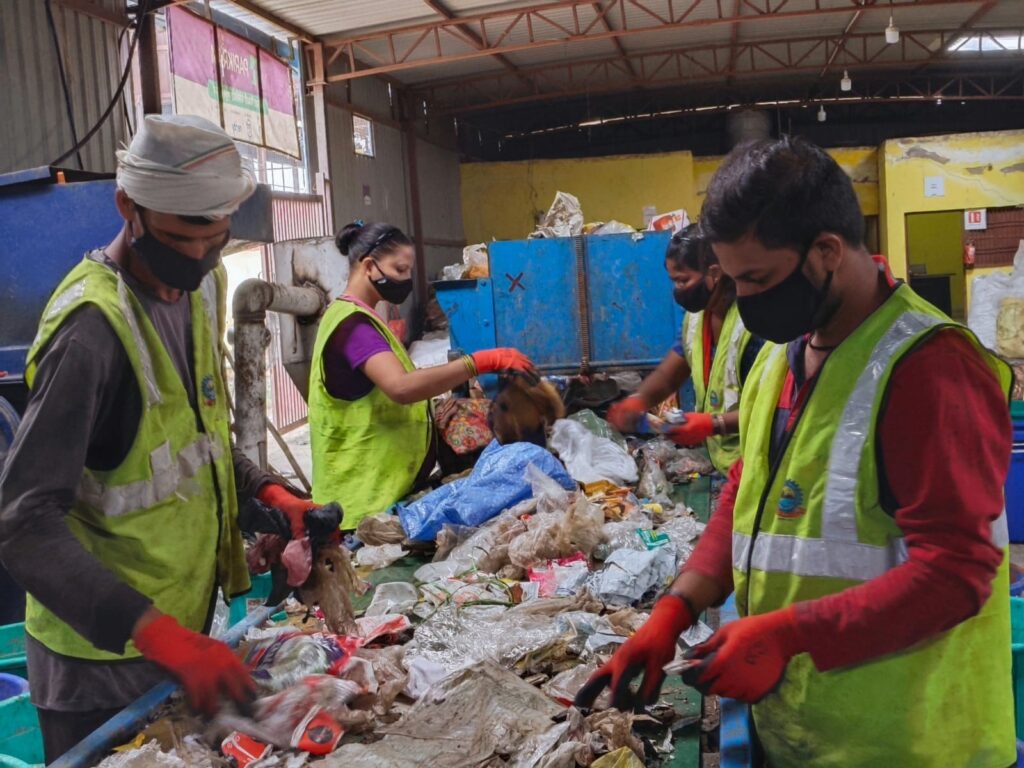
PepsiCo is also advancing the transition towards a more circular and resource-efficient value chain in India. The company is compliant with local Extended Producer Responsibility requirements for both its foods and beverage business. It is redesigning packaging to reduce material use and improve recyclability, including through the adoption of mono-material and polyolefin-based structures for its foods packaging and the transition to 100% rPET bottles for select products in its beverage packaging. Alongside this, biomass accounts for 97% of PepsiCo India’s fuel mix, supporting the company’s transition towards lower-carbon operations.
PepsiCo India is also advancing cleaner transportation through the Kosi–Pataudi EV Green Corridor, developed in partnership with Kalyani Powertrain Limited and Vayudoot Road Carriers. The corridor currently operates with thirteen 32-foot electric container trucks, enabling approximately 6 lakh electric kilometres annually. PepsiCo India has already retrofitted more than 800 vehicles, including distributor-linked vehicles for last mile delivery, across the country, accelerating the transition towards more sustainable mobility across its distribution network.
The company is also evolving its portfolio to meet changing consumer preferences. More than 50% of PepsiCo’s beverage portfolio by volume in India is now low- or zero-sugar. Across convenient foods, PepsiCo continues to expand positive choice offerings, including Red Rock Deli baked variants with 40% less fat and Kurkure Jowar Puffs, a millet-based innovation that celebrates India’s agricultural heritage. These innovations are part of PepsiCo’s broader effort to provide consumers with more choices that align with diverse tastes, preferences and lifestyles.
Together, these efforts reflect PepsiCo’s approach to sustainable business transformation in India, where progress across one part of the value chain can strengthen another. By investing in farmers, communities, resources, operations and consumer choices, PepsiCo aims to create a virtuous cycle in which a more resilient ecosystem supports a more resilient business, delivering long-term value for the business, communities, consumers and the planet.
*
About PepsiCo
PepsiCo products are enjoyed by consumers more than one billion times a day in more than 200 countries and territories around the world. PepsiCo generated nearly $94 billion in net revenue in 2025, driven by a complementary beverage and convenient foods portfolio that includes Lay’s, Doritos, Cheetos, Gatorade, Pepsi-Cola, Mountain Dew, Quaker, and SodaStream. PepsiCo’s product portfolio includes a wide range of enjoyable foods and drinks, including many iconic brands that generate more than $1 billion each in estimated annual retail sales.
Guiding PepsiCo is our vision to Be the Global Leader in Beverages and Convenient Foods by Winning with pep+ (PepsiCo Positive). pep+ is our strategic end-to-end transformation that places sustainability at the center of our business strategy, seeking to drive growth and build a stronger, more resilient future for PepsiCo and the communities where we operate. For more information, visit www.pepsico.com, and follow on X (Twitter), Instagram, Facebook, and LinkedIn @PepsiCo.





Leave a Reply