

S Viswanath
Turning and turning in the widening gyre
The falcon cannot hear the falconer;
Things fall apart; the centre cannot hold;
Mere anarchy is loosed upon the world,
The blood-dimmed tide is loosed, and everywhere
The ceremony of innocence is drowned;
The best lack all conviction, while the worst
Are full of passionate intensity.
Surely some revelation is at hand;
Surely the Second Coming is at hand. …..
When a vast image out of Spiritus Mundi
Troubles my sight: …….
That twenty centuries of stony sleep
Were vexed to nightmare by a rocking cradle,
And what rough beast,……………
The Second Coming-W B Yeats
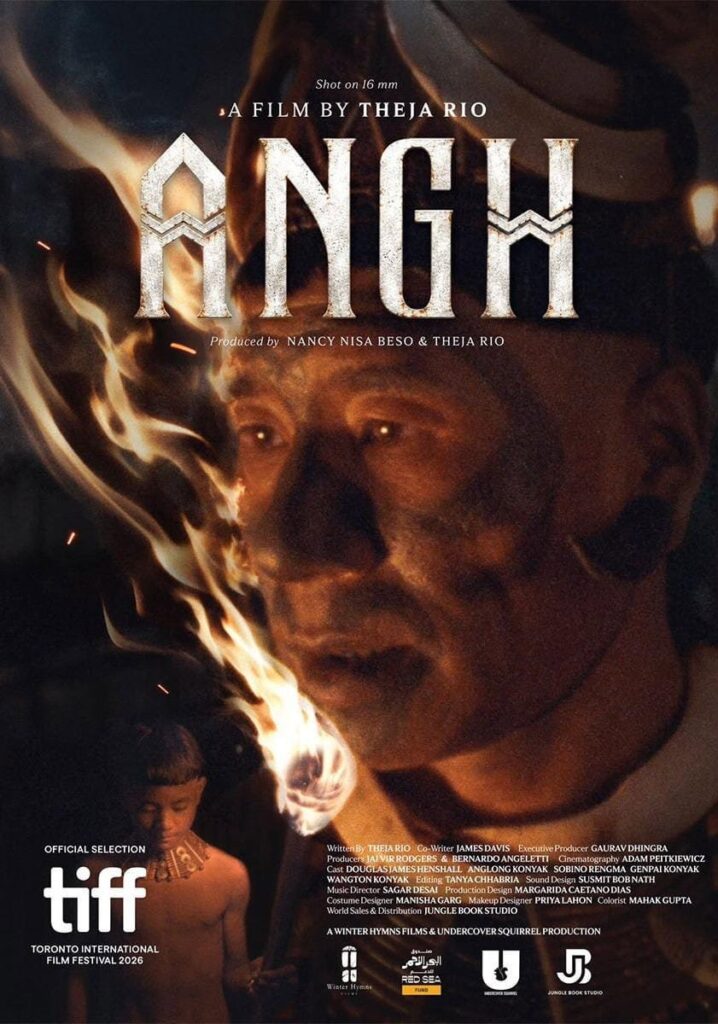
“Do not speak to me like I am an animal. Our forefathers flourished in these lands. Long before these (white) ghosts arrived in our mountains with their truth. Traitors. Traitors. All of you are Traitors. Do you believe in their God. Or is this all pretends. Trick them for food and shelter.” In these doleful, defeating cries of the defiant tribal patriarchal guardian – the venerated ageing hereditary chief of Konyak village – Anghba, lies the combustive core of director Theja Rio’s evocative and enlightening103 mins Anghwhich vividly explores the valiant village chieftain’s singular stubborn resistance against cultural hegemony and erasure of ancestral beliefs, faith and customs brought on by the incursion of Christian missionary in the State of Nagaland.
The melancholic and meditative film, which starkly and searingly portrays the proverbial conflict between indigenous identity and colonial modernity that still rages on even today the world over, whilelocal language, attire, ritual, memories lose their relevance to “modern” western ways, deservingly plucked the prestigious Platform (Competition) Prize at the Toronto International Film Festival – aka TIFF, according to five member Platform Jury, presented a “refreshing perspective, strength of filmmaking, and deeply resonant portrait of a world” alongside Theja Rio’s “vision, audacity and courage.”
That Angh, a searing and soulful elegy to the tragic battle resisting trampling of tribal life and living, individual identity and independence, found resonance and reward in Toronto, beatingequally eclectic 11 others for the coveted honour, is furthermore significant, in that, prior to every screenings, TIFF plays a short film clip reminding the Canadian diaspora, the City’sgrateful acknowledgementof the land Toronto istoday.
Furthermore, that “there were a lot of good films in the competition,” as Theja Rio himself graciously concedes, including films by far more seasoned directors, in an interview, and yet Angh pipped them to the prized recognition and reward bespeaks of the film’s and the filmmaker’s ruminative reflection on how both, individual and environment, the idyllic existence, weredecisively decimated into submission, despite thorny, tempestuous resilience to cultural and social transmogrification wreaked upon by the incursion of external forces and skewed developmental agendas.
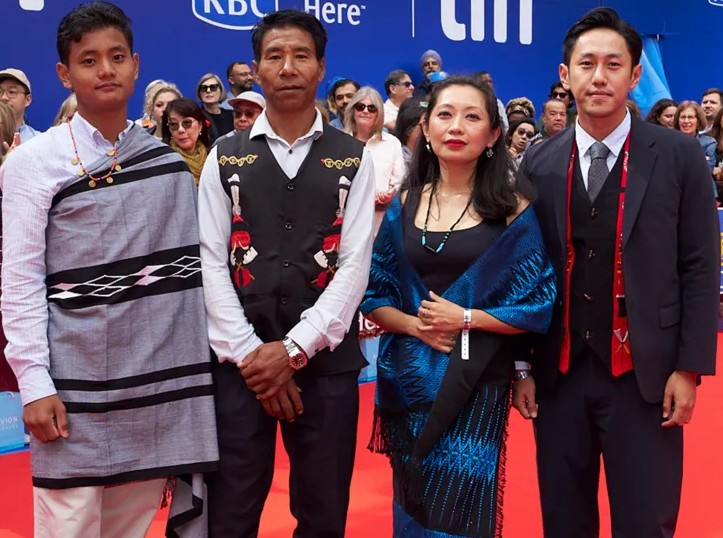
“As you consider watching a film with us, we encourage you to reflect on the land that you are on, who the traditional keepers of the land are, what the treaty relationship is, or if it’s unceded territory.TIFF Lightbox is located on the Treaty Lands and Territory of the Mississaugas of the Credit and the traditional territory of the Anishinaabe, the Wendat, and the Haudenosaunee.The territory is within the lands protected by the Dish With One Spoon Wampum Belt Covenant, an agreement between the Haudenosaunee and Anishinaabe and allied nations to peaceably share and care for the resources around the Great Lakes.Today, the meeting place of Toronto (also known as Tkaronto) is home to many Indigenous people from across Turtle Island, First Nations, Meiteis, and Innuit people. We are grateful to work on this land.”
The Platform (Competition) Section, which champions films with bold directorial vision and distinctive storytelling bestowing a bounteous CA$20,000 prize money to the best film picked by in-person international jury also provides the winner of Platform Prize (non-English language) automatic rite of passage for the Academy Award(Oscars) for Best International Feature Film.
That Anghthrough stoic, deliberately slow paced and sombre iteration of its thematic narrative succeeds in drawing its audience’s attention to the irrevocable historical effacement of State’s tribal ethnicity and culture and invested and understand about the traditions and relationships that have now long lost, bespeaks of the film’s and its maker’s visionary mission to press home the point that Nagaland today is “the most Baptist state in the world,” with its generation of indigenous cultural moorings lost to the winds of time and irreversible damage done to the native land, and the severing of natives from their tribal ancestors.
Incidentally, the debut full length feature film, is, in fact, the expanded version of the eponymous short film by the director which had earlier won the Special Jury Award at the 2021 Clermont-Ferrand International Short Film Festival.
Set in the early 1960s, in the verdant mountainous forest bordering Indo-Myanmar, the languorous and lamenting film, inspired by true events and historical circumstances, drawing heavily upon the history, culture, practices, traditions, beliefs, faith and lived realities of the Naga community, rendered in the tribal Konyak language, spotlights on Anghba, the patriarchal Konyak tribal chief, his mute son Amao, and ailing wife on her deathbed, as Christianity and Baptism swept village has fallen to the trappings of a “better” life promised for the converts.
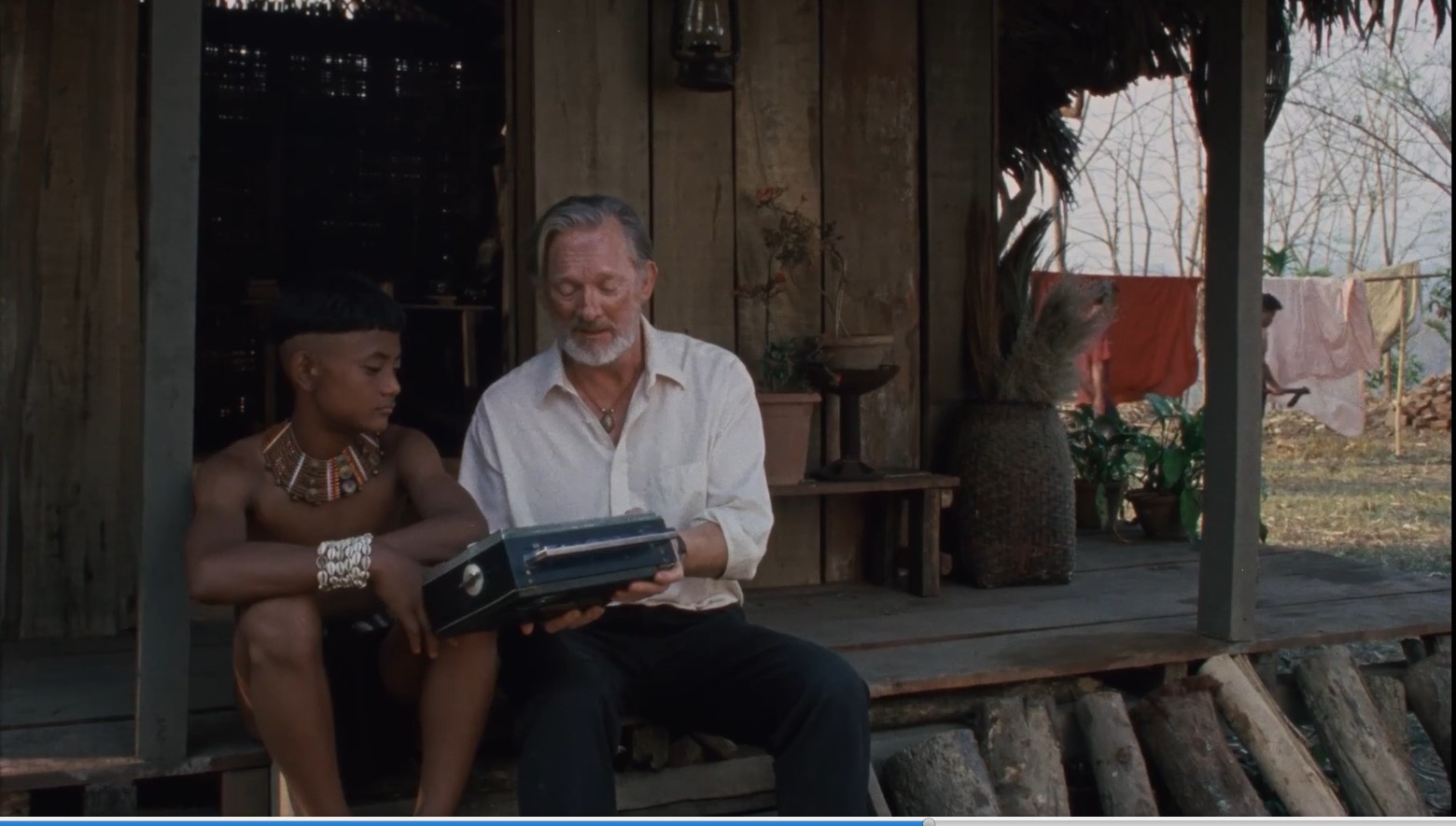
Despite the colonial encroachment and the allurements it doles out to woo the gullible tribals into its fold, slowly eroding and dismantling the very fibre and fabric of indigenous living, lifestyles, traditions and practices, memories and ancestral bonds, Anghba stands rock solid uneffaced by that entrapments from the “white ghost” as he addresses the American missionary pastor and his acolytes.
Deliberate, languid and lethargic in its unfolding, snaking at a snail’s pace, Theja Rio weaves and wefts a wondrous fateful saga while vividly capturing the tragic milieu wherein the aged tribal chief while fending of the friendly overtures works to drum sense into his mute son on how important it is to stick to one’s ancestry and individual identity while the young wavering ward is wonder struck at the “modernity” of lifestyle that embracing the new religion and practices is bringing about in the lives of his kinsfolk who had crossed the Rubicon of resistance to the “outsider,” who, as one of the initiates explains to the obdurate “old chief” that the patronising Christian paster was “giving you truth” and “desires teaching the truth about life.”
“Everyone is happy and safe. We don’t worry about the safety of our lives anymore,” describes the converted man residing in the Baptist settlement, to which the affronted and unamused “old chief” furiously retorts “so you have not only lost yourselves, you have lost your conscience as well,” holding on to the ground beneath his feat while the Atlas shrugs about him as he valiantly clutches to the straws of resistance slipping away.
Even a repentant return of Hontien, a former villager, return and protestations of forced assimilation and rootlessness caused by being so far from his ancestors, however, do not deter the righteously furious and indignant guardian of the skulls, Anghba who scoffs and rebuffs at the man retorting “you reek of liquor. You are drunk. Without shame, without sense.”While the man concedes “that may be true. I am trying to find my roots again.I have shamed our ancestors. I have stained their memory. They follow me even into my sleep.My father will not speak to me in my dreams.Even if you cast me out, let me speak to his skull. Let me ask for forgiveness.” The wise Anghba just counsels “go to the house. Lay down what burdens your heart.”
However, for the tragic Anghba, to whom, only desolation awaits, son Amao, a witness to this exchange, and despite the patriarch’s paternal counselling and jungle folk tales and wisdom to prepare him for a life after he is gone “you must learn to survive here. The jungle is vast. It has everything we need. But you must learn it, respect it. If you are wise with it, it will provide everything you need. You must learn it. You must remember it. That is how our people survived. And it is how we must survive. Protect and flourish in this wild, Amao, is caught between known ancestral calling and the irresistible pull of the cross and promise of greener pasture being purveyed by the pastor.
Despite his dad’s persistence towean him away and from being curious about the nearby bustling halcyon commune of converts of the Baptist village where English, church and Western sartorial lifestyle new modern technology, including a radio that are in contrast to the “primitive” and “punishing” ways of his tradition bound dad.
Young and promising Theja Rio starkly captures the dichotomous dilemma of the defiant aged,protective, preserving, and persevering pater’sattempts to shield his son from the outside worldand his curious, captivated son drawn to the promise of a new life yonder as the self-appointed guardian elder seeks to convince and pass on the ancestral beliefs and customs to his son that has been passed down through generations, even as his ailing wife wonders what would happen their young wanderlust waif is drafted into the rhythms and diurnal life of the Baptist settlement by the missionary.
Deserted and desolate the revered tribal old chief and headhunter may be but his singular stubborn stance to keep away the “white ghost” and their “alluring habiliments” of a better life from his homestead swearing by the ancestral ways passed on down ages, and his heir apparent (through whom he hopes to pass on the practices to posterity) turns into a haunting and sagacious soulful saga of repulsion and resistance to Catholic change being wrought on the tribals being “deliberately” and “consciously” “seduced by the comforts of the mission.”
According to Theja Rio the film is an offering, “a gesture of remembrance, of pride, and of presence. A way of saying that we are here, that we have always been here, and that our stories deserve to stand alongside the rest of the world.”
The intricate and intimate intergenerational tale of conflict and confusion between the father and the son takes on mythical proportions inviting and intriguing audiences to participate in to the “political repercussions of homogenisation of culture and the cost of religion to centuries-old tradition and thought,’ while both battle with their own sense of belonging in their respective universes.
“I want to make films about things I’m conflicted about rather than things I am sure about,” says the 31-year-old filmmaker Theja Rio, born and raised in Kohima and who studied filmmaking at National Film and Television School (NFTS) in Beaconsfield, UK. He further adds that for Angh, his biggest influence were films of Columbian director Ciro Guerra, more so the director’s Embrace of the Serpent.
As he explains, “while the film charts the European explorer’s travels into a region of Amazonian jungle, it is equally about Karamakate, the tribal character who accompanies the white explorers in the film. Guerra is someone who balances magic realism and surrealism with historical realism in his films. When you’re trying to make indigenous cinema, with its profusion of dream, myth, memory, ritual and spirituality, it’s an interesting line to tread.”
Indeed, the Konyaks one of Nagaland’s (a mountainous state of fewer than two million people on India’s northeastern frontier) 17 major tribes, concentrated in the eastern district of Mon, where such chiefs are known as Anghs, even today, has some older men bear facial tattoos associated with Konyaks’ historical practice of headhunting, but, sadly, as the film notes in its closing credits, “today, Nagaland is the most Baptist State in the world,” with Christianity as a way of life and practice thanks to the seismic cultural and civilisational shift Nagaland has witnessed due to the Christian conquest and with it the cultural loss on the pretext of modernity and progress.




Leave a Reply