

S Viswanath
Around 31 Screens in 8 Theatres, the 31st Busan International Film Festival is all set to wow cinephiles of the world. What makes the 31st edition of one of Asia’s prominent cinema carnival is that, recognising its growing international stature, repute and influence in being go-to festival, especially for Asian cinemas, the Busan International Film Festival has been officially taken on board by the International Federation of Film Producers Association aka FIAPF, as among the ‘A-list festival.’
The coveted recognition which sees BIFF join the ranks of major international film festivals such as Berlin, Cannes, and Venice, among others, also ensures that, in the wake of this recognition, the winner of Busan Award for Best Film, the top prize at BIFF’s Competition Section, automatically qualifies for being nominated for the Academy Award for International Feature Film from the winning film’s nation. With this, BIFF becomes among only six qualifying film festivals designated by the Academy of Motion Picture Arts & Sciences (AMPAS), joining the elite scroll of Berlin, Cannes, Sundance, Toronto, and Venice.
Around 316 films curated and culled from around 59 countries, the 10-day 31st Busan International Film Festival, on from October 6 to 15, 2026, will be enthralling and engaging cine enthusiasts with the crème la crème of contemporary and classic cinemas from world over.
The newly bestowed status as also as part of its commitment to global solidarity within the film fraternity, BIFF, having spent the past three decades discovering Asian Cinema and connecting it with the world, is now expanding its role beyond that of an internationally recognized film festival to become a global platform helping shape the future of cinema.
Following its enhanced official selections which marks the festival’s largest lineup since 2019, BIFF has also opened a day earlier than in previous years, in an effort to give audiences greater flexibility in planning their screenings schedules during the busy first week, which also sees the festival’s daily screenings expanding from the usual four slots to five, in the process, ensuring avowed audiences greater flexibility in catching the festival’s most talked-about titles, while enjoying a wider range of films as well.
BIFF, which took its birth in 1996 as the country’s first international film festival, has grown in size and stature as Asia’s premier film festival, specifically serving as a pivotal ,platform for discovering new Asian directors and Asian films. It is this regard, that BIFF’s two key sections – Vision Asia & A Window On Asian Cinema assumes immense significance. Further, what makes this year’s BIFF so special is that as many as seven assorted thematically amalgamated Indian films are being featured in the film festival under these two sections.
Dedicated to discovering and supporting independent cinema from Asia and Korea, the Vision Section is split into Vision – Asia and Vision – Korea, which sees the showcasing of fresh voices and bold perspectives. The section, which this year, presents 12 independent film each from Asia and Korea, two Indian films in fray.
Likewise, the A Window On Asian Cinema section, which showcases notable works by both established Asian filmmakers and emerging talents, reflecting a diverse range of perspectives and styles, sees five Indian films being featured, making a total of seven at the film festival, thereby marking Indian regional cinemas growing and influencing presence in the Asian film festival circuits. Incidentally, Indian films have found a niche for themselves as Toronto International Film Festival, Karlovy Vary International Film Festival, Venice, Locarno and other film festivals across the globe.
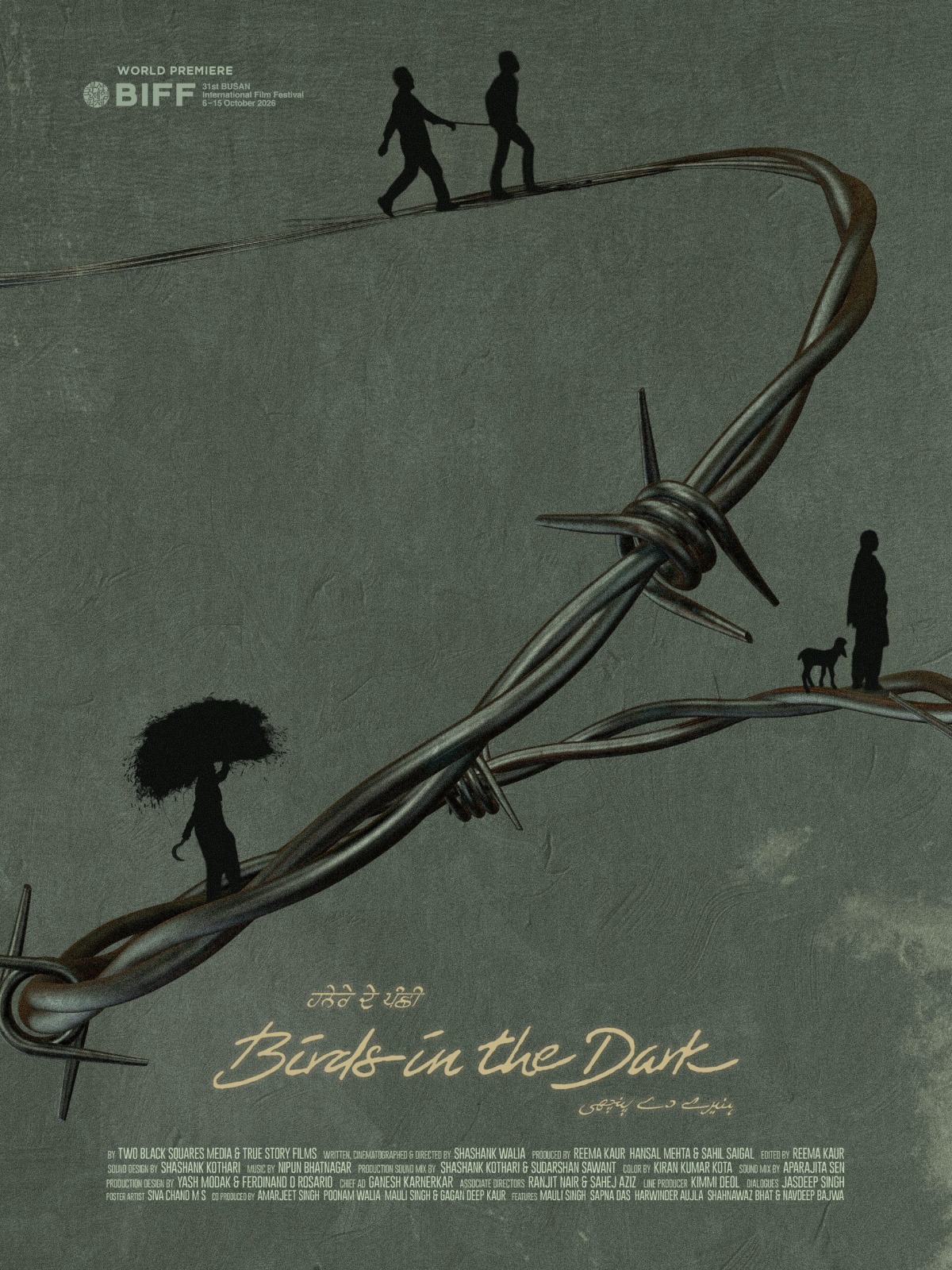
Filmed in black and white, the 141 min feature directorial debut of Shashank Walia – Birds In The Dark – tackles an amalgam of thematic narratives and cinematic genres. Described as a roadie romance with a dash of thriller suspense, the film, whose focus also brings to fore the gay theme, is predominantly a Punjabi film which also has a smattering of Kashmiri and Urdu, given that it spotlights on a Muslim man from Kashmir – Amir, who is taken into custody by the police informant Jagtar.
Like the many films in the gay genre, the film which tracks the travel of the two through the jungle and the mountains towards the distant city, takes on a meditative and reflective mode while the disillusioned police informer and the man he once wrongly captured find their way back to each other in a caste-divided village.
The film, which also touches upon the issues of human rights and labour problems, showcases how Jagtar, who sets Amir free, enroute, returns to his native from he had fled. There, one witnesses agricultural workers up in arms, while Jagtar reunites with Raman, the landowner and his former lover.
Soon, however, Amir too comes to town looking for Jagtar and meets Dilraj, the leader of workers’ organisation, and begins to feel a sense of solidarity, where a landless woman’s fight for land unsettles the old order, pulling their lives into a gathering struggle of desire and solidarity.
Director Shashank Walia, an alumni of Pune headquartered Film & Television Institute of India, where he did his cinematography course, through his black and white debut directorial fare, tackles the proverbial and dominant social issues of sexuality, patriarchy, famers’ resistance, and caste hierarchy, in a poetic and meditative manner, to drive home his homily.
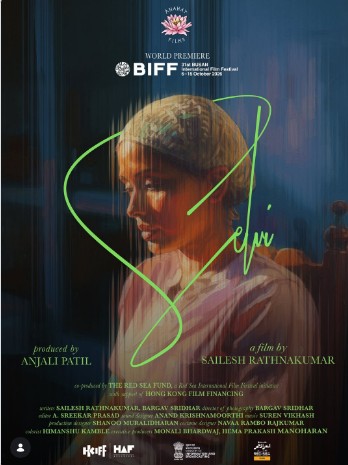
In contract, Sailesh Rathnakumar’s feature directorial debut – the 97 min Selvi – as the title bespeaks for itself revolves around the titular protagonist and charts the trials and tribulations of selfless woman who have navigate not only their work life demands but also their individual needs in an urbanised setting, .
Selvi, is a homecare nurse having come to the City to take of her family’s needs. Chasing the chimera of becoming a ‘real’ nurse and emplaning to Dubai in search of better life, however, finds her personal and professional problems push her to the edge, when her friend Kavitah attempts suicide following a breakup, resulting in Selvi taking up Kavitah’s shifts as well. As a result, saddled with hours and hours of shift duty, sees Selvi driven to fatigue and helplessness which she is unable to pour out to anyone.
Through Selvi, director Sailesh Rathnakumar seeks to throw light on similar such countless selfless women who exist in the care of others while their own individual life is impacted due to their dedication.
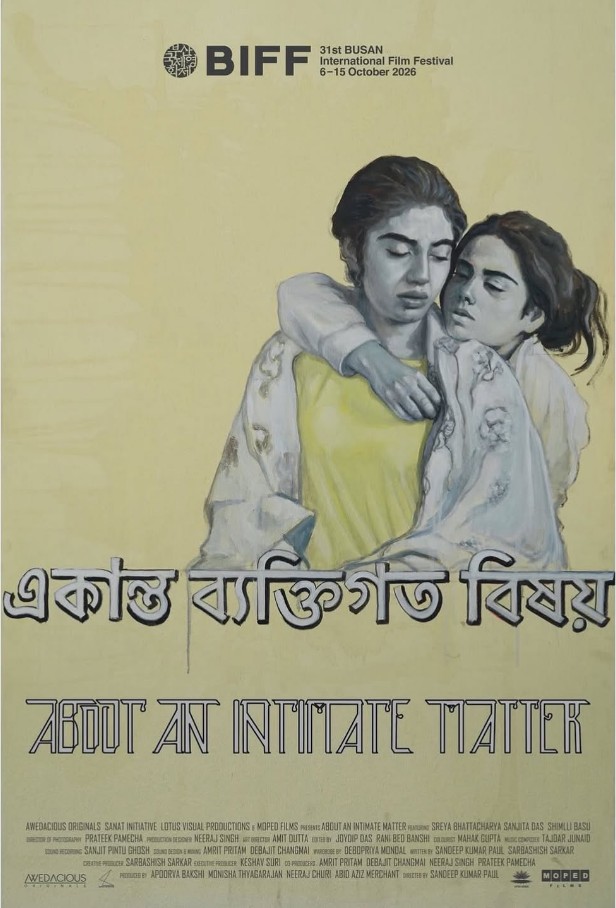
In A Window on Asian Cinema Section you have Sandeep Kumar Paul’s 95 min feature directorial debut film About An Intimate Matter (Ekanto Byaktigata Bisho) which is again a romantic saga that tackles the issue of lesbianism as also other social issues confronting women and society.
The Bengali film charts the challenges faced by a schoolteacher Swarna, in a live-in relationship with Driti, whose life is upended after her association goes public. The film examines the voyeuristic nature of modern society, placing the educator under public scrutiny while questioning her personal choices, including her sexual preferences.
How the societal scrutiny makes the life of Swarna, who, after graduating from a Delhi university, returns home to Kolkata to take up teaching at a secondary school, forms the focus of the film by Abbas Kiarostami inspired film maker who has no formal film training but self-taught.
Her personal life comes under public glare when the school’s disciplinary committee summons her following a complaint about her Facebook photograph she has posted. How her past relationship comes to haunt her shaking her entire life, while the censorial society sharply commenting on a woman’s taste and clothing becoming the targets of criticism and control, with the result what otherwise is an extremely personal and intimate choice is transformed into an ideological battleground by the society at large.
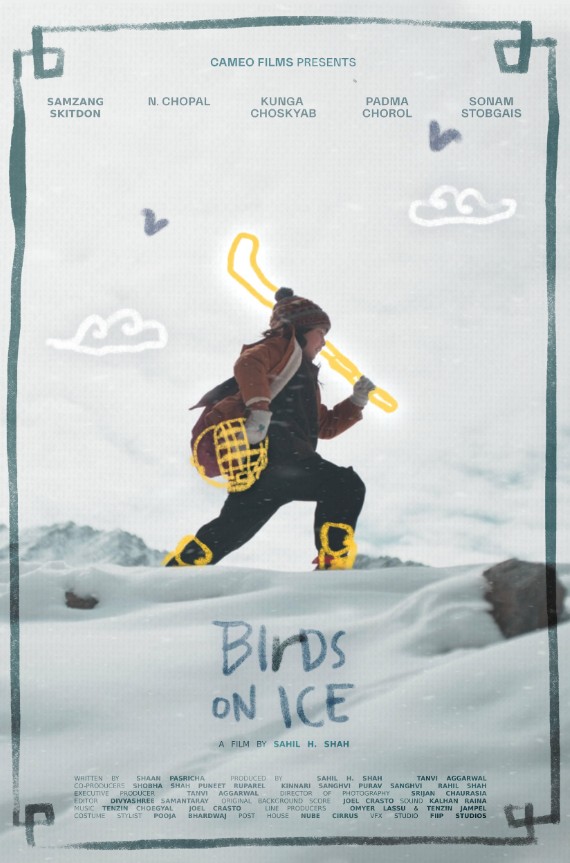
Sahil H Shah’s debut feature 86 mins Birds On Ice is a coming of age sports drama centring around a young Ladakhi girl who while awaiting the return of her shepherd parents while living with her grandfather, dreams of playing ice hockey but harsh winters and harsher realities of her family, adulthood and survival make buying skates impossible until she and her friend take matters into their hands.
The tender tale set in the high altitude region of the Himalayas speaks of how Young Tashi, who loves the sport more than anything, but her family cannot afford even a pair of skates. While she awaits endlessly for the return of her nomadic parents with her aging grandfather and the prospects of her best friend preparing to move away, goads the young girl into taking things in her own hands to realise her life’s cherished dream.
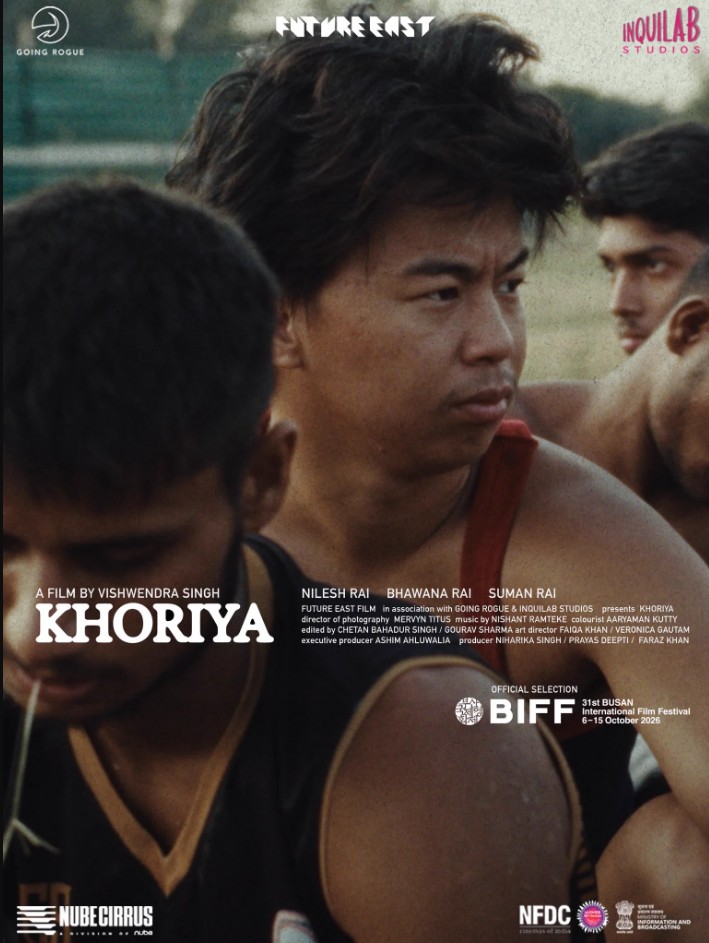
Vishwendra Singh’s 81 min debut Hindi-Nepali film Khoriya set on Delhi NCR’s outer fringe, centres around two Nepali half-brothers running a poultry farm that collapses following a bird flu outbreak. While the younger brother, dreaming of becoming a soldier, pursuing a young woman working in a parlour trying to break free of her home life and settle down with her.
The elder sinks into drinking and despair and driven to illegal trade of steroids by targeting military recruits unwittingly drags his younger kin into the business. With the result the girlfriend, a beautician in a parlour, decides to leave for Dubai, in search of better life. The film is a searing examination of the Nepali migrant workers within Delhi’s urban economy with both brothers struggling to hold onto their dignity in the city’s rougher margins, where while their labour is essential, however, their presence is simply ignored. The film’s title Khoriya, is a term for traditional slash-and-burn farming system in Nepal.
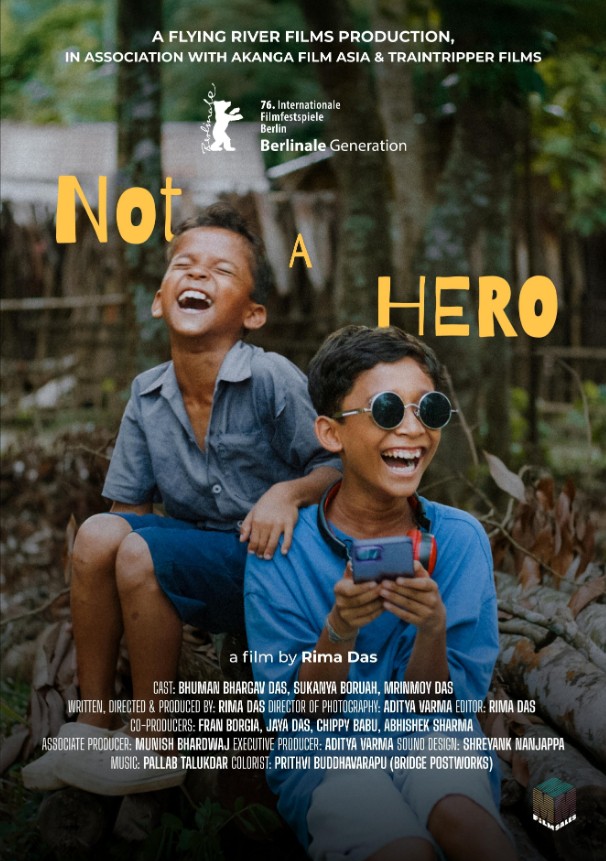
Film festival favourite Rima Das brings her India-Singapore coproduction film – Not A Hero. The 98 min coming of age fun filled frolicsome drama centres around a city bred young 11-year-old Mivan despatched to his aunt Pahi’s homestead in rural village. Uprooted from his familiar milieu, Mivan finds life in the country side tedious and boring. However, the young lad gradually adjusts to his new surroundings as he connects with friends, animals, and nature around him.
How his incongruous presence creates a crack in the conservative rural village, and Mivan and other children begin to resist the existing order, stirring up one small commotion after another, forms the film’s focal point as the children’s world unfolds against the picturesque landscape of the Assam region vividly capturing the gradual transformation of a boy alongside the changes taking place around him.
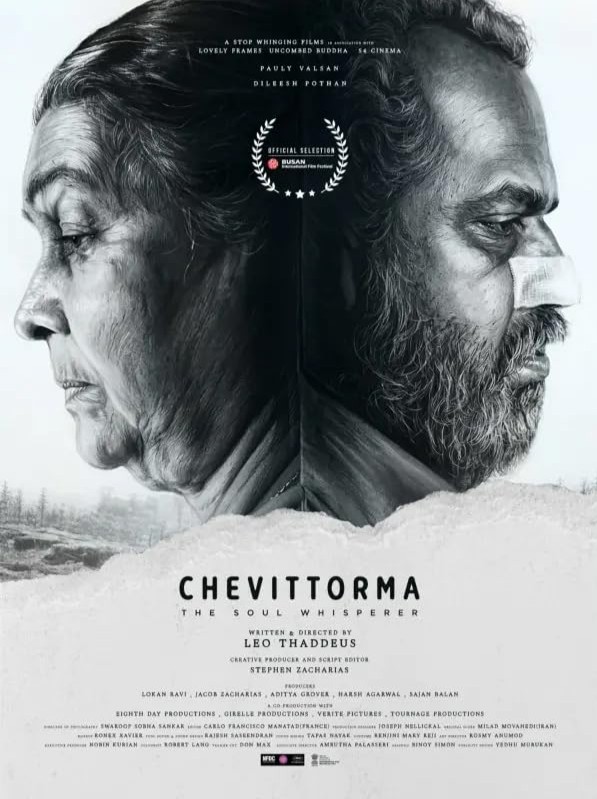
Leo Thaddeus’ 95 min The Soul Whisperer (Chevittorma) is the proverbial Malayalam movie, which set in the hills of Keralam, is a meditative, moody sombre film that reflects upon death, faith, memory and possibility of redemption.
Theresia, is a woman who sits by the bedsides of the dying and whispering prayers helping them die in peace. When she is summoned to the ancestral home of a powerful and wealthy landlord farmer, Varkichan, on his deathbed, urges him to repent and forgive. However, the hardened man does not believe in showing any weakness to either his son George and his daughter-in-law, who have returned after a decade and await his death.
What begins as a ritual vigil of people awaiting the man’s death, gradually becomes an unsettling confrontation with buried memories and unresolved histories, as the poser looms large – How can the long suffering and inherited anger that have tormented everyone in the family finally be brought to an end? This question emerges from George’s wife, a Tamil woman who has been looked down upon by her father-in-law throughout her married life, and from Theresia, a woman who lost her family without warning and became all alone.





Leave a Reply