

S Viswanath
“Children do not need us to shape them. They need us to respond to who they are.” — Naomi Aldort – Raising Our Children, Raising Ourselves
“In raising my children, I have lost my mind but found my soul.” — Lisa T. Shepherd
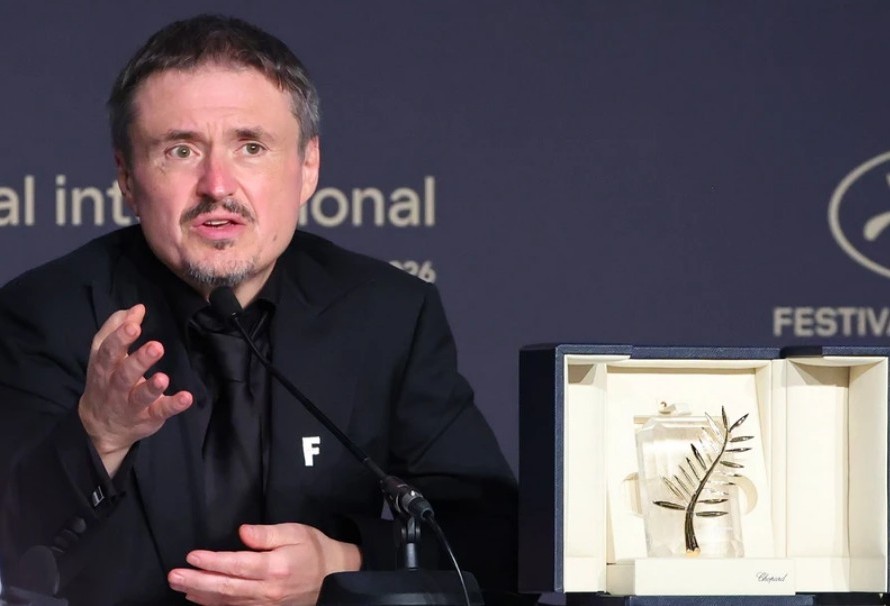
“It’s important to understand that there is no single truth and that we can survive and live alongside others, even if we do not share the same values. Even if we may be convinced that our values are the best, I do not believe we have the right to impose them on others. Without engaging in this dialogue, we’re going to see high levels of social violence. And this isn’t for our sake — since we’re older — but for our children.” Cristian Mungiu, after receiving the Cannes Palme d’or for his film Fjord.
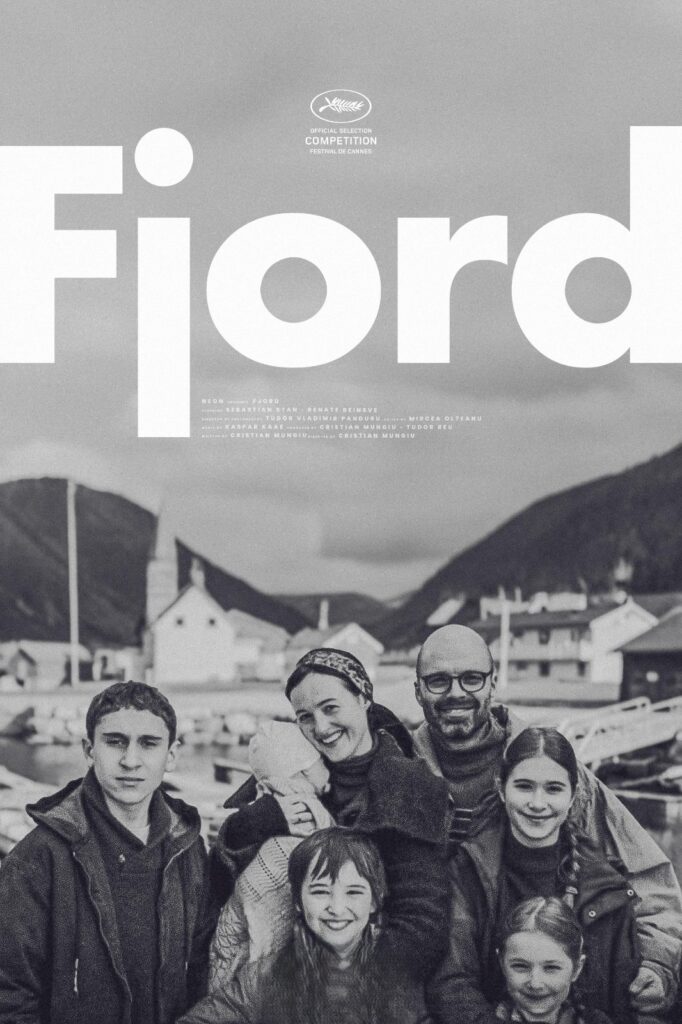
Set in, and largely around, Stryn (small village with a harbour in Norangsfjorden, near Oye in More Og Romsdal region of Western Norway), renowned for UNESCO-listed Geirangerfjord (world-famous fjord featuring steep cliffs and waterfalls like the Seven Sisters), Romanian New Wave filmmaker Cristian Mungiu’s “Fjord” translates to “where one fares through” or “a place where one travels” taking audiences on a potent socio-political cruise of universal ramifications.
Incidentally, Fjord is based on Bodnariu family written about by Sherwood Dobson’s book “Fjord: The True Story of Marius and Ruth Bodnariu, Their Children, and the Norwegian Family Separation Case.”
Fjord, which also means, “a long, narrow arm of the sea bordered by steep cliffs: usually formed by glacial erosion,” that won the prestigious Palme d’Or at the 79th Cannes Film Festival, commences with the cruise sailing through these very passage.
Ford anchors its troubling thematic narrative of State Vs Family/Individual on caring of children once it reaches the port of the coastal village surfing amidst the people that inhabit the simmering site of conflict through its 2 hours 26 mins screen run time before again setting sail over the horizon from whence it had arrived.
At the fulcrum of Fjord are Romanian-Norwegian couple Mikhai and Lisbet Gheorghiu, arriving at the small coastal Norwegian village, their homeland, with their brood of quintet children – Elie, Emmanuel, Judith, Timothy and the unnamed new born.
The family reaches Norwegian shares following the deaths of Mikhai’s parents, leaving their tranquil life behind in Romania to take up residence in the remote village, harbouring hopes of rebuilding their lives Lisbet’s family – her mother. Sure enough, the Halbergs – Mats & Frida, with a daughter of their own Noura, warmly welcome their neighbours amidst the community.
While the elders exchange pleasantries and promise of fraternity, their school going children likewise bond with one another as bonhomie, brotherhood and good neighbourliness marks the milieu .
Wholesomely welcomed by the inhabitants, the hidebound conservative and Bible led orthodox Xian family soon settle into the rhythm of their respective roles. The children attending their new school and making new friends. The mother donning the role of a nurse at an old aged hospice. The family head, assuming position at the tax office, with the respective colleagues providing them the ropes on their new responsibilities.
As if foreboding of things to follow forming the focus of Fjord’s searing and soul searching discourse the conversations cited below portends of what lies ahead. Both for the flabbergasted family being pilloried for their “parental trespasses” and the intriguing interplay of proceedings that keeps the audiences attentively invested in the film’s pulsating see-saw proceedings.
“You can accompany on a walk or be near them for the last minutes. You cannot bring anything from outside & communicate with the family. And no religious tripe if the family doesn’t ask. If you can’t stand it, come to me.” Says the hospice’s worker to Lisbet drumming on do’s and don’ts of maintaining patient – family distances.
“Sometimes it happens. With five children discipline is needed. There is no other way. Otherwise it is not like that.” Says father l, an air force engineer, to his Hallberg neighbours Mats, the school director & Frida, his non-practising lawyer wife during the dinner.
“A problematic child with mood swings. A disciplined children.” Says Frida to Lisbet of her step daughter Noura given to her unpredictable behaviour.
“She must learn to admit her mistake.” Says father Mikhai to wifey Lisbet as they prepare their children for the school.
“In principle, she’s a teenager. Not only is she doing things like adding problems and sympathy. She’s just too spoiled. It’s hormones. Everything will pass.” Says Frida to hubby Mats commenting on Noura’s conduct during the dinner sitting.
In the course of the film further such stark disparities and duplicities between the tradition bred and modern folk are revealed as the conversations that follow show.
On Noura’s invite to attend her birthday bash as also trip on the boat, Elie & Emmanuel reply: “We have to ask our parents for permission. Dad will be angry if we join.”
At another time when being tended to after she impetuously slits her wrist, Noura exclaims to Elie “Oh my God, you’re so sexy.” To which the much embarrassed and shocked Elie retorts “Don’t mention God in such a context.”
When Emmanuel counsels Noura not to hurt herself again and she questions him why, the boy replies “because Jesus is inside us.”
Such then is the indoctrinated lives of the two in stark contrast to the “freedom” and “independent” rebellious lass Noura.
These illustrative strings of snippets and snatches of divergent opinions and conversations sets the template of what follows. When the dormant volcano of different interpretations and inferences erupts and the new family, uprooted from their habituated cultural milieu faces its life’s crisis.
When the State intervenes to take it upon itself to question the very foundation of their beliefs and customs of caring for one’s children and thrusts itself as their custodian in the name of Child Protection Services. The family’s fragile blitheful bliss fracturing when the young daughter, Elie, arrives at school showing bruises on face and back shoulder.
Despite Elie’s litany of explanations for the bruises, things come to a head when school officials suspect that the Gheorghiu family — given their proclivity to rigid religious rituals, especially the severe, tradition bound Mikhai could be abusing his children with stringent punishment summoning the Child Protection Services pronto!
With Gheorghiu family’s conservativeness sticking out in contrariness to the secularity of the new community they have settled into sees the authorities informed leading them to move post haste to spiriting away the five children into State’s protective custody while a formal probe is put into play.
The aghast and angst ridden parents are left bereft and helpless facing the full fusillade of a government system that turns a blind eye refusing to understand them, setting the stage for an intense culture clash witnessed in the courtroom custodial battle.
Unwittingly swept and swirled into the open, modern libertine led society running whose laws and rules frown upon those impinging individual freedom, sneering and scoffing at the secular ways of the God fearing orthodox, the family is drawn into a courtroom battle soon embarking upon a Sisyphean struggle to regain the custody of their wards whisked away by the authoritarian State machinery in the belief the parents’ ways of disciplining are in total variance with prescribed policies to be practiced.
As religion and conservative cultural practices lock horns with the liberal and freedom values enjoined by the societal laws we witness how any disciplining in the name of faith and belief is construed as violence on the person and the State is at liberty to interfere and set things right purblind to the inherited beliefs and ways of the faithful.
While Mungiu’s larger intent and purport is laudable and appreciative, he, however, unwittingly turns his film into a blatant and beleaguered moralistic maudlin saga that is frustratingly facile to say the least. The film almost runs in a diametrical manner pitting orthodox vs liberal perspectives against the more modernistic other in prefixed cut boxes to buttress his larger homily with the liberal sardonically seeking to stifle the voice of the conventional social values, customs and received beliefs.
Where the throbbing theme demanded a subtle, nuanced and textured approach Mungiu, in trying to propel his well-meaning theme playing out the push and pull between religious and secular worlds makes a rather heavy weather of it while seeking to press home the point that while the State’s social programmes could be well-intentioned, however, its overarching exuberance in putting into practice could, on the contrary, could very well turn inimical, injuring the very people it seeks to safeguard.
Still, Ford, which seeks to serve as a sociological and metaphorical treatise, despite its didactic approach to the cultural clash and cruelly crushing the individual identity of people by dictating what is appropriate societal etiquette, and as Mungiu elucidates is “a small representation of the invisible violence of norms, also overflows in on itself through the limited use of characters” is sure to resonate among the real life parents who have had to go through such tragic situations and consequences thereof, is a worthy, meaningful watch and deserving of the Cannes Palme d’Or conferred on it.
God Speed! Amen!




Leave a Reply