

S Viswanath
Birthed in 2001 as ‘BRIC’ (Brazil, Russia, India, China) as a consortium of fast-growing emerging markets, and expanded to BRICS, ten years later with South Africa joining the formidable foursome family, today, BRICS, as a diplomatic conglomeration spanning to eleven full member states – Egypt, Ethiopia, Iran, Saudi Arabia, the United Arab Emirates and Indonesia, besides Belarus, Bolivia, Cuba, Kazakhstan, Malaysia, Nigeria, Thailand, Uganda, Uzbekistan, and Vietnam,has been steadfastly reshaping global governance ensuring voice of emerging economies are heard, and, more importantly, reduce reliance on Western-dominated fiscal systems,specifically, the US dollar.
India, which hosted the 18th BRICS summit in September, has been assiduously working towards ensuring the longstanding and multifaceted bilateral and multilateral ties that the emerging countries bloc enjoy, goes beyond just trade, commerce and business.
It is in this regard, the 57th edition of the annual calendar cinema carnival – International Film Festival of India (IFFI), which kicks of on November 20th assumes immense significance, in that, this time, IFFI is featuring and showcasing a special segment entitled BRICS Cinema 2026 which brings on this singular platform as many as 21 feature films drawn from Belarus, Brazil, China, Cuba, Denmark, Egypt, Ethiopia, India, Indonesia, Iran, Kazakhstan, Malaysia, Nigeria, Russian, Saudi Arabia, South Africa, Thailand, United Arab Emirates, Uruguay, Uzbekistan and Vietnam.
Ensuring that the soft power of cinema enables cementing and building better cultural and social people to people bridge among the member nations and its creative family, BRICS Cinema 2026’s specially curated and picked cinemas sees that the selection encompasses not just member countries, languages and cinematic genres and idioms, but also ensures that these enriching nifty narratives also engage, entertain and enrich its audiences with questions of freedom, national and individual identities, social inequities, family, civil strife, displacement and universal theme of belonging.
The BRICS Cinema showcase’s compendium of 21 choicest cinemas not only engages the viewers on questions of democracy, freedom, national history and contemporary global concerns, succinctly drawing upon nation’s histories, social realities and personal journeys, these films, also offer perspectives from societies they emerge from, while holding a mirror at defining moments of struggle and change, from pro-democracy movements to the fight against slavery and colonial rule and the like.
That Russia features as Partner Country with a special showcase of quartet of films – representing the richness and diversity of Russian cinema, reinforcing India’s strong relationship through artistic and cultural exchange through the medium of cinema, in consonance with the strong contingent of 21 features from BRICS bouquet bespeaks of the importance that India holds towards continued diplomatic and bilateral dialogue with the BRICS comity of nations and sewing geopolitical cooperation and mutual alliance to the greater benefit of the member countries.
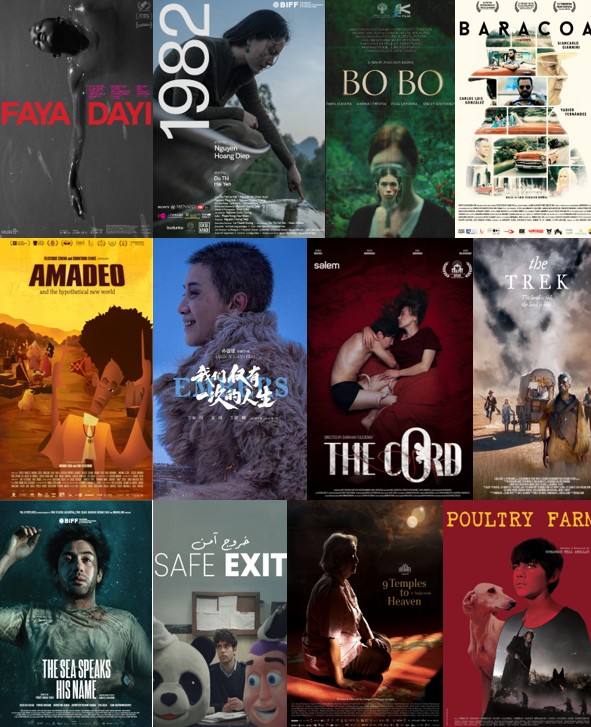
Fayi Dayi, directed by Mexican-Ethiopian woman filmmaker Jessica Beshir, is described as a poetic-lyrical documentary exploring the traditions and trade surrounding khat, a stimulant leaf widely used in Ethiopia.
The film takes audiences through a spiritual journey into the highlands of Harar, immersed in the rituals of khat, a leaf Sufi Muslims chewed for centuries for religious meditations – and Ethiopia’s most lucrative cash crop today.
Ethiopian legend has it that khat, a stimulant leaf, was found by Sufi Imams in search of eternity. Inspired by this myth, Faya Dayi is a spiritual journey into the highlands of Harar immersed in the rituals of khat, a leaf that Sufi Muslims chewed for religious meditations — and Ethiopia’s most lucrative cash crop today.
Through the prism of the khat trade, Faya Dayi weaves a tapestry of intimate stories of people caught between violent government repression, khat-induced fantasies and treacherous journeys beyond their borders, and offers a window into the dreams of the youth who long for a better life.
Blending documentary and drama, the film follows people who chew khat for spiritual comfort, social connection and escape from difficult lives. Once linked to Sufi traditions, khat has become part of everyday life across communities. For many unemployed and struggling people, the temporary high offers a space where their hopes and dreams can survive.
Vietnamese woman directorNguyễn Hoàng Điệp’s 1982 premiered at the Busan International Film Festival in the Vision-Asia Sectionfollows Yến, a bankrupt independent filmmaker struggling with financial problems, tries to balance caring for her mother, who has Alzheimer’s, with the demands of her own troubled family, while hoping to make one last film while dealing with acute fiscal and personal pressures.
On the anniversary of their father’s death, Yen’s mother, who has dementia, suddenly vanishes, amid disagreements over selling the family home, Yen and her siblings—spoiled youngest sister on the run from creditors and brother expecting a child—band together in half-hearted search for their mother confronting deep-seated family secrets.
The trio’s search brings old secrets and unresolved family tensions to the surface. A year later, Yến enters a forest with her 16mm camera and encounters an ageing mother elephant. As she calls out “Mom!”, a faint voice answers from the distance, leading her into a strange and dreamlike world.
The metacinematic film explores the thin line between creation and destruction, aging, memory, and an artist’s survival.
1982sees Nguyễn Hoàng Điệp, marking her long-awaited return to feature filmmaking nearly a decade after her acclaimed 2014 debut – Flapping in the Middle of Nowhere.
Russian woman director Anastasia Kuzina’s Bo Bo winner of Special Jury Prize – For Fidelity to the Traditions of Auteur Cinema at Koroche Film Festival spotlights on Nadia was born with a large, maroon hemangioma on her face making her an outcast in her village.
She faces constant hostility and ridicule from those around, so much so, even her family rejects her true self. Her grandmother relies on religious rituals to cure her, while her mother obsessively dreams of a Moscow surgery.
Meanwhile, Nadia, on the other wants, to get with life and just sing in a choir. After a series of troubles, she ends up in a Moscow hospital, meeting children with similar conditions. She seeks salvation in singing in the choir and friendship with the only person close to her, Yura. But an accident leads them both to injury, and Nadya’s life changes forever.However, removing the physical mark changes nothing in her family’s dynamic. Ultimately, they realise the true problem was never her birthmark but their own inner attitudes.
Luis Ernesto Doñas’s Italo-Cuban dramedy and road movie film Baracoa revolves around the death of Felipe, an Italian revolutionary who became a Cuban citizen, and who fought for ideals that have drifted away from modern Cuba.
Following Felipe’s death, his son Pepe—who is strained by homophobic prejudices—discovers that his father left part of the family estate and his ashes to Jimmy, the family doctor who secretly performs as a drag artist named Estrellita. Pepe and Jimmy are forced to travel together across Cuba toward Baracoa, turning the trip into a transformative journey of reconciliation and understanding.
Through intense landscapes, eloquent silences, and unexpected encounters, their journey to remote Baracoa becomes a life-changing experience. Suspended between the dream and reality, they discover a way to bring different worlds together. Because true revolutions never end. For, Baracoa becomes a journey of profound transformation, suspended between surreal and the poetic, where opposing worlds ultimately find reconciliation.
Filmed entirely in Cuba, the film unfolds as a dramaturgical journey across shifting emotional and symbolic landscapes rather than a purely geographic itinerary. Each location functions as a stage of transformation for Pepe and Jimmi.
Set in the 19th century, when slavery still exists, Brazilian woman filmmaker Brenda Lígia’s Amadeo And The Hypothetical New World (Amadeo e o Hipotético Mundo Novo)is an animation film which follows Amadeo, a brilliant young African inventor, who builds the photographic camera before the Europeans did.
Everything would have been perfect—were it not for the fact that this took place in 19th-century Brazil, the last country in the Americas to abolish slavery. Disguised to avoid enslavement, he uses his invention to support a revolution for Black liberation on the plantation of a powerful Baron.
Set in Brazil in 1830, he uses his invention to help liberate enslaved people while facing an impossible love story with the daughter of a powerful baron.Unable to overcome the pain of love, he throws himself deeper into work, determined to perfect his invention.
Along the way, he grows close to Linda, the baron’s daughter, an idealistic young woman passionate about science and art, with whom he begins a forbidden romance. An imagined tale of adventure, romance and humour set in the New World.
Amadeo and the Hypothetical New World is dedicated by its filmmakers to their ancestors, on whose life and work their journeys are built. During the credits sequence, a voice that talks about freedom, the cost of it, that is always earned, never given. Freedom isn’t free and, without struggle, it doesn’t last.
Sun Aoqian, Chinese film director’s sophomore feature Emberscentres around a terminally ill crematorium worker, Huang Yan who manages the furnace at a crematorium.
One fateful afternoon, she accidentally mixes two sets of ashes at work, with the families of the dead receiving wrongful remains. The woman believes the bad luck coming from the mix-up is causing the deadly illness ravaging her body.
When she confesses the truth, neither family wanted to swap them back. Only Yao Xue, the daughter of one of the deceased, believed Huang Yan. On a desperate attempt to save her life, sets out to undo her mistake with the unexpected help of a young girl caught in the embroil. Aoqian Sun expertly traverses the lines between social drama and thriller to prod at questions of death and family within contemporary Chinese society.The two embark on a wild and absurd journey to return the ashes, where they came to understand life anew and chose to live bravely in the face of death.
Aoqian Sun expertly traverses the lines between social drama and thriller to prod at questions of death and family within contemporary Chinese society.
Darkhan Tulegenov’s Kazakh film The Cord charts the course of three teenagers after they are arrested for murder following a fight, their parents work together to clear their children’s names.
Tulegenov, whose earlier features include “Brothers” and “Zhaza”, has worked across both arthouse and more commercial cinema, while “The Cord” continues his interest in morally complicated characters and contemporary Kazakh society. The movie also received the International Film Festival of India Vision Asia Award at BIFF, with the jury highlighting its exploration of motherhood, privilege and moral compromise.
A mother’s world unravels when her only son is charged with a violent crime in this dark, chilly and pointed Kazakh drama.However, Dinara, a middle-class single mother, discovers that the wealthier mothers plan to use their money and influence to blame her son, Kuanysh, for the crime. Determined to protect him, she begins to cross the limits of law and morality, as her unconditional love for her son leads her down a destructive path.
Dinara is a divorced mother who has devoted most of her life to her only son, Kuanysh, who is preparing to enter an American university. Everything changes when Kuanysh goes to a nightclub with his best friend Sanzhar and Leila, a girl who seems to have something going on with one of the two, and becomes involved in an assault.
When the victim subsequently dies, the incident becomes a homicide case. The wealthy and influential parents of the other two begin manoeuvring to protect their own children gradually pushing responsibility toward Kuanysh. Dinara, unwilling to accept that her son might lose his future,
South Africanfilm director Meekaaeel Adam’s The Trek set in 1846, is a historical, horror and Western drama wherein a Dutch-Afrikaans family and their British supporter cross the dangerous Kalahari Desert to claim a piece of land.
The story follows a Dutch-Afrikaans family and their British benefactor as they make a perilous journey across the Kalahari / Karoo desert to claim a 200-hectare plot of land. Guided by a mysterious Khoen man named Atshumao, the group is stalked by harsh terrain, hunger, paranoia, and two shapeshifting desert spirits playing a grisly wager on their lives.
Starvation, suspicion and madness plague a group of 1846 settlers as they journey across the Kalahari under the eyes of two desert spirits.
While its runtime and occasionally muddled plotting reflect production hurdles, a valiant effort to re-centre the story ensures that The Trek leans into its core strengths, remaining a substantial, commendable piece of cinema that showcases South Africa’s rich potential for the Western genre.
The elevated horror-western set in Africa’s barren Kalahari desert, isn’t an easy watch. But it is a beautiful one as one of South Africa’s most daring new voices, Meekaaeel Adam makes his directorial debut in this gripping story.
Yosep Anggi Noen, Indonesian director’s The Sea Speaks His Nameis a political drama based on the novel of the same name by Leila S Chudori. Set in the final years of New Order authoritarian regime it showcases how after three activists are arrested for distributing banned books, tensions rise at a university in Yogyakarta, Indonesia.
Biru Laut, a student, joins a discussion group called Winatra with his friends Daniel, Alex and Sunu, and his girlfriend Anjani. Together, they fight for freedom of expression despite growing risks. One night, Laut and his friends suddenly disappear. Their families and friends search for them but find no answers. Years later, Laut’s sister, Asmara Jati, joins others in their efforts to discover the truth about the disappearance and understand what happened to their loved ones.
As they face persecution and forced disappearances, their loved ones struggle to find them. In a time of creeping erosion of democratic structures, its stark history lesson is simultaneously a retrospective reflection on alarmingly current processes.
Militarist mechanisms and industrial corruption have been undermining the implementation of the 1998 reform movement since the beginning of Prabowo Subianto’s presidency.
Yosep Anggi Noen’s imposing drama about love and the fearless fight for democracy tries to do everything at once and sometimes overreaches, just as it does with its formal inconsistencies.
The Egyptian film Safe Exit by Mohammed Hammad is about Samaan a young Coptic Christian who works as a security guard in a residential building in downtown Cairo. At night, he writes stories and dreams of publishing his first novel. He suffers from long-term trauma after witnessing his father’s murder by a terrorist group that targeted Christians in Libya during his childhood. Amid Cairo’s busy streets, he meets Fatimah, a young Muslim woman. Their simple encounter develops into an unusual friendship that gradually helps Samaan face his painful past and overcome the emotional barriers he has built around himself.
Mohammed Hammad’s second featurefollows a young Cairo based security guard grappling with the trauma of his parents’ murder in religious and ethnic violence a decade earlier.
Ten years earlier, Simon saw his father executed in Libya, a tragedy that locked his life into a state of suspended grief. He now lives on the rooftop of the building he guards, moving through his days with quiet surrender.
The title Safe Exit carries a cruel irony, since every path away from Simon’s social and emotional confinement has collapsed. He spends his nights staring into darkness, sometimes setting down his thoughts in a notebook. He wants to become an author, while his daily life remains trapped in low wages and steady fear.
The film builds a world where religious identity and economic hardship are bound tightly together. It observes a generation formed by violence, poverty, and shrinking hope.
Simon’s struggle becomes a private fight for survival after a public massacre. The narrative steps away from sweeping political rhetoric and studies the human cost of geopolitical horror.
Bangkok-based filmmaker Sompot Chidgasornpongse’s 9 Temples To Heavenwinner of the Sutherland Award, in the First Feature Competition, at the BFI London Film Festival, charts the journey of Sakoll, who, after hearing a prophecy that his elderly mother may die soon, sets out on a one-day pilgrimage to nine temples as a remedy.
Just two weeks before her birthday, he brings his ailing mother, along with his wife, brother, sister, and children, on the journey, moving through the splendour of Thai temple architecture. From one temple to another, the nine family members continue their rituals, while the grandmother of the family grows increasingly weary, both physically and mentally.
Apichatpong Weerasethakul is a Thai filmmaker’s long-time assistant director takes the director’s seat and creates a spiritual road movie focused mostly on the journey (not the destination). This is one fine example of cinema as a form of meditation.
With a spiritual presence guiding the characters’ and viewer’s journeys across each site, Chidgasornpongse observes the spirituality of the road movie.As Sakol and his family digress in their expedition, the hypnotic visuals, particularly a time-lapse of the sky becoming dark, overshadow the characters’ motivations.eschews traditional narrative threads in favour of one breathtaking 140-minute experience. Our minds travel while our bodies stay in contact with our seats. Our senses are heightened when we connect to the soul. The focus is on the experience, not the outcome.
Mohammadreza Ardalan’s Poultry Farmis a 2026 Iranian mystery thriller and social drama film written and directed by Mohammadreza Ardalan. The story follows Hawar, a homeless and undocumented Kurdish/Iraqi young boy who illegally crosses the border from Iraq into Iran in search of work. He finds a job at a remote poultry farm on the outskirts of Tehran.
When his only friend and coworker disappears without a trace, Hawar launches an investigation that pulls him into a harsh world of exploitation, fear, and violence.
Combining the mystery thriller with social drama, “Poultry Farm” uses an isolated and oppressive setting to portray the vulnerability of invisible migrants and the brutality of power structures. A tense and humanist film, where the terror lies in the cruelty of the real world.
Impressive photography based on warm tones, highlighting the oppression and desolation of the place.
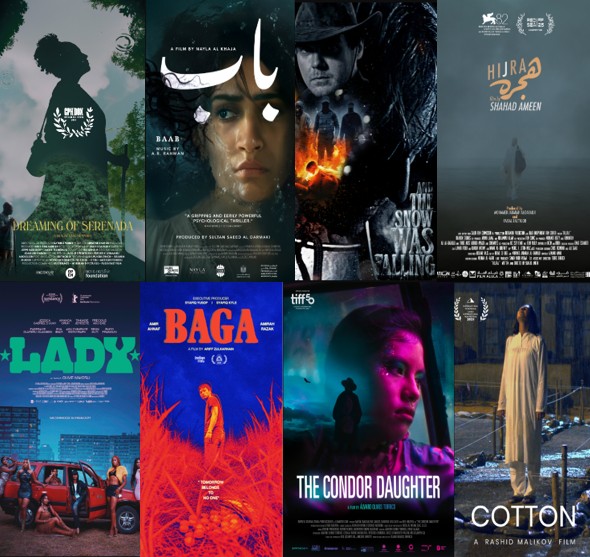
Dreaming of Serenada (Drømmen om Serenada) is a 2026 Danish feature documentary directed by woman Katrine Weber, which is also a personal story about climate struggle, identity, and belonging between Denmark and Uganda.
The film follows Luba Mukibi Lynch, a Danish-Ugandan (and Russian-descended) woman living in Copenhagen, as she returns to her father Ibrahim Mukiibi’s rainforest resort on the shores of Lake Victoria in Uganda.
After the resort is hit by severe flooding, Luba confronts the impacts of the climate crisis, family distance, and deep questions surrounding identity, responsibility, and what it means to call a place home.
A father-daughter relationship in a changing world. Luba Mukibi Lynch experiences a growing sense of powerlessness in the face of the climate crisis when her father’s resort on Lake Victoria is hit by flooding.
She lives in Copenhagen, but her thoughts revolve around Uganda – the nature and landscape of her childhood, her father’s rainforest – and what it means to take responsibility, both as a human being and as a daughter. And whether the time has come to return to her native country.
UAE’s woman director Nayla Al Khaja’s Baab winner of Best Narrative Feature at the Berlin Women Cinema Festival 2025, is a Arabic psychological drama and dark fantasy film. India’s AR Rahman marks his first-ever feature score for an Arabic film.
It revolves around Wahida, who, following her twin sister Nisma death, has struggled to overcome her grief. She suffers from constant ringing in her ears. One day, she finds a set of cassette tapes that may explain what happened to Nisma. She begins investigating to discover the truth about her sister’s death.
When her twin sister dies without explanation, a woman sets out to uncover the truth. But a haunting sound in her left ear leads her into a mountain world of visions, secrets, and dangerous revelations. BAAB is a tense psychological drama where the path to closure opens a door that should never have been opened.
A slightly slow pace aside, Baab is a deeply personal walk through some of the darkest emotions human beings face.With Baab, director Nayla Al Khaja delivers a striking piece of psychological dark fantasy that resists easy categorisation. The film is as an intimate yet unsettling exploration of grief.
And The Snow Was Falling by Andrei EgorovRicard is a is a Belarusian dark fantasy, sci-fi, and horror feature film about a brave knight guarding his king’s lands.
Shot on a micro-budget of $1,500 in Minsk, Belarus, the Russian-language movie blends action and adventure elements with a post-apocalyptic or medieval survival premise.
Ricard, a brave knight guarding his king’s lands, discovers the arrival of a deadly winter.Along with the freezing cold come “Fireflies,” terrifying humanoid creatures that bring death to the realm.Ricard must venture into uncharted territories to find a new home for his people, uncovering truths that challenge everything he believes about the world.
As an unforgiving winter descends upon the kingdom, an eerie darkness awakens—night monsters emerge from the shadows, threatening to consume everything in their path. The once peaceful lands surrounding the castle now tremble under the looming menace, casting a chilling silence over the realm.
In this hour of despair, the courageous knight Ricard steps forward, driven by duty and hope. He embarks on a perilous journey across uncharted territories, seeking a sanctuary where his people can find safety and rebuild their lives. Against the biting cold and sinister forces, Ricard’s resolve will be tested as never before, forging a path through the unknown toward a future shrouded in danger and promise.
Saudi woman filmmaker Shahad Ameen’s sophomore film Hijra winner of NETPAC for Best Asian Film Award at Venice International Film Festival 2025 &Yusr Jury Prize, Film AlUla Audience Award -Saudi Film, at Red Sea International Film Festival 2025, is a coming-of-age film which follows Twelve-year-old Janna who travels across Saudi Arabia on a pilgrimage with her strict grandmother, Sitti, and rebellious older sister, Sarah.
When Sarah suddenly disappears, Janna and Sitti set out to find her, fearing their father’s reaction. Their journey through ancient routes and harsh deserts brings hidden family secrets and old conflicts to light. As Janna learns more about her grandmother’s past, the journey becomes a search for understanding, forgiveness and reconciliation, bringing the family closer.
Director Shahad Ameen uses the landscape to draw parallels between the physical and emotional journeys of her characters (and, in a broader sense, the multiplicity of women in Saudi Arabia) so powerfully, you’ll feel the wind on your skin long after leaving the cinema.
With striking visuals, Hijra tells a powerful story of female resiliencein Saudi Arabia in the early 2000s.With Hijra, I wanted to capture the quiet revolutions of women in motion and explore how freedom is understood across generations and time.
Lagos born and based woman film director Olive Nwosu’s Lady is about a determined taxi driver in Lagos forms an unexpected bond with a group of free-spirited women, leading her into a world of friendship and self-discovery despite the risks along the way.
The film, Olive Nwosu’s feature debut, premiered in the World Cinema Dramatic Competition at the 2026 Sundance Film Festival, where it won the Special Jury Award for Acting Ensemble.
Set in Lagos, Nigeria, Lady follows one of the city’s few female cab drivers, known as Lady, who survives by staying focused and tough while saving money to attempt moving. Her world changes when Pinky, her long-lost childhood friend and now a sex worker, returns unexpectedly. Drawn reluctantly into Pinky’s orbit, Lady becomes the driver for a group of glamorous, reckless, fun-loving women navigating Lagos nightlife. What begins as judgment slowly evolves into a bond of unexpected sisterhood.
The director describes the film as her “love letter to the women of Lagos,” aiming to honour lives often overlooked in cinema and create a Lagos heroine “flawed, luminous, and unafraid.”
Set in a conservative seaside village on Malaysia’s East Coast, Ariff Zulkarnain’s debut Malaysian feature Baga:Tomorrow Belongs To No One(Baga: Esok Untuk Siapa)follows Jani and Melur, a young couple who dream of building a life together.
When an unexpected pregnancy forces them to make difficult choices, Jani turns to the drug trade in search of a better future. Living amid poverty and addiction, they struggle to escape their circumstances and find a way towards a different life.
The film follows a struggling boatman battling addiction and a batik artisan dreaming of a better future in a conservative fishing village in Kuala Terengganu.
Set in a conservative seaside village on Malaysia’s East Coast, BAGA follows Jani and Melur, two young lovers trapped between inherited realities and dreams of escape.
As love collides with addiction, poverty, and tradition, the couple must confront the cost of survival in a community where opportunities are scarce and every choice carries consequences.
The film is a raw, visceral, and atmospheric neo-noir that breaks away from the horror-dominated Malaysian cinema circuit.
Winner of Youth Jury Award&Special Jury Award at Sofia International Film Festival 2026, Bolivian director Álvaro Olmos Torrico‘s sophomore feature The Condor Daughter (La Hija Cóndor) follows teenager Clara living in a small Indigenous community high in the Andes.
Her adoptive mother, a midwife who raised her from infancy, has taught her ancient songs sung during childbirth and passed down through generations. While Clara carries on this musical tradition, she has a different dream. She hopes to leave the mountains and become a folkloric music star in the city.
Set primarily in a rural indigenous Bolivian Quechuan community, this mother-daughter drama follows the often-tense relationship between the local midwife,mother, Ana, and young Clara (María Magdalena Sanizo), who assists her.
And decides to leave the remote, mountainous village of Totorani and pursue her dreams in the big city. But her departure coincides with a devastating storm that leaves dead animals and dried crops in its wake, prompting the villagers to interpret the calamity as a curse. Blaming Clara for the misfortune, they force her mother to go in search of her and bring her back.
Bolivian writer-director Álvaro Olmos Torrico returns seven years after Wiñay (2018) with a deliberately paced yet quietly powerful film, showcasing the gradual loss of tradition in the face of modernity. It brings a mix of mournful and liberating tones to the table.
Moscow born Uzbek filmmaker Rashid Malikov’s Cotton set in a remote village in Uzbekistan, follows Gulchehra, a woman who spends her days picking cotton to support herself and her ailing mother-in-law. Her husband has left the village to find work abroad, leaving her waiting for his return.
When her mother-in-law dies, Gulchehra is left alone in a society shaped by gossip, harsh attitudes and strict traditions. She continues her tiring daily work, with little hope of a better future. Through her quiet struggle, the film portrays a woman’s loneliness, the pressures of a male-dominated society and her determination to live with dignity despite the difficulties she faces.





Leave a Reply