
S Viswanath
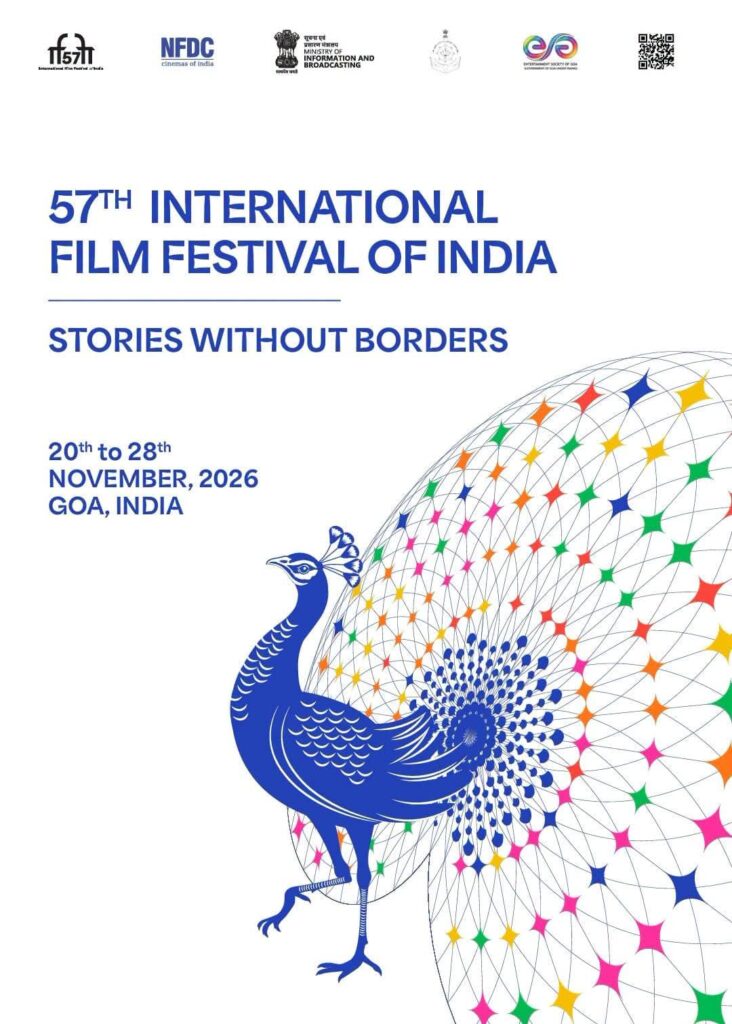
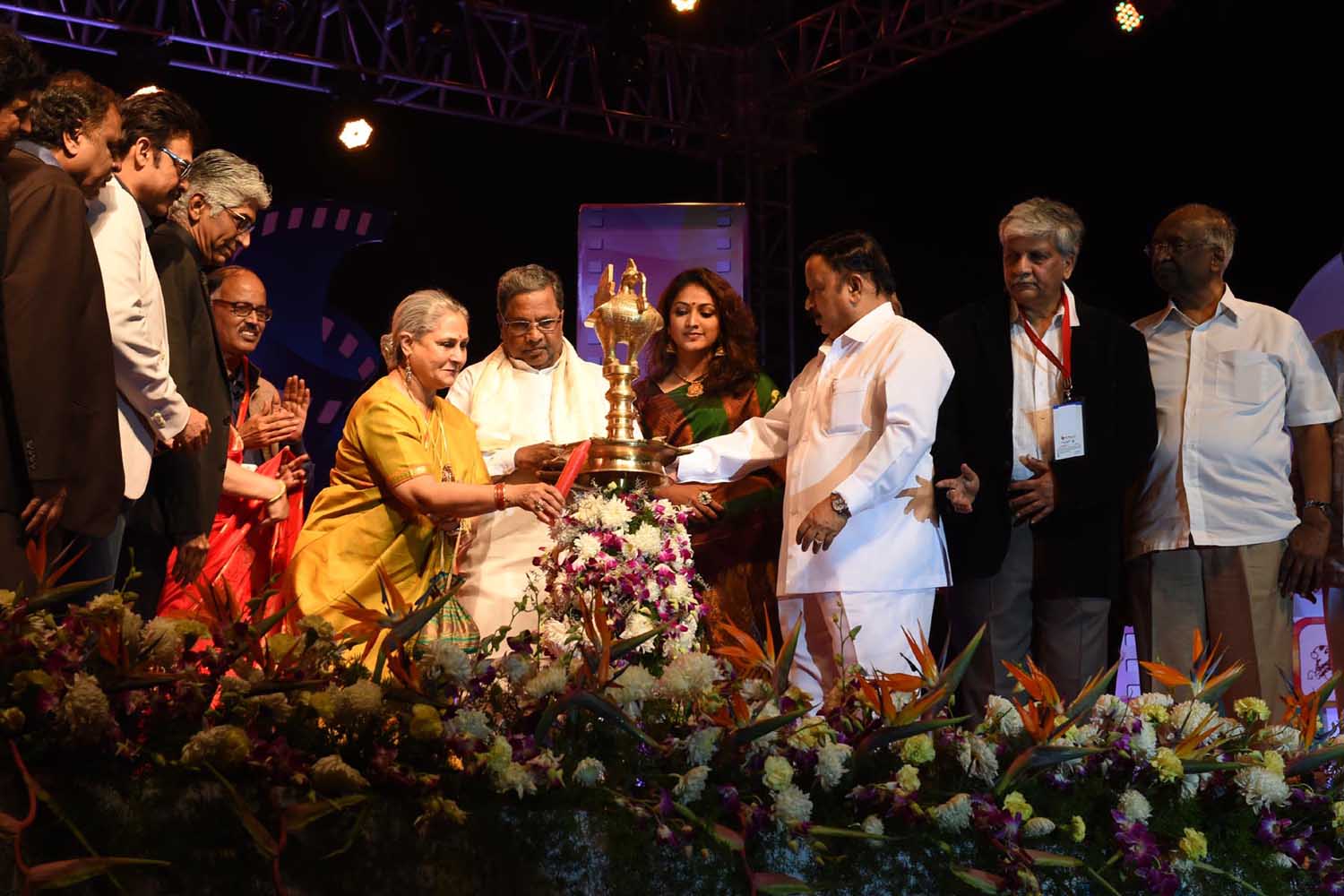
As the curtains go up and over 7,000 plus avowed cine enthusiasts congregate in the sea, sand, churches and beaches City of Panaji, in the State of Goa, it is time to pause a moment to reflect and run through the voluminous catalogue of the 57th Edition of the annual nine day cultural and carnivalesque extravaganza – International Film Festival of India to celebrate the soft power and unifying force of cinema.
Yes. “IF ONLY WISHES WERE HORSES, ‘AUDIENCES’ WOULD GET THE CINEMAS THEY LOOK FORWARD TO.” But then, with IFFI it would be literally asking for the moon. This has been the l affaire lately with India’s and Asian sub continent’s premier cinema carnival – the International Film Festival of India.
Coming as it does, almost at the fag end of calendar year, with permanent residency in Goa, the much coveted and eagerly expected cinema jamboree, has ample time, resources and wherewithal to make IFFI the dream film festival film for thousands of cinephiles and cineastes converging on their annual Cinema Hajj, come November, featuring crème la crème of choicest contemporary cinemas, culled and curated from across the celebrated cinema universe.
However, as is being witnessed, year on year, that’s not to be. If one were to put it rather euphemistically using Lord Alfred Tennyson verses, from his famous poem The Charge of the Light Bridge, “Was there a (an audience) man dismayed?.., (Then) Theirs not to reason why.,” even if those in IFFI team “Someone had blundered., (And) Theirs not to make reply.,” for, in the Elysium of IFFI’s Cinema Paradiso it is WTSIWYW – meaning “what they screen is what you watch,” and yours is not to question why.
That IFFI has before it panoply of film festivals such as Sundance Film Festival, USA., International Film Festival Rotterdam, The Netherlands., Berlin International Film Festival, Germany., Sofia International Film Festival, Bulgaria., Fribourg International Film Festival, Switzerland., Hong Kong International Film Festival, Hong Kong., Jeonju International Film Festival, South Korea., Cannes Film Festival, France., Krakow Film Festival, Poland., Bali International Film Festival, Indonesia., Karlovy Vary International Film Festival, Czech Republic., Locarno Film Festival, Switzerland., Venice International Film Festival, Italy., Toronto International Film Festival, Canada., Busan International Film Festival, South Korea and Cairo International Film Festival, Egypt., among innumerable others, as the year draws to a close, to track the best of cinemas, to negotiate with sales agents and rights holders, besides of course, the programming and creative curation heads of respective film festivals.
The advantage IFFI’s programming and curation team has is, in that, a readymade list of films that have wowed and won awards, accolades and appreciation from all along these film circuits, including those taking a shy at the Academy Awards on a golden platter.
All that NFDC, now mandated with hosting the film festival under the aegis and patronage of the Ministry of Information & Broadcasting, is to make a wonderful wish list of films that have been feted and made the right noises at these film circuits to zero in on and bring them before the eager bever expectant Indian film festival cine going community, so that they too savour the cream of cinemas that have made their mark on the festival movie marquee.
However, a cursory glance at the non-competition Cinema of the World segment of IFFI bespeak of many films that have not found their pride of place in the IFFI’s screening scroll. Thereby, depriving its itinerant cinema attendees, cinemas they should watch, revel and rejoice in the belief, that IFFI has indeed answered their year long manna, fingers crossed, which they have been waiting to be fulfilled right through the year, while tracking films that were the rage of film circuits the world over.
True, IFFI’s Cinema of the World and other related segments featuring films from across the globe does have a sizeable number of them being rightfully featured. Among them being Bitter Christmas (Amarga Navidad) by Spain’s renowned auteur Pedro Almodóvar, Coward by Netherland’s Lukas Dhont, Fatherland(Vaterland) by Poland’s Paweł Pawlikowski (a rightful choice as an Opening Film), Everytime by Austria’s Sandra Wollner, among others from Cannes Film Festival, which have also found favour with other film festival organisers across several countries.
What, however, is rather bemusing and quite glaring and conspicuous by their absence is Cannes winner Fjord by Romania’s Cristian Mungiu, All of a Sudden(Soudain ) by Japan’s Ryusuke Hamaguchi, Gentle Monster by Austria’s Marie Kreutzer, A Man of His Time (Notre Salut) by Belgium’s Emmanuel Marre, Minotaur by Russia’s prodigious director Andrey Zvyagintsev, Parallel Tales (Histoires Parallèles)by Iran’s famed filmmaker Asghar Farhadi, Sheep in the Box by Japan’s famous filmmaker Hirokazu Kore-eda, A Girl Unknown by China’s ZOU Jing, What Belongs To Others by Poland’s Grzegorz Debowski, among a heady, handful others, which audiences prayed for would be on IFFI’s filmi menu.
Likewise, one would have loved to watch Rose by Austria’s Markus Schleinzer, Filipiñana by Philippines’ Rafael Manuel, Safe Exit (Khoo-rooj Aa men) by Egypt’s Mohammad Hammad, Yellow Letters by Germany’s İlker Catak which incidentally won the Golden Bear top prize, Flies (Moscas) by Mexico’s Fernando Eimbcke, Ah Girl, by Singapore’s Ang Geck Geck Priscilla winner of the Youth Award, among others which were all part of the Berlin Film Festival and sister festivals, like Toronto, Karlovy Vary, Busan, Sundance, Locarno and the like.
Similarly, from Venice Film Festival, Bucking Fastard by renowned German director Werner Herzog (despite its off-putting title), A Good Little Soldier (Un bon petit soldat) by France’s Stéphane Brizé winner of the best screenplay award, Possible Love by South Korea’s Lee Chang-dong of the 2018 Burning fame (probably the best film of the year and could possibly pick the Best Foreign Film & Director Academy Awards) which bagged the Grand Jury Prize at the film festival as also the FIPRESCI Award, the ARCA Cinema Giovani Award, Let Us Through, Dear Ancestors by Philippines’ Lav Diaz, among few more, have been given ruefully overlooked, while making do with films like Hirokazu Kore-eda’s Japanese film Look Back, Ann Sirot & Raphaël Balboni’s Belgium fare, Diane In The Loop, Alina Serban’s Romanian drama I Matter (Eu contez) winner of the Audience Award, which features as the Mid Fest Film at IFFI, as if, in compensation.
From other film festivals such as Toronto, Karlovy Vary, Busan, wherein several of the above films are missing at IFFI have featured, the others which would should have found a place at IFFI but missing include Red Rocks by France’s Bruno Dumont, Head to Head by Iran’s Ghasideh Golmakani, The World Before by Korea’s Yoon Dan-bi, Sinner by Korea’s Hong Sung-min, La Perra by Chile’s Dominga Sotomayor, The Lost Children Of Tuam by Ireland’s Frank Berry, The Smell of Apples (Die Reuk van Appels) by South Africa’s John Trengove (all from Toronto).
Ban Dal (Half-moon) by Korea’s Hae-Sup Sin, Black Money for White Nights (Cherni pari za beli noshti) by Bulgaria’s Kristina Grozeva & Petar Valchanov, God Forgives Everyone (Che dio perdona a tutti) by Italy’s Pierfrancesco Diliberto, The Station (Al Mahatta) by Yemen’s Sara Ishaq (all from Karlovy Vary).
Similarly, from Busan a horde of films have been missed out which could have been explored such as
The First Taste of Loneliness by China’s GU You, Hilol by Uzbekistan’s Botir Abdurakhmanov, Midday Meal by Iran’s Majid Majidi, To Be Ordinary by Taiwan’s Lee Yun Chan, After The Song by Japan’s Kumamoto Ryohei, Things I Left At The Theatre by Korea’s Park Kun-young, No Good Men by Afghanistan’s Shahrbanoo Sadat, Cattle Run by Korea’s Kim Ji-hyun, The World Before by Korea’s Yoon Dan-bi et al.
In fact, several Indian films which have had a run of the various international film circuits and have garnered high opinions and appreciations strangely do not find a place in the screening scheme of things at IFFI.
The problem, it seems, lies in the fact that, the composition of members taken on board to watch the screeners and decide on which films could be explored, rather than send out a team of committed curators and programmers, who pan out attending and scouting at various film festivals and then come back with their status report. This is a practice undertaken at several international film festivals which is woefully lacking at IFFI.
Furthermore, given that IFFI has now gotten into the practice of distributed screenings at one too many venues – Panaji, Porvorim, Ponda and Margoa, to avoid overcrowding at INOX Panaji, having over 200 plus films, only defeats the purpose, since few films get only one screening and sometimes with clash of screening time, one is left to choice from either of them.
Less films with multiple screenings of much talked and highly accoladed films would serve the larger purpose of taking cinema to the people’s doors and ensuring almost everyone got to see the film they loved to, ensuring a much more even spread of films as also film education which is what ultimately film festivals are all about – engaging cinephiles to watch some of the contemporary cinemas and confabulate and confer on the trends, the genres, the narratives and thematic concerns that are the order of the day on the filmi horizon and make for a better public discourse on them.
In summation, it would be prudent to close this with the telling quote from actress Tilda Swinton “I think that film festivals, we’re very often given to understand, are about filmmakers and about films and about the industry of filmmaking. I don’t believe that they are, I believe that film festivals are about film audiences, and about giving an audience the encouragement to feel really empowered and to stretch the elastic of their taste.”
And as India’s and Tamil filmdom’s very own Suhasini Maniratnam states: “In a film festival, people come to watch because they are interested in cinema. It’s not like watching a premiere show or being in any cinema hall, where you are not with like-minded people.”
Lest, as Hong Kong filmmaker Wong Kar-wai does, audiences down here too would mimic him: At film festivals, I put on my sunglasses and go to sleep, given the choice of cinemas that fail to engage and interest the viewers rather than films that would draw them into an immerse and meaningful discourse.
So true. One only hopes, IFFI, in the editions to come, and follow, takes this aspect in mind, would introspect and reflect, and give true blue audiences a film festival that they would always cherish and coo about at coffee table conversations and at conferences that celebrates the Seventh Art in all its true essence and element.


Leave a Reply