
S Viswanath
A good movie can take you out of your dull funk and the hopelessness. A good movie can make you feel alive again. Good movies make you care, make you believe in possibilities again. The movie doesn’t have to be great. It can be stupid and empty.You can still have the joy of a good performance, or the joy in just a good line.Movies are the most total and encompassing art form we have. The romance of movies is not just in those stories and those people on the screen.But in the adolescent dream of meeting others who feel as you do about what you’ve seen.– Renowned Film Critic Pauline Kael in her seminal book: For Keeps: 30 Years at the Movies
“The cinema like the detective story, makes it possible to experience without danger all the excitement, passion and desirousness which must be repressed in a humanitarian ordering of life.” –Carl Gustav Jung – Swiss psychiatrist, psychotherapist, and psychologist.
Opening. Midfest. Closing. Like a typical movie script that anchors itself on a catchy opening, a gripping middle and a captive closing, the International Film Festival of India – IFFI, following on this now familiar format is featuring three fascinating films as part of its Opening, Midfest and Closing films.
Describing films so chosen being part of festival’s overall vision that embody innovation and inclusivity showcasing diverse global cinemas, IFFI, reinforcing its singular role as global melting point for outstanding crème la crema contemporary and creative cinemas, is presenting prominent international award winners and festival favourites, including much anticipated titles that triumphed at Cannes, Berlinale, Locarno and Venice, and other film festival circuits preceding it.

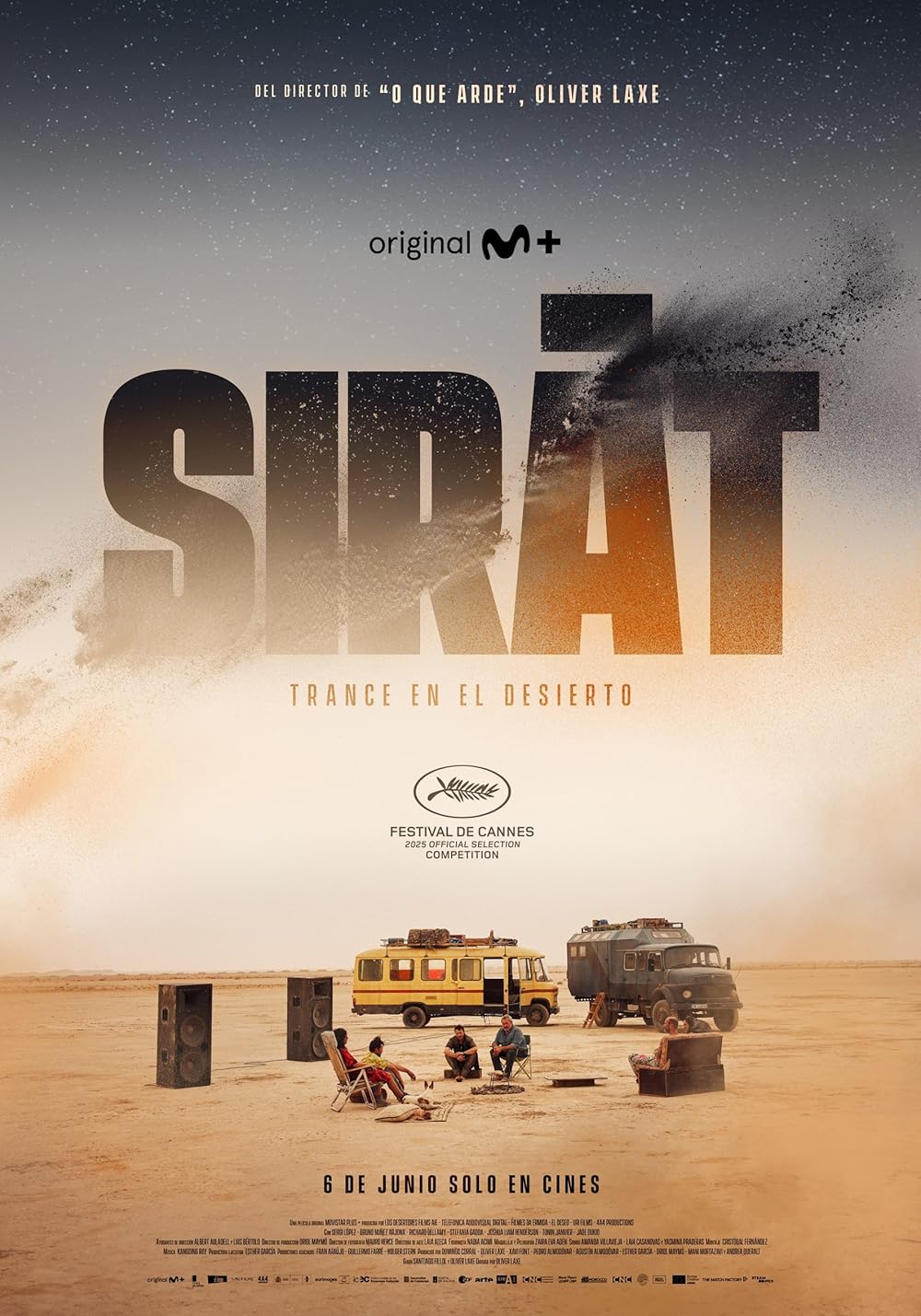
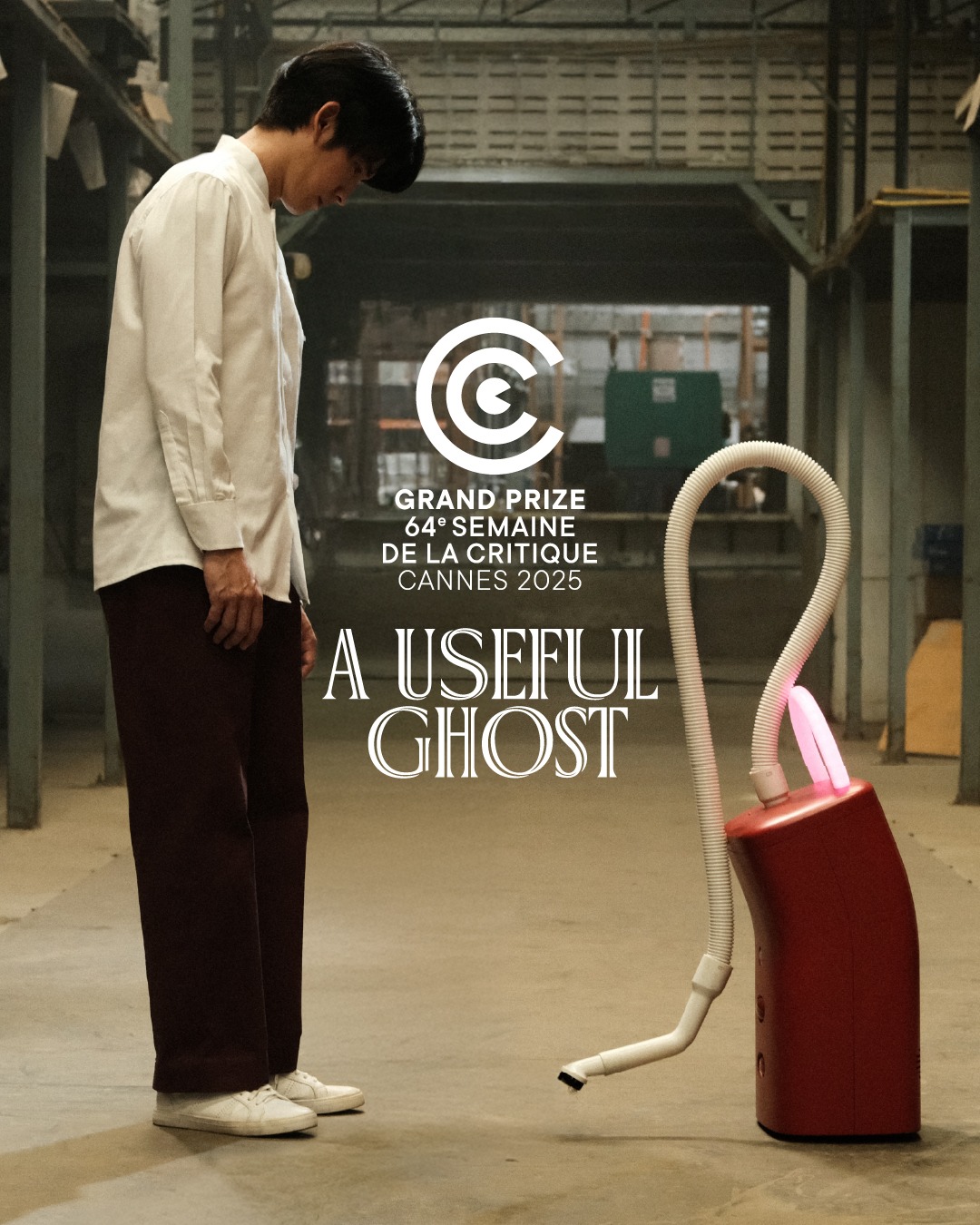
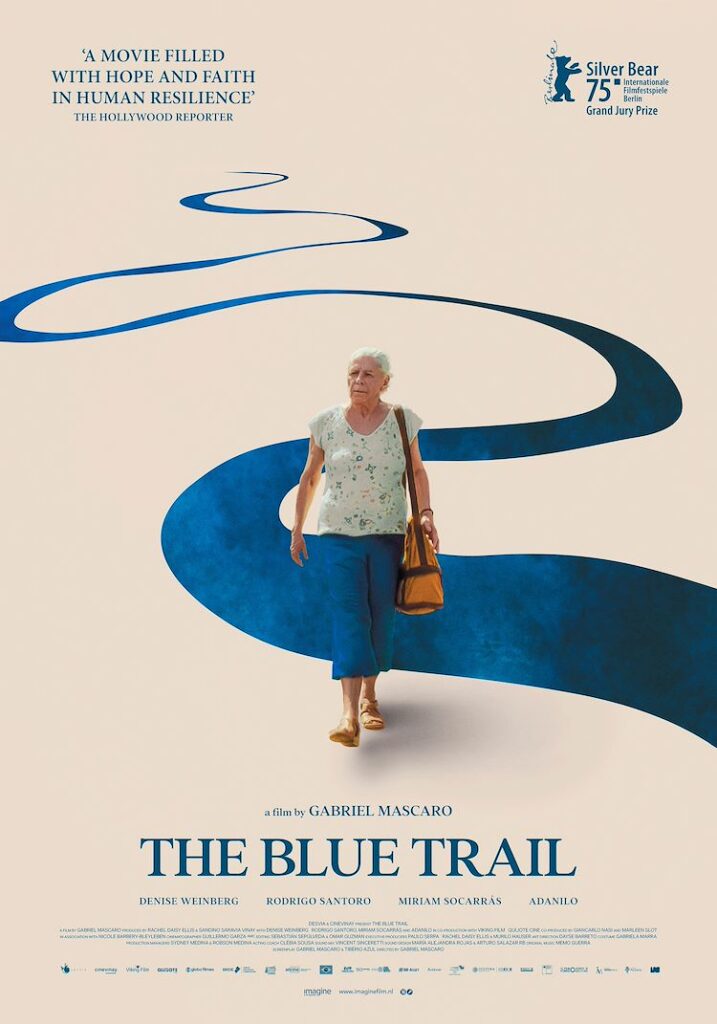
So making the Opening, Midfest and Closing fixtures of 56th IFFI this time around is the Brazilian sci-fi fantasy The Blue Trial, the intense, scorching, high adrenaline roadie thriller Sirat and an offbeat dark fantasy horror comedy A Useful Ghost (Pee chai dai ka).
Three different genres of films from three different delectable directors drawn from three different movie making destinations seeking to provide a myriad and multifarious meld of ensemble experiences to engage and enthralled in.
Described as “a quiet manifesto on freedom, dignity, and the right to dream:,” and winner of the Berlin International Film Festival’s Silver Bear – Grand Jury Prize, the Brazilian sci-fi fantasy The Blue Trailby Gabriel Mascaro follows a woman’s journey through the Amazon.
Having premiered in Official Competition of 75th edition of Berlin International Film Festival, the film, after travelling to Toronto International Film Festival, Karlovy Vary International Film Festival, BFI London Film Festival, and Tallinn Black Nights, has anchored itself at the next port of call – the 56th IFFI.
Enroute on this successful sojourn, the film and its director Gabriel Mascaro picked the Prize of the Ecumenical Jury, Berliner Morgenpost Readers’ Jury Award, Guadalajara International Film Festival’s Ibero-America Competition Best Feature Award, The Youth Jury Award at Valladolid International Film Festival, Best Film at Golden Panda Awards, while its principal protagonist, the effervescence and irrepressible Gabriel Mascaro picking a couple of awards for her performance as the Best Actress.
The 87 min film, by Brazil filmmaker and visual artist from Recife, Pernambuco, is the dystopian feature which speaks of Tereza, 77, a contended factory worker, blissfully residing in Muriti, an industrial town on the edge of Amazon, who embarks upon self-discovering and soulful sojourn to realise her (bucket list) final dream to take a plane ride, escapes from the swooping authorities, where the State, in the guise of economic recovery, has put in place a perennial system of mandated compulsory vertical isolation of octogenarian seniors confining them in a government colony.
Taken aback at the State enforced order to vacate her homestead and determined not to bow to the dictates of the inhumane initiative that seeks to confine the elderly in a senior citizen colony away from Gen Z so that the younger lot can fully concentrate to foster and work towards the country’s growth and productivity, refusing to gicveup her freedom, the septuagenarian embarks on a clandestine boat journey through the Amazon.
Left with no alternative but do as per the State’s bidding to leave her beloved above and faced with the troublesome fact that her daughter Joana has her ID and money, and so she can’t make a move without her daughter’s approval, Tereza takes the only recourse in front of herwho, to her disappointment, is more than keen to see the back of her mother, while the neighbours too egg her on to play by the rules. “I look forward to seeing you there in a few years”, says a friend. “I don’t know whether I’ll make it”, retorts a far more sceptical Tereza. However, Tereza that she is, wills to live the rest of her life as she wants.
Tereza gets onboard a riverboat with shady captain Cadu and sets sailing on the Amazon for one last adventure where, in the course, she comes across the “blue drool snail”–whose slime can be used as eyedrops to see one’s future. But not before she meets the debt ridden gambler whose plane is grounded and the rebellious Roberta free-spirited senior she hooks up with, who uses her boat to retail Bibles.
What thereon ensues is a journey through lush landscapes full of obstacles, unexpected encounters, and a growing realisation that freedom knows no age. Described as rebellious road movie and an humanistic Amazonian ecological saga by Gabriel Mascaro about old age, resistance, and right to keep dreaming, the Brazilian beauty blends social urgency weaving an atmospheric, evocative narrative style showcasing that aging can also have a very different face. In the process the film seeks to drive the homily about respect for senior citizens and their resolve to survive, despite the oppressive government forces that seeks to push them to the fringes and periphery of societal existence.
If Gabriel Mascaro’s first feature – Ventos de agosto (August Winds), premiered in competition at Locarno in 2014 was awarded with a special mention, his sophomore flick Boi Neon (Neon Bull premiered in Venice Film Festival followed by Toronto International Film Festival (Platform Competition) in 2015, received Special Jury Award at Venice.
Seen as a critique of the Fascism that Bolsonaro unleashed upon Brazil and with thin line demarcating compliance and complicity with the State, Tereza represents those prepared to break this Rubicon in order to safeguard their privileges and individual freedom by spiriting away from a society that wishes to dispense with the likes of her.
Besides its political overtones the film comes across as one that celebrating life and a charming character as it documents an otherwise disturbing development about human cost that ageism so easily disregards.The film’s title references to both the river where Tereza finds purpose in her life, and the ooze left behind by Blue Drool Snail believed to allow its users to visualise the future.
Described by Chicago International Film Festival Jury while awarding the Gold Hugo for Best Film as “it is rare to find a film that makes us thrilled, angry, yearning, and lost at the same time. A film that takes us on an unexpected journey through the hallucinating world of the rave dancers in the desert of Morocco, with the specificity of a journalist, and with all sensual power of a filmmaker” who shows “explosive mastery of story elements, themes and emotions that mirror our crumbling world” Oliver Laxe’s Sirat in the course of film circuits run also picked the Palm Dob, AFCAE Award Special Mention, Krzysztof Kieslowski AwardBest Feature Film, Cinema By the Sea ProgrammeBest Feature Film, and a clutch of other awards as well.
Eulogised as an “hauntingly beautiful and disturbing allegory of life on the edge” Sirat“structured like drug-induced trance,”which has “viewers bewitched and confounded, experiencing a blend of pleasure and horror,”centres around Spaniard Luis, his child young son Esteban and their canine Pipa arrive amidst a large rave bangerright in the middle of scorching Moroccan desert, comprising men and women in 20s, 30s and 40s tattooed, with fake mohawks and ear piercings, frenziedly swaying to heavy techno music coming from humungous speakers circling them set up on the golden sands of the Sahara. There, Luis and son hand out leaflets with picture of his daughter Mar, missing for five months.
The searing scintillating thriller Sirat set in the scorching Moroccan desert by Spanish director Óliver Laxe’ takes audiences on a “poetic journey of faith, loss, and redemption”as it spotlights on a father searching for his daughter, accompanied by his young son, as they brave the elements.
As the militia bust the party and the disrupted revellers do a runnera desperate Luis follows them, determined to find his missing daughter. The crew reluctantly accept Luis and his son into their company, with assortment of men and women – the garrulous and charismatic one-armed Bigui, one-legged Tonin who infuses joy into the team with his ventriloquist act, turning,the goofy and cluelessJosh, with women Jade and Stef completing the motley.
Sirat, fourth feature by 43-year-old Franco-Spanish director Oliver Laxe turns out a spectacular ode to life, in all of its magnificent intensity and frailty. Sirat premiered in the Official Competition of 78th Festival de Cannes, besides the festival rounds of TIFF Toronto, Karlovy Vary, Sarajevo. San Sebastian, BFI London Film Festival, and Tallinn Black Nights.
The Thai filmmaker of Teochew-Hainanese descent, born, brought up and based in BangkokRatchapoom Boonbunchachoke’sA Useful Ghost aka Pee chai dai kais a 140 min intriguing and interesting fantastical family flick keeping in consonance with its tantalising title.
Winner of the FIPRESCI Award at Cannes Film Festival Thailand’s A Useful Ghost by Ratchapoom Boonbunchachoke described by the director himself as “my approach has always been to blend and juxtapose big and small, serious and silly, collective history and personal matter, composed and campy in my work,” in a interview with French Union of Film Critics (La Semaine de la Critique), A Useful Ghost which bagged the prestigious Critics’ Week ‘Grand Prix AMI Paris’ prize at the Cannes Film Festival is a directorial debut about a spirit which possesses a vacuum cleaner leading to many curious episodes and revelations as a result of its ‘spirit’ed visitation.
The plucky, profound plot revolves around March, widowed young ward of Suman, the cold, stone-faced, inflexible owner of a vacuum cleaner factory and an embittered widow herself,and Nat her late daughter-in-lawwith Dot, their 7-year-old boy, wherein March runs the family-owned vacuum-cleaner-manufacturing factory. Following the demise of Nat due to respiratory disease triggered by air pollution a distraught March is troubled a similar fate would befall his son, who gradually develops similar symptoms.
Concerned with her son’s health, Nat returns as ghost posing the home’s newly purchased vacuum cleaner. While the discovery of the devilry has everyone at their wits end, only her husband sees this as prospects to reunite the family. The “useful” ghost desperately tries to not only dust off the house but also the ghosts of dead labourers that had died at the family’s factory.
Nat’s manifestation as a spirit inhabiting one of her factory’s vacuum cleaners, a development Suman finds wholly unnatural and unacceptable but son March welcomes reunited with his departed beloved. Much to March’s chagrin, Suman and her family take recourse to everything to get rid of the pesky ghost so they can reopen the plant and restore their severely depleted income.
The film is more of a razor-sharp fantastical satire of Thai politics about a country that pushes its diaspora into silence and oblivion, but whose power lingers and hauntsthe system demanding justice from the repressive regime.
With three eclectic ensemble of films with diverse and delectable thematic narratives IFFI promises its 56th expedition another of exciting, enriching and engaging rendezvous celebrating the captivating charm and joi de vivre of cinemas at the annual nine-day cultural calendar extravaganza ashore sun kissed, breeze wafting festooned filled boulevard of pulsating Panjim (Panaji) of Feni, fish and fun n’ frolicsome carnival City and Pearl of the Orient – Goa.

S VISWANATH is a veteran film critic who officiates as JURY at several National & International Film Festivals. He deputises as CHIEF CINEMA CURATOR/PROGRAMMER & CREATIVE ADVISOR for Bengaluru International Film Festival (BIFFes). He also curates & advises on the selection of shorts & documentaries for Bengaluru International Short Film Festival (BISFF). Mr Viswanath is the author of “RANDOM REFLECTIONS: A Kaleidoscopic Musings on Kannada Cinema”.





Leave a Reply