
“I can’t draw.” This is a sentence we hear often—and say ourselves without hesitation. It suggests that painting is reserved only for those born with special talent or for professional artists. In reality, painting is not a test of skill; it is a natural process that supports human life, offers emotional grounding, and gives direction to thought. Therefore, the value of painting is not limited to painters alone—it belongs to every individual.
In truth, art is born first, and the “artist” is born later. Art emerges from human experiences—sensations, struggles, joys, sorrows, questions, and continuous searching. It is within this journey of art that the identity of an “artist” gradually takes shape. Hence, rather than saying that an artist creates art, it is more appropriate to say that art creates the human being.
An artist is, before anything else, a human—shaped by experiences, unsettled by circumstances, and engaged in an ongoing process of inquiry. The line that appears on paper or canvas is not merely the result of technique; it is a record of the inner dialogue taking place within that person. Therefore, a painting is not just an object—it is evidence of a lived journey.
Painting teaches a person how to see—not only the external world, but the inner one as well. It sharpens sensitivity, deepens thought, and gives the courage to be honest with oneself. In this process, a person does not merely create images; they shape themselves. Through sustained engagement with art, qualities such as patience, understanding, compassion, and sensitivity begin to develop.
Thus, art is not merely a tool of expression; it is a process of formation—of personality itself. The identity of an artist emerges from art, but even before that, art makes a human being more human. Seen from this perspective, the true role of art lies not in image-making, but in human-making.
Everyday life is constantly filled with words—meetings, phone calls, messages, and social expectations. Yet many emotions cannot be adequately expressed through language. This is where painting begins its work. A simple line, a patch of colour, or a spontaneous form creates a pathway through inner complexity. Painting is a language that does not require speech, yet listens deeply.
Today, painting classes are conducted in many places. Often, participants are asked to copy a single image. The final result may look attractive and suitable for framing, but it is identical across individuals. In this process, the hand moves, but thought comes to a halt. Many hobby artists today paint from photographs or recreate images seen in galleries. However, the true purpose of painting is not imitation—it is introspection. Every individual’s experience, emotional landscape, and way of seeing are different; then how can all paintings be the same?
While painting, a person temporarily steps away from the external world. Work pressure, household responsibilities, financial concerns, expectations, and comparisons recede for a while. Choosing colours and making lines anchors attention in the present moment. The mind calms, breathing steadies. This is why painting often functions like meditation. No special preparation or age requirement is needed—though what is essential is proper guidance from a mentor with deep understanding and serious engagement with art.
For children, painting offers open skies for imagination. It teaches them to think freely, experiment, and accept mistakes. For adolescents and young adults, it provides direction to a restless and questioning mind, giving emotions and uncertainties a safe channel. For adults, it reduces stress; for the elderly, it becomes a way to reframe memories, experiences, and the arc of life through colour and form. Painting, therefore, is a companion through every stage of life.
In painting, the question “Is this beautiful?” is secondary. The more important question is, “Is this mine?” There is no right or wrong, no good or bad—only honest expression. Such expression cultivates sensitivity and empathy. Over time, it nurtures the ability to understand others’ emotions and to see from different perspectives. As a result, the impact of painting extends beyond paper and canvas into human behaviour and relationships.
In today’s fast-paced and competitive world, maintaining mental balance has become a major challenge. In such times, painting is not a luxury—it is a necessity. It is not medicine, but it offers emotional support. It does not provide direct solutions to problems, but it gives the strength to face them. This is why the use of painting in therapeutic processes is steadily increasing across the world.
Painting does create artists—this is undoubtedly true. But more importantly, it creates sensitive, aware, and balanced human beings. Not everyone needs to become a professional artist; however, everyone should experience painting at least for themselves, as a means of self-dialogue. This is one of the true needs of our time.
Before saying, “Painting is not for me,” one should try holding a piece of paper and some colours. Something extraordinary may not emerge, but the mind will feel lighter, thoughts clearer, and perhaps the connection with oneself a little stronger. And sometimes, that alone is enough—to live with greater balance as a human being.
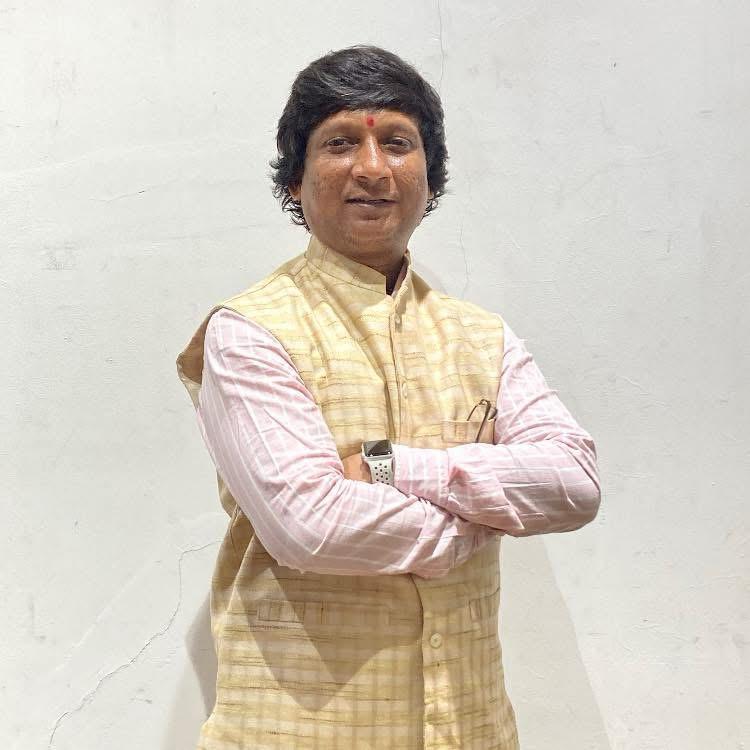
Sunil Shalini Vishnu Redekar
Visual Artist | Art Mentor | Art Researcher | Critic
Founder – The Chitarri
Contact: +91 82860 32999
Email: sunilredekar@gmail.com




Leave a Reply