
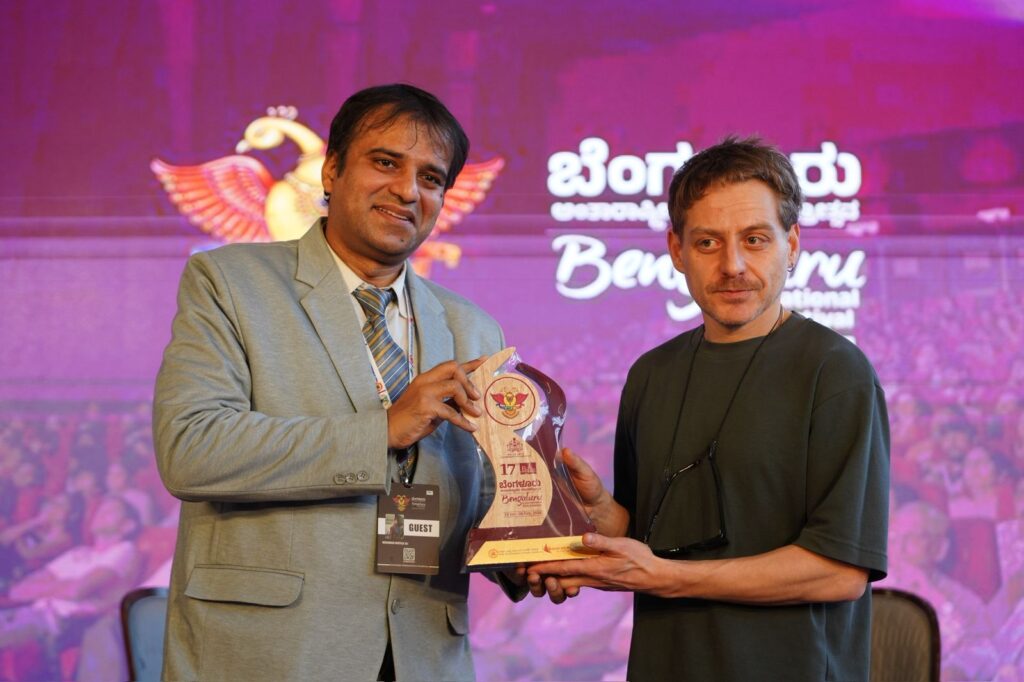
Speaking at a session titled From Short Films to Feature: Finding Cinematic Language at the 17th Bengaluru International Film Festival, Polish filmmaker Damian Kocur reflected on his journey from short films to features, offering an intimate account of how he approaches cinema as a sensory, emotional and deeply human medium. Damian Kocur is a film maker from Poland who’s known for his works like, ‘Bread and Salt’ and ‘Under the Volcano’ which are been recognized in various film festivals.
Kocur said he often prefers silence over excessive visual or narrative noise, explaining that cinema has the power to rely on basic human sensations rather than constant stimulation. For him, reducing cinematic elements is not about minimalism as a style, but about creating space for the audience to feel and observe. He described filmmaking as a process of stripping away distractions in order to reach something honest and essential.
Reflecting on the relationship between cinema and politics, Kocur acknowledged the frustration of responding directly to current events through film, given the long and uncertain timelines of production and financing. Instead of chasing topical relevance, he said he is more interested in making films that are universal and emotionally durable, works that remain meaningful even when their political context fades.
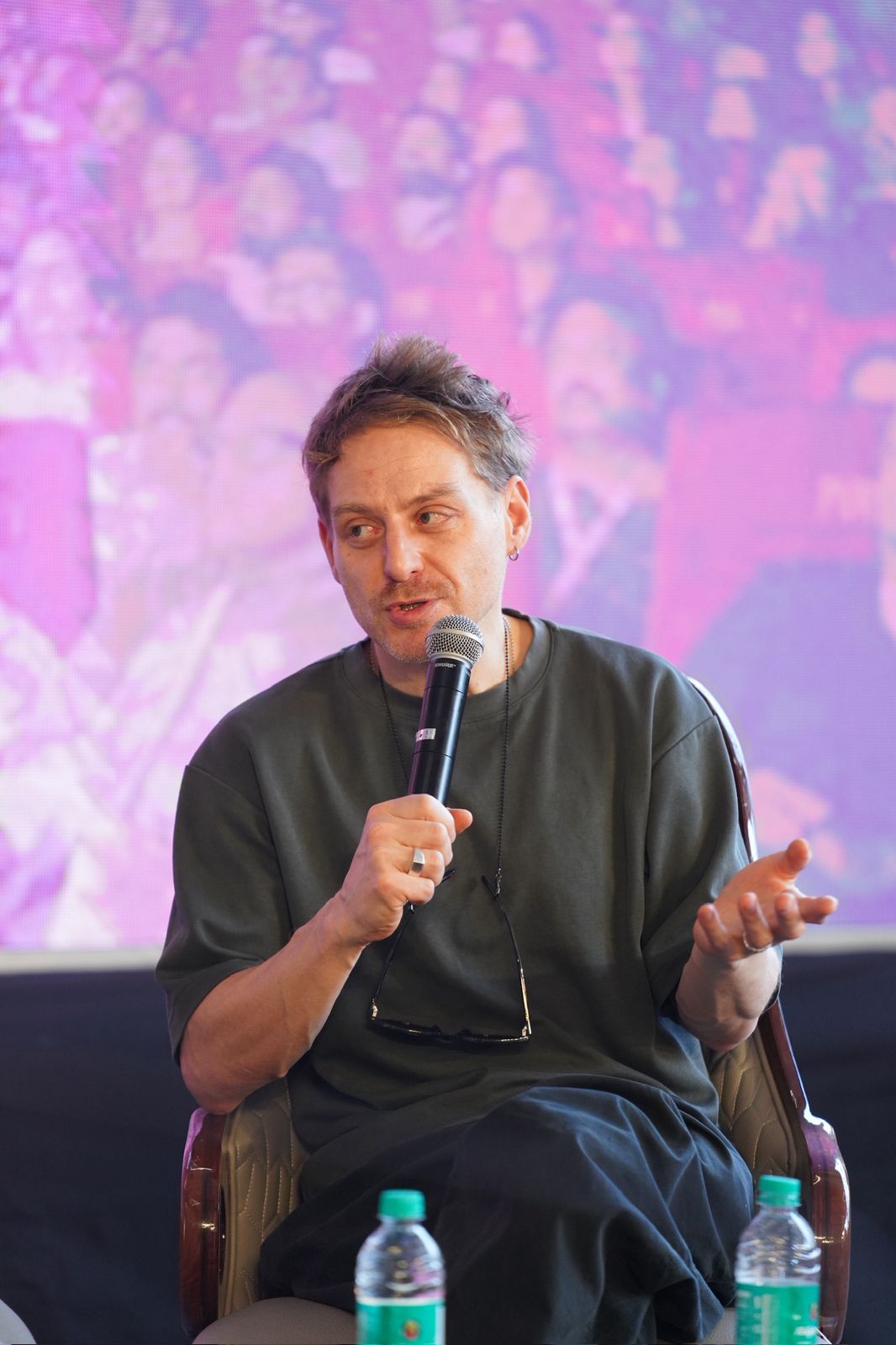
He believes that emotional truth is closely tied to the language in which a story is conceived and that certain nuances cannot be translated without loss. This sensitivity extends to his work with actors, where presence and believability matter more than plot mechanics. He said he is less concerned with perfectly constructed stories and more interested in moments of truth that feel lived-in rather than performed. He argued that cinema does not need to explain everything, and that ambiguity often mirrors real life more accurately than neat resolutions. Observing people in everyday spaces, watching how they move and interact, remains a key source of inspiration for him as a filmmaker.
Sharing his impressions of India on his first visit, Kocur said he was struck by the vitality of street life and the richness of everyday interactions, which he finds largely absent from the more orderly and predictable spaces of Poland. This sense of discovery, he said, reinforces the importance of staying open to the world and continuously feeding one’s curiosity as an artist.
Speaking about the OTT, Kocur described cinema as a shared language that helps people feel less alone. Whether watched on a large screen or a small device, he believes the power of film lies in the experience of watching and feeling together. For him, cinema is built from small sounds, quiet movements and fleeting expressions elements that, when treated with care, can resonate far beyond the screen.




Leave a Reply