
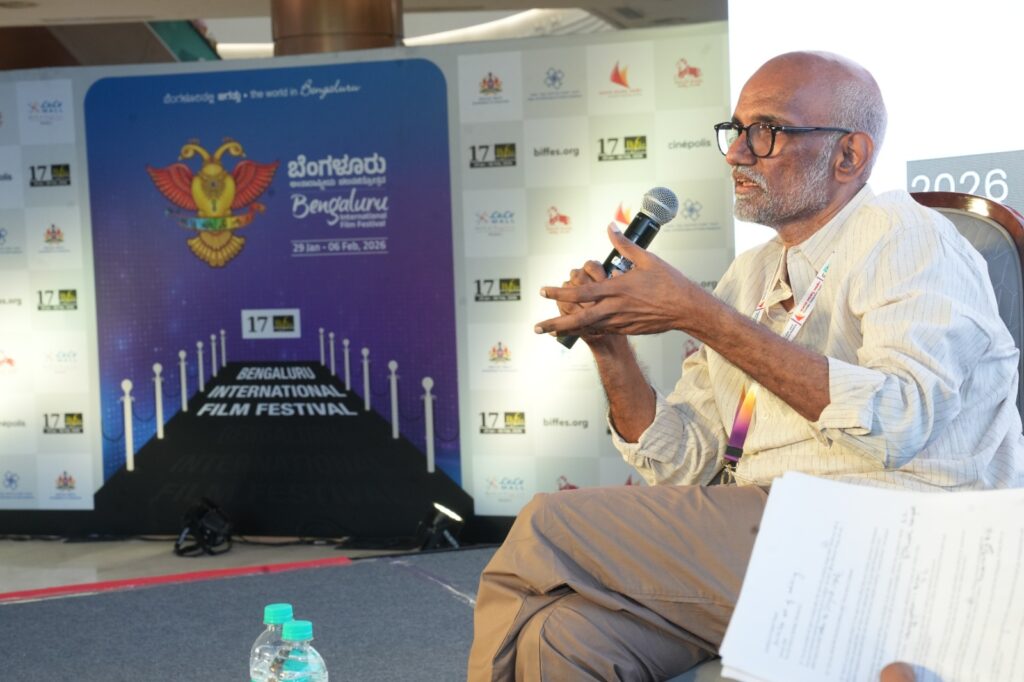
Editor Sreekar Prasad speaks about the art of editing in film making
Prasad asserted that while AI has become a useful tool for research and efficiency, it cannot replace the artistic intuition and emotional sensitivity required in editing. According to him, editing is rooted in organic human decisions,choices that emerge from instinct, experience and an understanding of emotion, something AI-generated prompts cannot authentically replicate.
At the 17th Bengaluru International Film Festival, veteran film editor Sreekar Prasad delivered an insightful session titled “The Invisible Art of Editing”, moderated by producer Sandeep Vishwanath, offering a deep dive into the philosophy, process and evolving challenges of film editing.
Prasad emphasised that his work as an editor begins much before shooting starts. He prefers to be involved from the early script stage, often after the first draft, accompanying the director through the development process. This early collaboration, he said, allows the editor to bring objectivity, a sense of visual rhythm and narrative clarity to the film. Editing, for him, is fundamentally about storytelling,ensuring that the flow is right, the emotions land, and the audience remains engaged. He noted that scripts are not sacrosanct and often evolve significantly once filming begins, as real-world constraints like locations, performances and budgets inevitably shape the final outcome.
Calling the editing table the place where a film is truly made, Prasad explained that substantial screenplay changes often occur during post-production.
This “rewrite” through editing can be minimal or extensive, depending on the film, but it plays a decisive role in shaping the final narrative. Being involved from the script stage through this reworking process, he said, strengthens his ability to contribute meaningfully to the film.
On maintaining objectivity, Prasad revealed that he does not visit film sets. By staying away from the physical challenges of production, he is able to view the footage as a first audience would, judging performances and scenes purely on their cinematic impact. However, he stressed the importance of parallel editing during the early days of shooting. The first 10 days of filming, he said, are critical, as early edits can help identify issues in tone, performance or missing shots, allowing the team to course-correct while still on location.
Prasad also spoke at length about the importance of understanding a film’s target audience. Editing choices, he explained, are deeply influenced by who the film is made for. While mainstream theatrical audiences may require heightened moments and emotional “highs,” these must feel organic and not forced. He advocated for longer takes and holding on performances when needed, cautioning against excessive cutting simply because multiple angles are available. Knowing when not to cut, he said, is just as vital as knowing when to cut.
Explaining his workflow, Prasad described two stages of editing: micro and macro. While individual scenes are refined during shooting through micro editing, the real challenge arises during macro editing, when the film is viewed as a whole. Scenes that work in isolation may not serve the larger narrative and may need to be removed to preserve momentum. A single misplaced scene, he warned, can break the audience’s emotional connection and disrupt the film’s flow.
On technology and visual effects, Prasad highlighted the need for careful planning and budgeting. Pre-visualisation, he said, is essential to determine what is feasible within a film’s resources, ensuring that VFX enhances rather than overwhelms the story. He concluded by urging filmmakers and technicians to remain curious and open to technological change, noting that resisting change can render one irrelevant. Despite advancements in tools and techniques, Prasad reiterated that cinema remains a deeply human art form,one that ultimately depends on the invisible, intuitive craft of the editor.




Leave a Reply