
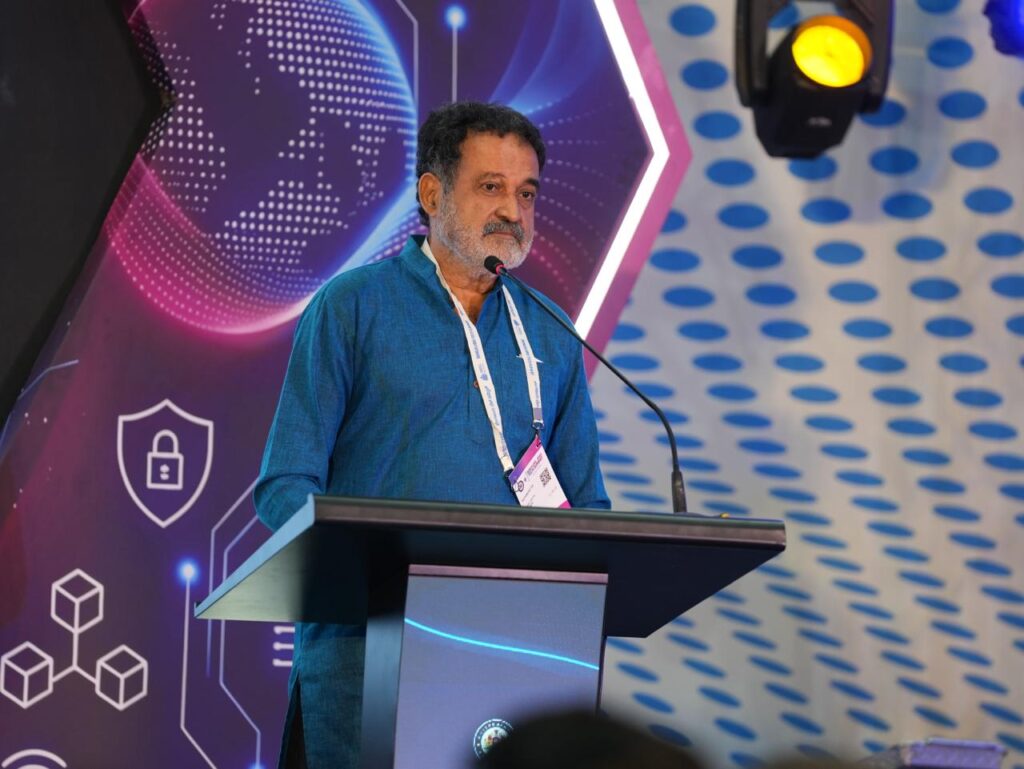
Bengaluru: Artificial intelligence (AI) is set to bring about significant changes in several sectors, including India’s economy, employment, education, healthcare and defence, over the next 25 years. AI and robotics will play an increasingly important role across sectors, including warfare, said IT expert and entrepreneur Mohandas Pai.
Speaking on ‘AI and India: The Future’ at the Bengaluru Tech Summit on Wednesday, he said AI would transform several aspects of everyday life and bring about far-reaching changes across industries over the next 25 years.
He predicted that increased power generation from solar and nuclear energy would make electricity more widely available in the future. Every student would have an AI-powered teaching assistant to support learning, while AI-assisted doctors and nurses would help provide personalised healthcare. Robots and AI would take over most routine tasks that currently require human labour, and everyone would acquire programming skills, he noted.
Referring to the growth of prominent Bengaluru-based unicorn companies, Pai said Sarvam, founded in 2023, currently has a market valuation of USD 1.5 billion. Emergent, established in 2024, is also valued at USD 1.5 billion. Netradyne, founded in 2015, has a similar valuation of USD 1.5 billion. Krutrim, established in 2023, and CommerceIQ, founded in 2012, each have a market valuation of USD 1 billion, he said.
Quantum computers will play a crucial role in future technological advancements, while the use of AI and robots in warfare is expected to increase. AI will also have a significant impact on the news media and gaming industries. India will emerge as a major provider of advanced technologies to other countries. Advances in medicine and technology could also extend human life expectancy to 120 years, Pai observed.
He estimated that the capacity of data centres in India would increase fivefold by 2030. He also outlined five key areas essential for the development and expansion of AI: electricity, semiconductor chips, data centres, technology models and software applications. Strengthening capabilities in these areas would be crucial to driving the future growth of AI, he said.




Leave a Reply