

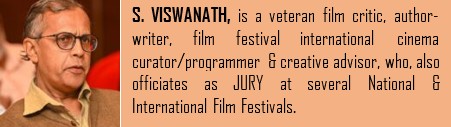
S Viswanath
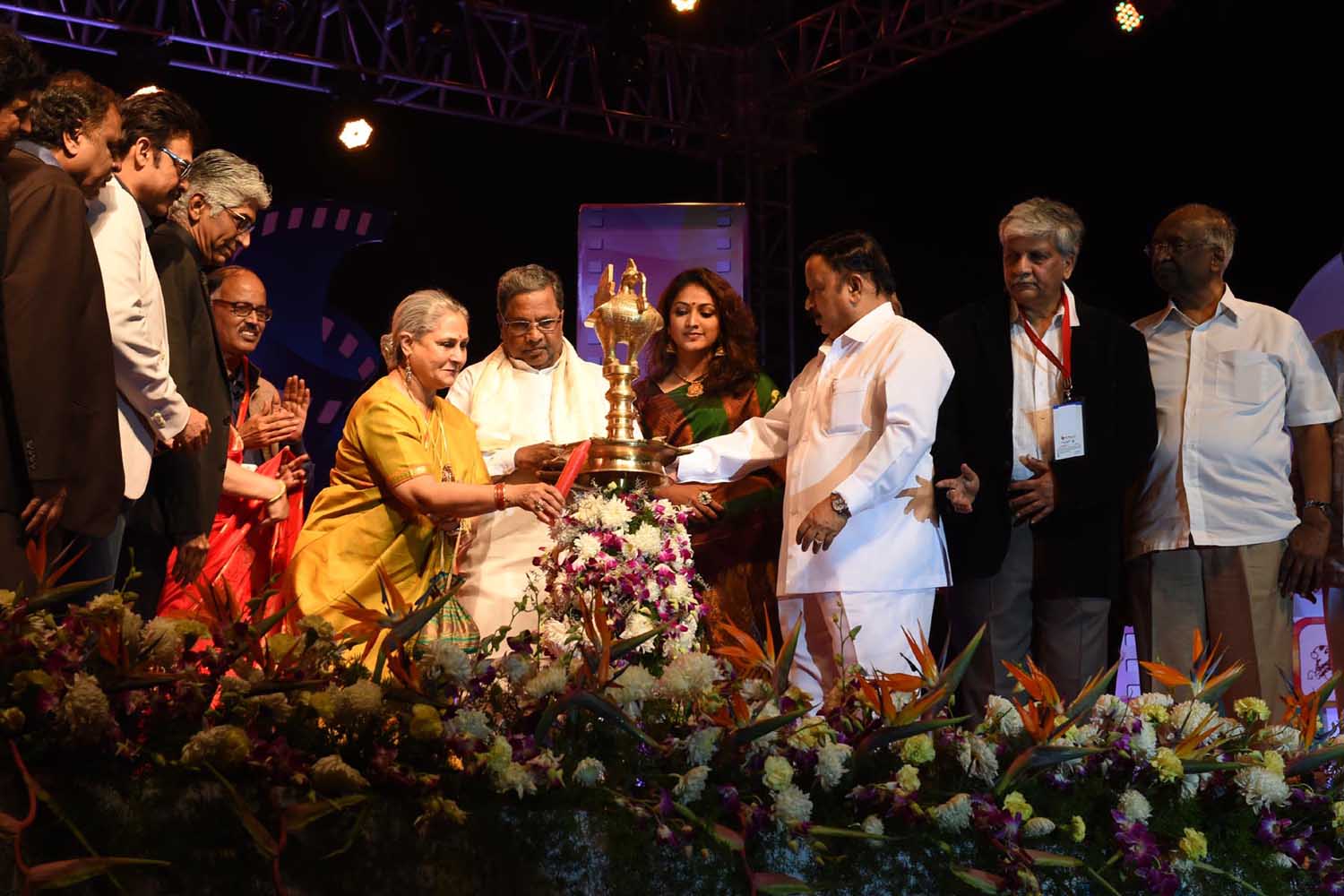
With just eight days to go, the historic old GMC (Goa Medical College) Heritage Precinct, on Dayanand Bandodkar Marg (DB Road) in Campal, is getting all dressed and decked up to host the 57th annual calendar cultural carnival – the International Film Festival of India.
The Heritage Precinct, which also houses The Palace of Maquinezes or Palacio dos Maquinezes, built in 1702, originally belonging to two brothers, Diago da Costa de Ataide e Tieve (a squadron leader) and Cristovam da Costa de Ataide e Tieve, known as Maquinezes, and stands directly across the Campal Promenade along the famed Mandovi River and its floating fleet of Casinos, as well as adjacent forest park / wooded green area, awaits the avowed cinephiles from across the globe as they undertake the annual Haj to the Mecca of IFFI, to congregate, celebrate, and confabulate all things cinema for the nine days from November 20 to 28, when the entire avenue and its surroundings turn into a surreal Cinema Paradiso during this time of the year.
The Palacio dos Maquinezes which today fronts as the office of the Entertainment Society of Goa, and the organisational partners of International Film Festival of India, Directorate of Film Festivals (DFF) and Press Information Bureau (PIB), come November, and the Heritage Precinct, which is the hallowed home to PVR Inox and its four theatre screens, is indeed a sight to behold come November when the entire epicentre turns into a Coliseum of Cinema as film after film light up the screens while the court yard turns into a impromptu theatrical stage for music, dance, celebrity parades and a hive of activities as the Seventh Art is saluted and savoured much to the engagement and enrichment of those that have religious trekked to catch, up, close and personal what trends and thematic concerns today’s contemporary cinemas and its seasoned filmmakers present before the diehard cine buffs.
In the run up to the festival proper which flags off from November 20, IFFI has announced its line ups for some of its regular screening segments a cursory glance of which provides a promising palate of gourmet films on the menu card.
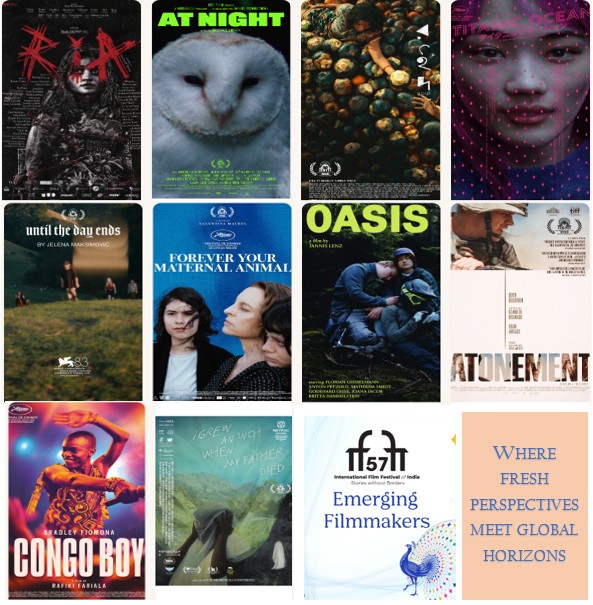
In its Emerging Filmmakerssegment the festival has announced a curated collection of ten films drawn from Austria,Bangladesh, Belgium, Bulgaria, Central African Republic, France, Greece, Philippines, UK andUSA.
Ria, is a provocative socio-political debut feature, by Filipino filmmaker Arvin Alindogan Belarmino, spotlights on a young woman from the folk-punk scene who teams up with her foster mother and fellow punks to resist a developer intent on demolishing their building, the last structure standing in their razed neighbourhood. Enmeshed between angst and anxiety, but doughtily driven by grief and determination, Ria takes a call on how far she is willing to go to protect her home and the community that stands together against the realtor’s threat and might.
The film which premiered at South Korea’s Busan International Film Festival successfully picked The Heart of Eurasia Award as part of Busan Vision Awards Sectionwhich is presented by Kazakhstan-based Foundation for the Support of Culture &Education’Shabyt Astana’ and carries a cash prize of KRW 10,000,000 or 10 million won equivalent to ₹7 lakh plus.
The debut feature At Night (La Nuit) by London-based experimental filmmakerBeatrice Gibsonfollows six women in Paris, including a filmmaker, a single mother, a former sex worker, and a poet, as they traverse through the City after dark, each dealing with their own individual struggles.
While the filmmaker tries to make sense of the film she is creating, a Black single mother challenges the labels society places on her, even as a former sex worker looks back on her past, and the poet gives up her hope of having a child.
Set over a single night, the first feature film draws inspiration from the writings of Alice Notley, June Jordan, Kathy Acker and Bernadette Mayer blending dreams, fiction and reality while exploring the assorted women’s experiences and their individual inner lives.
Incidentally, the film saw its director Beatrice Gibson picking the Best Emerging Director Award, at Locarno International Film Festival as also Best Feature Film Award (ex-aequo) at the Bucharest International Experimental Film Festival 2026.
The mystery movie Roid(Sunshine)by Mejbaur Rahman Sumon described as one of the strongest voices of Bangladesh’s New Wave Cinema movement, draws its plotline from on a story by Mejbaur Rahman Sumon and Selina Banu Moni.
The film which examines desire and attachment with haunting, elemental imagery and compelling performances, centres around Sadhu, a lonely middle-aged man, who weds a woman with mental illness and builds a house on an empty plot far from the village. However, her behaviour disturbs his peaceful life, so he abandons her in a distant place. After several days, a palm fruit falls from the tree near their house, and strangely, his wife returns. This happens again and again. The woman, the palm tree, and Sadhu’s life seemingenwrapped in a mysterious, endless cycle.
Greek woman filmmaker Konstantina Kotzamani’s Titanic Oceanis a fantasy drama which follows a group of teenage girls at a Japanese boarding school as they train to become professional mermaids.In the scintillating teenage universe, we wondrously watch how 17-year-old Akame learns to hold her breath, perform for adoring crowds, and swim alongside sharks. Under her silicone mermaid tail, Akame slowly finds her siren voice, discovers first love, and experiences a metamorphosis, turning her performance into a physical and personal transformation.
The Serbian film Until The Day Ends by Belgrade’s woman editor-director Jelena Maksimovićis a coming-of-age directorial debut drama film is set against the backdrop of the Serbian anti-corruption protests, and follows an anarchist student and a pro-government young man as they flee Belgrade.
Lena, 20-year-old anarchist student, runs away from her unhappy family and meets Stefan, 22 year old pro-government youth. The two are drawn towards each other despite being on opposite camps of Belgrade’s protests.
While Lena fights for a better world, Stefan, on the other hand, driven by personal dreams, keeps himself away from the protests. Do the two reconcile despite their divergent ideals and inspirations forms the fulcrum of the film in a city which is riven by protests and social tensions.
The sophomore Belgian film Forever Your Maternal Animal(Siempre soy tu animal materno)by French-Costa Rican woman directorValentina Maurel which won the Un Certain Regard – Best Actress, at Cannes Film Festival for its principal player Daniela Marín Navarro, centres around two sisters – Elsa, 28, who returns to Costa Rica from Europe and reconnects with her sister Amalia, 20, who’s on an esoteric, existential path.
Their parents are busy in their own lives. Her father drifts through a series of affairs, while her mother is immersed in republishing the erotic poems of her youth, neither fully grasping the seriousness of the situation. The film shows how Elsa’s return draws the three women into a confrontation with what still binds them, despite everything.
Incidentally, the film was shot in the Zapote district of San José, Costa Rica, the neighbourhood in which director Maurel, daughter of Costa Rican poet Ana Istarú, herself was raised.
I Have Electric Dreams, Maurel’s debut feature film was an impressive film which bagged several awards, including Best Direction at International Competition in Locarno 2022.
OasisAustrian filmmaker Jannis Lenz which had its world premiere at the 83rd Venice International Film Festival competing in the Orizzonti section, won the Grand Jury Prize ‘Bisato d´Oro’, Independent Film Critics Award.
Set in a school campus, the film spotlights on how, when a video of a student threatening his classmates goes viral, violence spreads through the school. Under pressure from teachers and parents, three lonely students find shelter in a nearby forest. Their games become strange rituals, and they use pain to escape their problems. But as past hurts come to the surface, their relationships change and the distance between them grows.
The film speaks of the filmmaker’s style drawing on his background in parkour and freerunning, his films explore physical limits, urban spaces, control, vulnerability and the complexities of masculinity.
Atonement by American filmmaker Reed Van Dyk is inspired by true events, based on Dexter Filkins’ acclaimed New Yorker article. The film follows a former US Marine who, driven by guilt,undertakes an extraordinary journey to meet the survivors and face the consequences of his actions, to seek forgiveness years after a split-second decision during the Iraq War devastates an Iraqi family.
Set in Bangui, Central African Republic, the coming-of-age story, Congo Boy, the Central African Republic film by Fariala Alolea Albert, speaks of the trials and tribulations of 17 year-old Robert who dreams of a career in music, but is thwarted by the civil war tearing his country apart. When both his parents are thrown into prison, he is left to look after his four younger siblings on his own, juggling daily life, odd jobs, school exams and concert stages, determined to follow his dream.
The film saw its protagonist Rafiki Fariala bag the Best Actor Award in the Un Certain Regard Section at Cannes Film Festival 2026 while the film was awarded Best Film at Pingyao International Film Festival.
The Philippines’ film I Grew Up An Inch When My FatherDied by Leyte, Philippines based filmmaker P R Monencillo, which the NETPAC Award, at International Film Festival Rotterdam and Jury Special Mention at Filmfest Aachen 2026, revolves around two grief stricken brothers’ struggle to move on in life after being after freed their abuse father following his murder by the neighbour, maintaining ties with the killer’s son, exploring crime’s ripple effects and generational guilt.
Kenken, the younger brother who witnessed the killing, who stopsspeaking, finds comfort in a mysterious, unseen presence that offers him a way into the supernatural world, while his older brother Ge, struggles to reconcile with his best friend, Ricor, the murderer’s son.
With surrealism as its key element of visual narrative, the film has been shot in 4:3 format mostly in desaturated colour, with occasional splash and frequent red.





Leave a Reply