


S Viswanath
“ The Marché du Film is first and foremost a place of action, structured around three essential pillars: the global marketplace for film sales, a platform where projects are created and financed, and a hub for sharing knowledge and expertise where the industry collectively shapes its future ,” Guillaume Esmiol, Executive Director, Marché du Film .
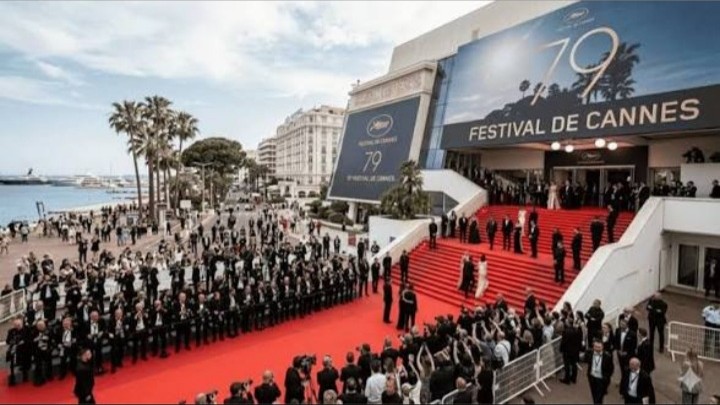
With curtains up on the 79th Cannes Film Festival. The glitz, glitterati and glamour oozing hoi populi sashaying in their sartorial haute couture designer best scorching the Red Carpet at the Palais des Festivals et des Congrès, abetting the Croisette, papped by pushy pursuing paparazzi, one’s thoughts veers to the contingent of collective cinemas from India seeking to make a splash at the Mother of All Festivals.
It is here that Cannes’ Marche du Film – a place Where the Global Film Community Comes Together – holds window of opportunity and promises aplenty as filmmakers and producers seek to pitch for prospective business and catch the enterprising eyes of buyers, sellers, sales agents and promoters of films assembled from movie marquee world over. This year with over 16,000 film professionals from 140 countries the event further cements its place as the world’s leading marketplace for film sales, project funding and global industry networking.
Further, according to Cannes Film Festival organisers, the United States, France and the United Kingdom remain the top three countries in terms of attendance, with Europe continuing to lead as the most represented region. Also Asia is gaining strong momentum, driven notably by Japan, this year’s Country of Honour, recording nearly 50 pc increase in attendance, becoming fifth most represented country at this year’s film market.
Likewise, growth is seen accelerating across regions with Iraq returning to the Village International, Egypt doubling its presence, and Benin debuting at the Palais des Festivals while Latin America is strongly represented, with activities in collaboration with Ventana Sur.
Thus, not only does Marché du Film facilitates world premieres of films from all around the world. The high profile making to marketing segment helps those in business on either side to discover, explore and experience the vibrant international film scene. Deals and pacts and promises, struck through dialogues and discussions, parleys and promotions as also through the proverbial Marché du Film screenings.
A place where right connections at right time turns into oasis of opportunities as one explores the world’s biggest international film market, discovering diverse range of films from around the world while connecting with the buyers and sales community.
For, after all, the Marché du Film is buzzing and bustling beehive to more than 1,500 market screenings each year, facilitating as ubiquitous ultimate platform for doing deals, driving business and forging new partnerships and alliances to closing deals, offering industry professionals widest scope of multifarious movies available on the market: auteur films, independent films, mainstream films, genre films, as well as animation and documentaries from all around the world.
As the top film business event in the world, the Marché du Film provides a diverse group of tailored programmes dedicated to all sectors of the industry: co-production, docs, animation, genre films, XR, innovation and much such more.
Through these face-to-face, one-to-one up, close and personal programmes, market participants gain access to pitching sessions for film projects and works-in-progress, across the table meetings, immersive workshops and a multitude of networking events. These experiences are meticulously crafted to cultivate fresh collaborations, secure film financing, and discover today’s rising talents!
Marché du Film’s vibrant ecosystem, representing diverse perspectives from over 140 countries, spanning all forms of cinema and companies of all sizes is a space offering perfect setting to connect, collaborate, and accelerate film business.
Drawn by wide range of exhibitors — primarily sales agents and film institutions — whose presence attracts a full spectrum of the film industry. These exhibitors driving the momentum, forging meaningful connections, striking deals, while shaping the future of cinema in Cannes turning it into one the most prestigious moment of the year!
With over 300 exhibitors from around the world assembling to showcase their latest lineups, transforming the Palais into a dynamic marketplace alive with opportunity, screening rooms, conference halls, and assigned networking areas provide the ideal environment for discovering new films, exploring fresh trends, and building industry connections.
The 31 screening rooms, Palais des Festival’s Palais B to H: 7 screening rooms (3rd floor). Palais I, J & K: 3 screening rooms (4th floor). Riveria & Lérins 1 to 3: 1st floor, Lerins Cinema Club: 1st floor Cinema les Arcades 77, rue Félix Faure (3 screening rooms), Cinema Olympia 5, rue d’Antibes (9 screening rooms), turning into hive of activity. engaging distributors and sales agents, whose unparalleled opportunity one to immerse yourself in the world of cinema and cultivate invaluable connections within the industry in one dynamic setting.
That the other Cinemas of India, especially from regional film making centres of the country, such as Kannada, Malayalam, Marathi, Punjabi films were cynosure of Marche du Film being screened across various sections to catch the discerning eye of the film or sales agent or the festival curators / programmers that could make their prospects bright, is indeed a truly happy augury.
That these have trekked to the Mecca of Movies to make a strong mark on the global stage providing a prestigious platform for filmmakers and producers worldwide to showcase their work and gain global industry recognition is truly appreciative.
Thanks to the pull power of Cannes Film Festival Indian Cinema, year on year, sees a robust presence, with several films and artists participating across various categories and in the process becoming the talking points in the festival circuit for their storyline and powerful performances.
That Indian films have held their own at the festival’s main event – winning accolades and awards – over the years is a done thing. But for these films seeking to cut through the marketing chase and be noticed is another thing.
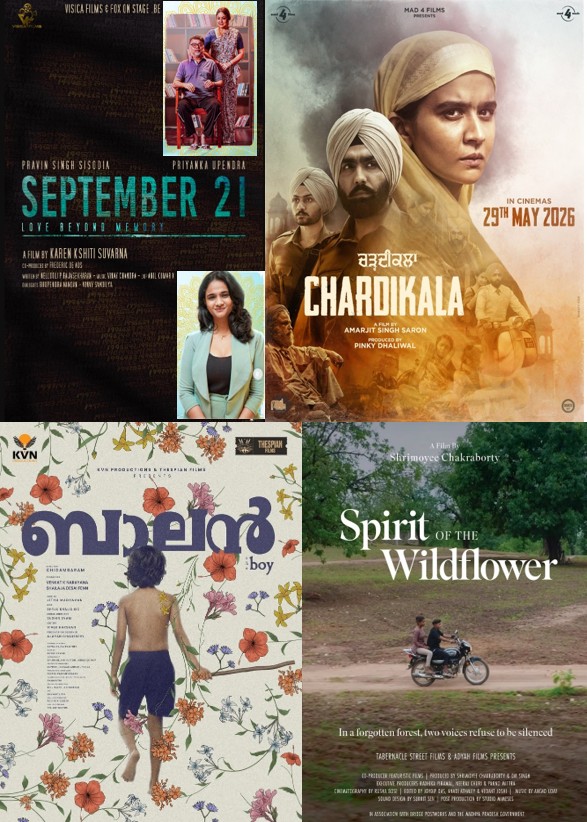
This time around you have September 21, Chardikala, Balan: The Boy, Shadows of the Moonless Night, Spirit Of The Wildflower, Lakadbaggha 2: The Monkey Business, Laalo – Krishna Sada Sahaayate & Gudgudi make up the impressive line up of films,
among a handful of regional cinemas that have boarded Cannes bandwagon to see whether they can break through the clutter and competition and come away with a few serious enquiries boosting their prospects not only for the film but also its makers and proud producers who have put every penny into its making.
While the country may not have a contender for Palme d’Or or Uncertain Regard Competition Sections this year to rub shoulders with the likes of maestros such as Pedro Almodovar, Asghar Farhadi and James Gray, and other heavy weights of auteur cinemas, however, these handful of films represent the country as premieres, restored classics, student showcases and at film market screenings.
Sandalwood’ very own dual-lingual September 21 the Kannada feature debut by Karen Kshiti Suvarna will have its world premiere at the Palais Theatre on May 16. Shot in Hindi and Kannada, the film revolves around an elderly Alzheimer’s patient who becomes convinced that his wife is quarantined in the neighbouring house during the Covid-19 pandemic. As his memory worsens, his estranged son returns home and struggles with the emotional demands of caregiving and family responsibility. The film releases in the country theatrical circuits on May 22, 2026.
In the run up to the Cannes screening the film makers, producers and crew held a media briefing in Bengaluru. Speaking on the occasion The film’s director Karen Kshiti Suvarna said “the film was a very personal story about emotions. We wanted to give audiences a real and honest glimpse into the world of caregivers. Taking the film to Cannes at such an early stage in my journey feels surreal, and I truly hope the story connects with people across cultures.”
Actress Priyanka Upendra said “Being part of September 21 has been incredibly meaningful. The story speaks about love, memory, and responsibility in a very real and sensitive way. I’m confident the film will leave a strong impact on everyone who watches it.”
Chardikala aka Zakhma Toh Chardikala Tak, the Punjabi film, directed by Amarjit Singh Saron premieres at Cannes’ Marche du Films (film market). The film follows the story of a nurse whose quiet life spirals after she is falsely accused in a major case. As she struggles with loneliness and hardship, she gradually begins helping families dealing with their own challenges. The film is slated for theatrical release in the country on May 29 following its Cannes showcase.
Balan: The Boy from Malayalam filmmaker Chidambaram, of Manjummel Boys fame, which also screens at the Marche du Films, centres on a teenage boy searching for his missing mother. The story deals with abandonment, emotional instability and survival in a harsh social setting. The story is also expected to explore themes of identity and resilience. It is releasing on June 19.
Spirit Of The Wildflower by London-based filmmaker Shrimoyee Chakraborty is another which is being screened in the festival’s Marche du Film Section. The documentary follows two sisters running India’s first legal mahua distillery. While one dreams of turning their local brew into an internationally recognised brand, the younger sibling hopes to transition and live as a man. The film explores identity, ambition and social acceptance within a conservative environment.
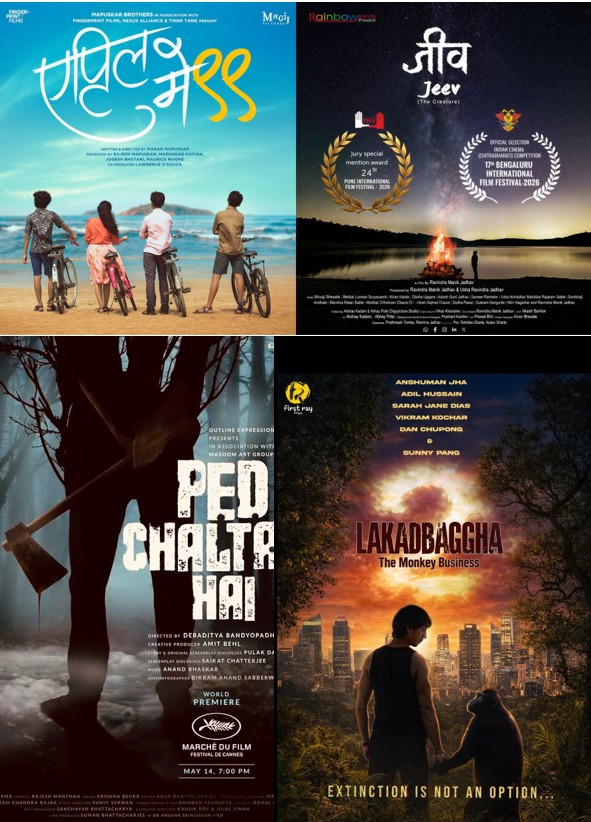
Lakadbaggha 2: The Monkey Business by actor-director Anshuman Jha’s action thriller is being showcased at Cannes 2026 with exclusive market screening at the Marche du Films ahead of its official world premiere later this year.
The sequel which continues the story of the animal-lover vigilante introduced in the first Lakadbaggha film is being presented to international distributors during the festival.
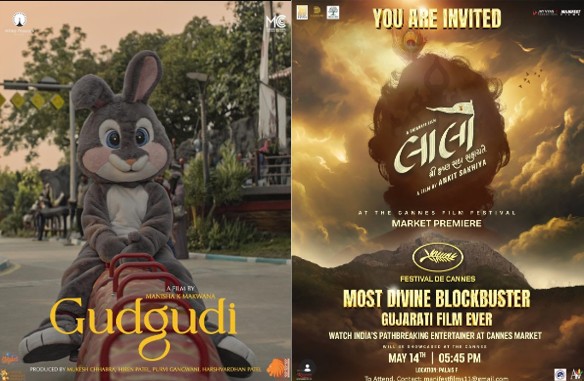
The short film Gudgudi, by Manisha K Makwana world premieres at Cannes 2026 in the Marche du Films segment. The film reportedly explores the emotional journey of a middle-class woman navigating life and personal struggles within the backdrop of an amusement park.
The Gujarati film Laalo – Krishna Sada Sahaayate by Ankit Sakhiya is about a rickshaw driver trapped in a farmhouse confronts his past demons while experiencing visions of Lord Krishna, who guides him through a transformative journey of self-discovery and healing.
Ped Chalta Hai, is a 100-minute suspense thriller film shot in Palamu, Jharkhand, directed by Debaditya Bandopadhyay, which conveys the message of environmental conservation and water, forest and land, through suspense and emotional storytelling to explore environmental imbalance and is based on a story by Bengali writer Pulak Das.
Two films, Jeev (The Creature) in Konkani language and April May 99 are being showcased to international buyers and industry professionals as part of Maharashtra’s initiative to promote regional cinema on a global stage
The two Marathi films paint a picture from the tribal traditions in the Konkan to the nostalgic 1990s coming-of-age tale. Jeev ( The Creature) is directed by Ravindra Jadhav, this film explores the traditions and customs of the tribal Konkani community in Maharashtra.
Jeev is a 104-minute feature film in Konkani. When the elder of Chaure family, father of the young protagonist Miru, dies on the day of Holi, an ancient custom is invoked. Until the departed soul (Jeev) returns to the family by the next Holi, no festivals may be celebrated and no sweets prepared.
This return is believed to occur through the birth of a new life human, animal, or bird, As the year unfolds, Miru, along with his mother, wife, and young son, struggle to ensure that a new Jeev appears in their household before next Holi. Their efforts are repeatedly obstructed by relatives who seek to isolate and boycott the family, Social pressure mounts, raising the threat of expulsion into the forest, away from the community. Caught between belief and survival, Miru’s family confronts rigid tradition, hostility, and uncertainty.
April May 99, directed by Rohan Mapuskar, is a nostalgic coming of age tale set in the pre-digital summer of 1999 in Shrivardhan. Three 14-year-old best friends Krushna, Prasad, and Siddhesh eagerly await their school vacation filled with cycling, games, and carefree adventures. Their plans unravel when Prasad’s father insists on sending him to Mumbai for an English course, sparking resistance from the group.
The arrival of Jaie, a charming girl from Pune visiting her aunt, disrupts the boys’ dynamic, igniting friction, testing loyalties, and sparking unexpected bonds. For Prasad’s father cancels the trip on the condition that Jaie tutors Prasad in English while he helps her adjust to village life. Through laughter, rivalries, and heartfelt moments, the four teens navigate adolescence, self-discovery, and the fleeting innocence of youth.
While Indian filmmaker Ashutosh Gowariker is representing the country in his role as director of the International Film Festival of India (IFFI), Marathi Cinema is represented by veteran actors Ashok Saraf and Nivedita Saraf, along with actress Prajakta Mali and producer Kedar Joshi, with Gujarati Cinema represented by actor-producer Mansi Parekh and singer-producer Parthiv Gohil, highlighting the growing outreach of Gujarati films.
With Cannes Film Festival as the first stepping stone to success as they plan the film festival circuit rounds while hitting the theatrical releases it is to be seen how these handful of films fare in the months to come.





Leave a Reply