


S Viswanath

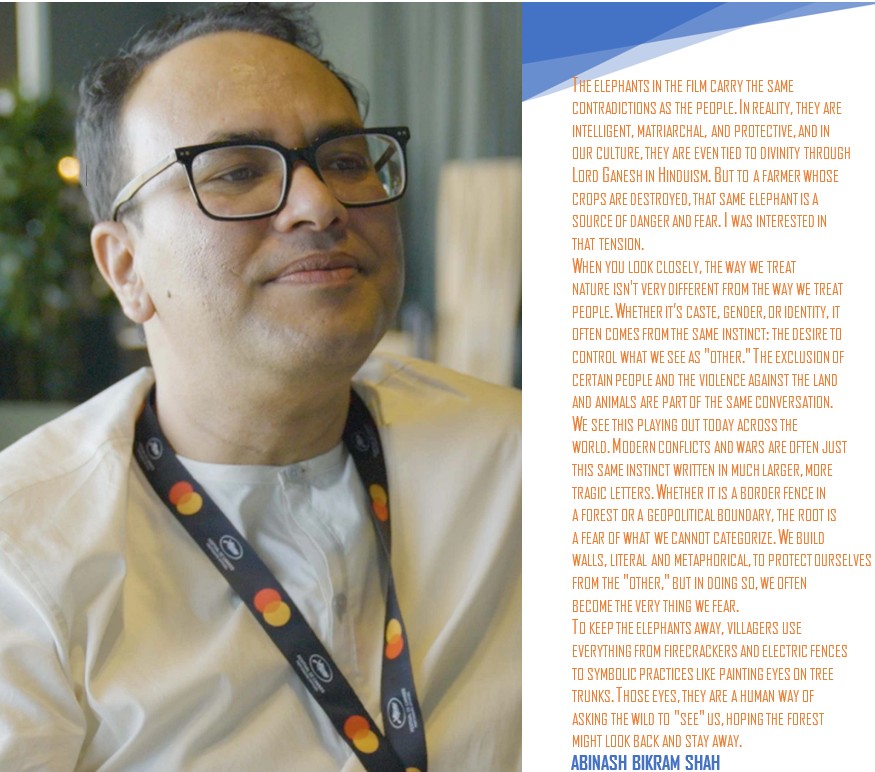
THE BESPECTACLED DIRECTOR ABINASH BIKRAM SHAH WITH HIS PRINCIPAL CAST – PUSPA THING LAMA (PIRATI), JASMIN BISHWOKARMA (CHAMELI), SAHAB DIN MIYA (JOON) IN RED, ALIZ GHIMIRE (APSARA) WITH BLONDE HAIR BEHIND.
“I was drawn to the contradiction of their (transgender) place within South Asian society. They are often pushed to the margins, yet invited into intimate spaces as spiritual figures whose blessings are believed to bring fortune and whose curses are feared. That tension between rejection and dependence felt deeply human to me.” – Abinash Bikram Shah, film director – Elephants In The Fog.
Gender and more so, one’s sexual and individual identity, in recent years, has been a seriously debated and deliberated global issue. Wearing one’s gender on his/her sleeve the new normal among the statement making diaspora the world over, aggressively intent on explicitly expressing their sexuality.
So much so, the highest courts of the countries, as also the State, and larger civil societies and social activists have been seriously engaged on the subject. With appropriate legislations (vacillating between reformist and regressive pendulums) being put in place to ensure gender identity and parity among people so that anathema of discrimination is dismantled from social sphere. In an express attempt to ensure these “marginalised” sections of society do not face social stigma or social ostracisation.
It is precisely in this direction films and filmmakers too have, in recent times, sought to bring into sharp focus social realities these sections face. How they strive against all situations to stand their own demanding dignity, and acceptance they deserve to lead their lives as equals among the larger diaspora.
For example, the much awarded and highly accoladed allegorical Chilean film The Mysterious Gaze Of The Flamingo by young, promising director Diego Cespedes’ debut feature, speaks of the community’s trials and tribulations, life and living through the eyes of a eleven-year-old Lidia.
Set in a desert mining town in northern Chile, and taking mystical, mythical and magical realism mode to drive its homily, the film shows how Lidia lives with her beloved queer family confronted with a situation when an unknown and deadly disease threatens their existence.
The folklore legend has it that it the disease afflicts and is transmitted through a simple glance, when two people fall in love. While people are assailing her family for this malaise, Lidia seeks to scour and sift whether this myth is real or make belief.
In a similar vein, young and talented Nepalese filmmaker Abinash Bikram Shah whose 2022 short Lori (Melancholy of my Mother’s Lullabies) competing in the Short Film Palme d’Or won Special Jury Mention, making him the first Nepali filmmaker to be officially selected for Cannes and win the award, charts the trials and tribulations of the Kinner or Hijra or bisexual community of his hometown Nepal.
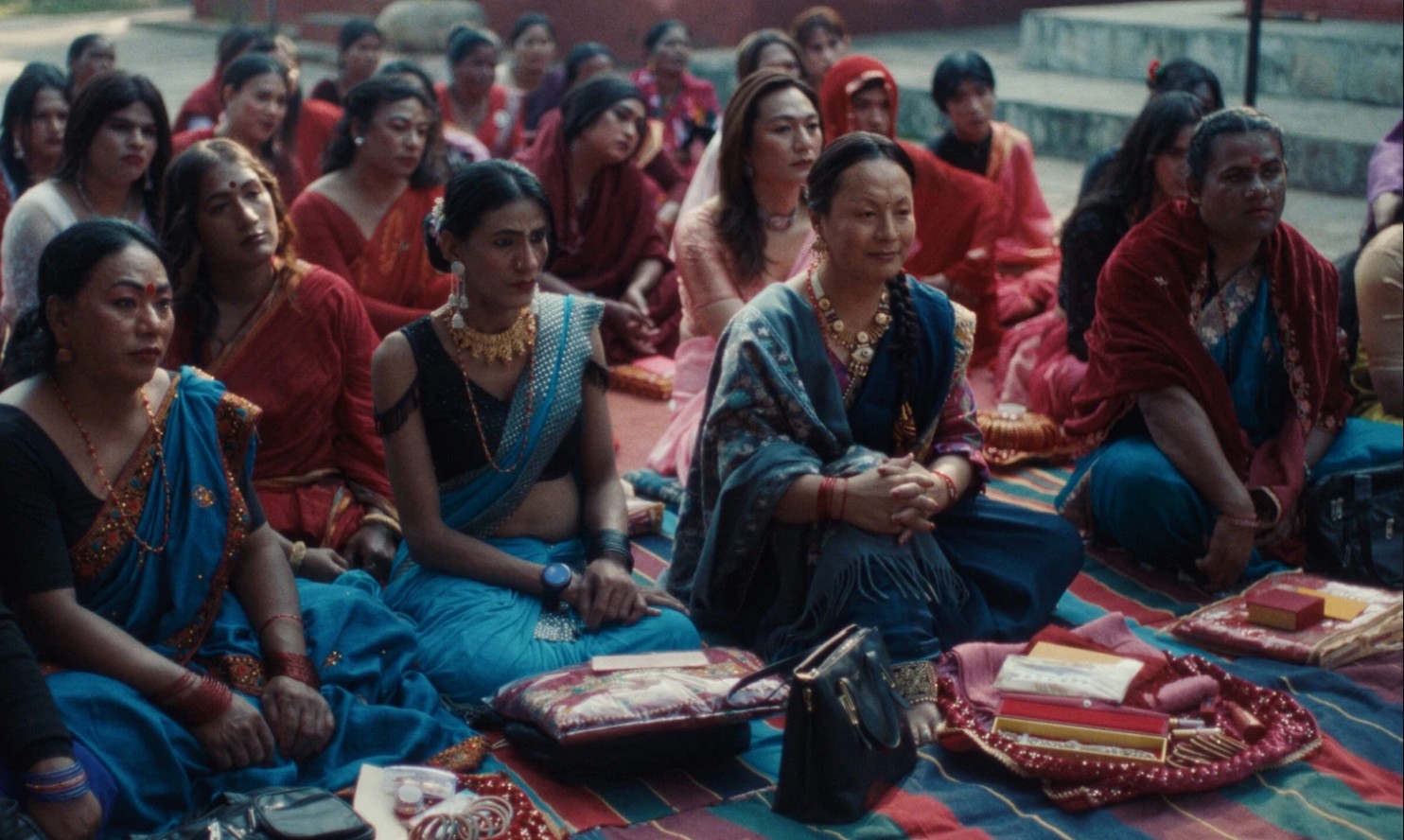
Inspired by the real life incident, and giving his film – Elephants In The Fog winner of Jury’s Prize at Cannes Film Festival Un Certain Regard 2026, a thriller tinge to have audiences invested in the film’s larger social context and cultural thematic text, the filmmaker shows how marginalised and outcast Nepalese Kinnar community struggles to protect itself not only within own community but also from society at large which has consigned them to margins of forested fringes infested with elephant incursions ever in peril of being ‘jumbo’shed by the marauding herd.
Cannes’ Un Certain Regard, is a section introduced that highlights emerging filmmakers and distinctive storytelling voices, that runs parallel to the competition for Palme d’Or and is considered second most prestigious section at Cannes.
To give it a context, Kinners (or Hijra) bisexual community in the country are recognised third-gender group consisting of transgender individuals, intersex people, and eunuchs. The community rooted in an ancient kinship system led by a “guru mata / God Mother,” and revered for their spiritual power to bless at weddings and childbirth.
Much as these non-binary and intersex people are reviled and resented of their presence amidst the populace, curiously, these very derided and detested people are popularly identified as harbingers of good fortune.
Despite legal protections, the community, which continues to fight societal stigma, discrimination, and economic marginalisation, they are, however, as goes traditional practices involve inviting them to homes during ceremonies for sing and dance performances seeking blessings in exchange for money.
Their sharp, characteristic claps accompanying traditional celebratory performances at occasions, as also announcing their sect. The very claps, dreaded as curse or decried as show of intimidation or obscenity. However, as Elephant In The Fog, draws to a close, and the herd of pachyderms, these very rhythmic and resounding remonstrative claps become an emphatic and emblematic assertion of identity, resilience, rebellion and empowerment.
As in The Mysterious Gaze Of The Flamingo, in Elephants In The Fog, you have the blossoming romance between Pirati the “Materfamilias” of the community and her dhol drummer that sets the stage for the eventual conflict in the film and the course it takes thereon during its run time of 103 minutes wherein the flagrant sexual desire becomes both contagion and curse with the “daughters” at the pivot of the engaging drama.
Set in Thori, a small hamlet nestled by the dense forest in Nepal’s southern Terai plains populated with elephants which the small close knit community members have to find off with night vigilance duties along with the forest task force, far from ‘normal’ human habitation, the filmmaker faithfully charts the lives and lifestyles of the community members portrayed by the community member themselves playing the part.
Given to their oath of celibacy, Prati, who has under her a triad of “daughters” – Joon, Chameli, besides the one of whom she is especially dots upon Apasara, is caught betwixt her dhol master beau and the “daughter’ dear to her.
While in The Mysterious Gaze Of The Flamingo these ‘women’ almost living in filth and squalor on the outskirts service their client, in Elephants In The Fog the protagonist ‘matriarch’ Pirati defies the oath and conventions set for the person who is vested with the community’s safekeep and takes recourse to ‘flings’ giving in to the call of the flesh which the daughter frowns upon.
For the ‘mother’ and her ‘lover’ are planning to spirit away to distant Capital City of Delhi chasing the chimera of a better and secure respectful life from the censorious confines of the community they are currently cocooned in.
Incidentally, the moustachioed drummer lives in the border city of Birgunj, in complete contrast to the quietude and seclusion of the Thori village, that provides the divergent worlds Prati navigates as she buses and flits across the streets of the concrete, heavy traffic, and chaotic cosmos of Birgunj.
It is in this noisy, populated, dust laden mechanical world that Pirati ironically finds her haven for her romantic rendezvous with her paramour far away from the prying eyes of her “community daughters” plunging in the privacy of physical pleasures with none to notice or frown on her dalliances.
As filmmaker Abinash Bikram Shah so succinctly puts it in an interview “for Pirati, traveling between these two places is more than a commute; it is a movement between two different states of being. She is caught between the community that shaped her and the promise of a “normal” life where she can finally be anonymous. By filming in these real locations, I wanted to show that her choice is a physical tug-of-war between two worlds that rarely understand one another.”
Divested of her ‘matriarch’ position when her infractions are discovered as she readies to desert her ilk and take her flight from the coop ‘daughter’ Apasara goes missing putting Pirati in the quintessential Hamletian dilemma of whether to give wings to her dream desire or stay put to ferret the truth of her beloved Apasara’s mysterious disappearance and perform her responsibility to her “daughters” and “sisters”.
A searing, searching, soulful, sensitive and evocative film, Elephants In The Fog with its technical finesse – cinematography and editing and unintrusive background score which turns out into a heart-wrenching intimate and intricate expose of real life situation of the ‘community’ makes for an enterprising, ensemble, engaging viewing with pitch perfect acting contributing to its overall aesthetic appreciation and pulsating portrayal.
Indeed, the film speaks of how Nepalese cinema has come a long way with and striking it rich on the film festival circuits resonating with the global cinema community with their topical thematic texts and eclectic and effective cinema auteur sensibility and directorial dexterity.

THE BESPECTACLED DIRECTOR ABINASH BIKRAM SHAH WITH HIS PRINCIPAL CAST – PUSPA THING LAMA (PIRATI) EXTREME RIGHT, SAHAB DIN MIYA (JOON) IN RED AND ALIZ GHIMIRE (APSARA) WITH BLONDE HAIR BEHIND
The film, and its maker, speak of the global acknowledgement of tiny Himalayan landlocked nation’s growing stature in creative cinema excellence and powerful authentic narratives rooted in its soil but which resound universally and is received with such high appreciation and accolade.





Leave a Reply